

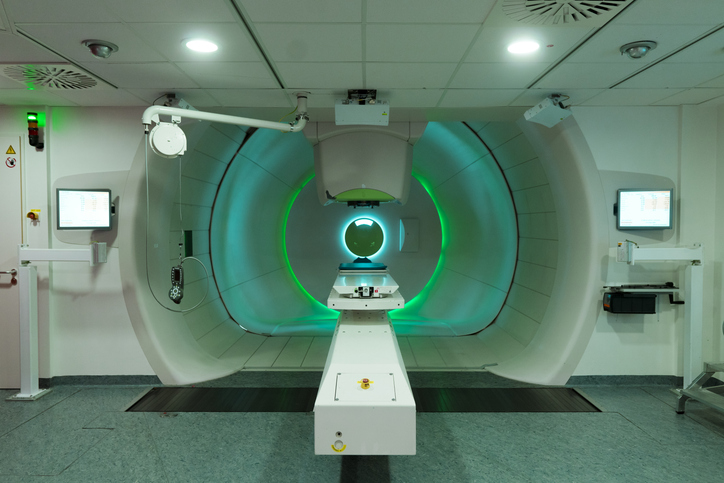
Research led by The University of Texas MD Anderson Cancer Center has shown that proton therapy significantly improves overall survival, reduces high-grade toxicity, and has comparable disease control to traditional intensity-modulated radiation therapy (IMRT) for patients with oropharyngeal cancer.
“This is important, level one evidence that proton therapy has both a survival benefit and quality-of-life improvement for these patients and should be the standard of care for advanced cases of oropharyngeal cancer,” said Steven Frank, MD, executive director of technology and innovation and deputy division head of strategic programs for Radiation Oncology at MD Anderson. “These results demonstrate the advantages of proton therapy for head and neck cancer patients, and this study could lay the foundation for increased accessibility for patients who may benefit.”
Frank and co-authors explain in The Lancet that although radiotherapy is an integral component of oropharyngeal cancer treatment, it is consistently associated with severe toxicity, including severe end-of-treatment malnutrition and gastrostomy-tube dependence in more than 60% of patients.
Researchers have tried to reduce toxicity by changing the type of concurrent chemotherapy used and reducing the radiation dose given, but up to now these efforts have been unsuccessful in Phase III trials.
Proton therapy, also known as intensity-modulated proton therapy (IMPT), is an alternative form of radiotherapy that has unique physical and biological properties, using charged particles rather than the high-energy x-rays of photon-based IMRT. The enables a reduced radiation dose to be delivered to non-cancer tissues and thus reduced toxicity.
In the current study, Frank and team directly compared IMPT with IMRT, both with concurrent systemic therapy, in 440 adults (median age 61 years, 91% men) with stage III or IV oropharyngeal cancer.
They report that, at three years post-treatment, progression-free survival (PFS) rates were similar between the 221 participants randomly assigned to receive IMPT and the 219 individuals given IMRT, at 82.5% and 83.0%, respectively. The corresponding five-year PFS rates were also similar between the two treatment arms, at 81.3% and 76.2%.
However, the five-year overall survival rate was significantly higher with IMPT than with IMRT, at 90.9% versus 81.0%, which translated to a significant 42% lower risk for death in the IMPT arm.
“The 10 percentage point improvement in overall survival for the proton therapy arm was unexpected,” said Frank. “The results of the control arm were consistent with other randomized trials, and the improvement in overall survival over 90% has never been seen before.”
He also noted that patients with squamous cell carcinoma located on the base of tongue and tonsil as well as those with metastatic spread to their lymph nodes in the neck were most likely to benefit from IMPT when treated with concurrent systemic therapy.
Disease control rates were similar among the patients who received IMPT and those who received IMRT. At five-years the local recurrence rate was 2.9% in the IMPT arm and 5.6% in the IMRT arm, while regional recurrences occurred in 3.4% versus 3.2% and distant metastases in 9.1% versus 8.9%.
“With equivalent rates of local, regional, and distant disease control between IMPT and IMRT in the current study, the unexpected improvement in survival outcomes with IMPT might reflect a reduction in death due to: less severe treatment-related toxicities; better survival after disease progression; unknown factors; or some combination of the above,” Frank and co-authors write.
Indeed, patients given IMPT had lower rates of grade 3 or worse lymphopenia than those give IMRT (76 vs. 89%) and were less likely to experience severe difficulty swallowing (31 vs. 49%) and severe dry mouth (33 vs. 45%). They were also significantly less likely to be dependent on a feeding tube at 60 days (27 vs. 40%).
“The primary thing for patients to understand is these trials overwhelmingly show that both proton therapy and traditional radiation are great treatment options,” Frank said. “Nonetheless, these results indicate a survival benefit for proton therapy in oropharyngeal cancer patients as well as reduced high grade toxicities during treatment and less feeding tube dependence. These results, along with other recent data, highlight the importance of continuing to identify which patients are most likely to benefit from proton therapy both in the short term and the long term.”
He also commented that although IMPT has higher initial costs relative to IMRT, “a follow-up study on patients from this trial will be demonstrating that IMPT is cost-effective by improving overall survival, reducing cancer care costs associated with toxicity management with IMRT, and enabling a higher rate of return to work with patients treated with IMPT.”
