

Targeted nutrient transport is gaining traction as DHA delivery research moves from mechanism to real-world market application.
The brain is one of the greediest organs in the body when it comes to docosahexaenoic acid (DHA), yet also one of the least hospitable to incoming molecules. The blood–brain barrier (BBB) and its retinal counterpart have long protected neural tissue with admirable vigilance, which is excellent for survival but far less helpful for anyone attempting to deliver therapeutics or nutrients to these privileged regions. Conventional omega-3 supplementation has, for years, been promoted as a convenient route to cognitive and visual support; however, the biological reality is more complicated, with growing evidence that only specific molecular forms of DHA gain meaningful access to the brain’s inner sanctum.
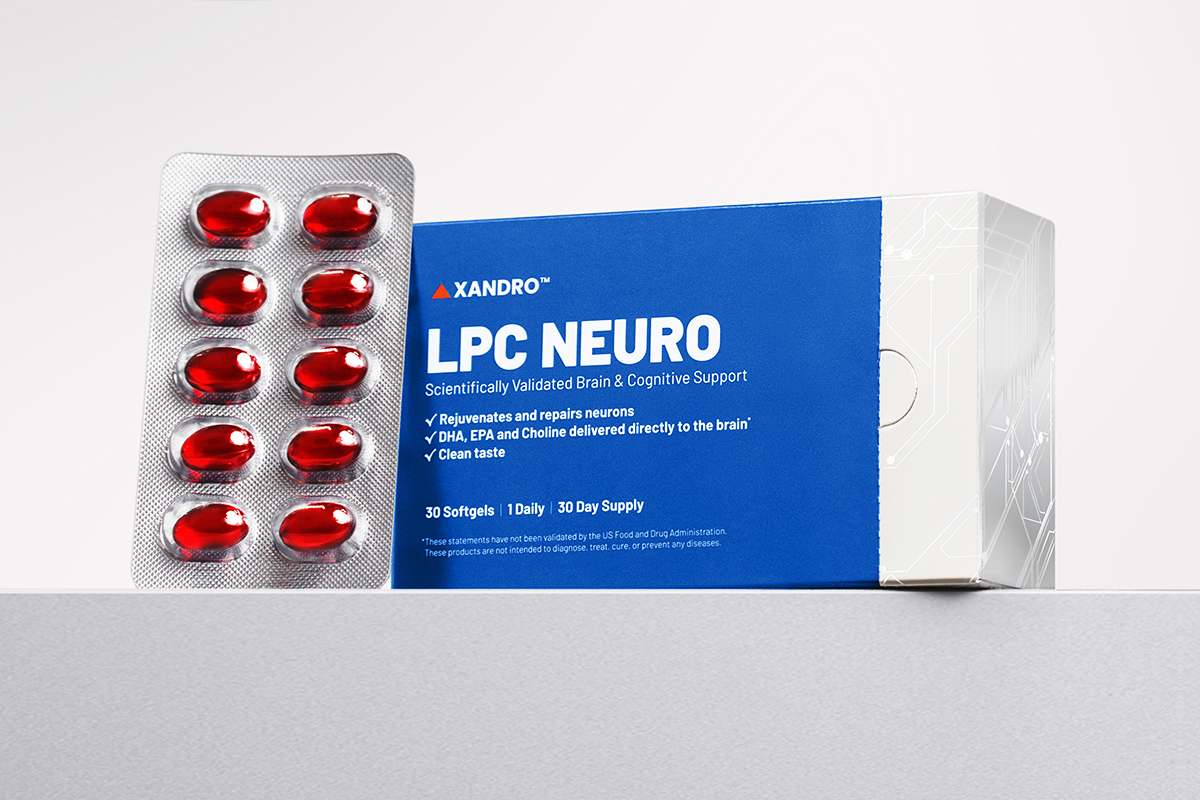
Xandro Lab’s announcement of its LPC Neuro formulation draws on this evolving understanding. Rather than relying on free DHA or triglyceride forms that largely circulate elsewhere, LPC Neuro uses Lysoveta (LPC-DHA) – the form transported by MFSD2A, the membrane protein that ferries DHA across both the BBB and the blood–retina barrier.
The central role of MFSD2A in brain DHA uptake was first established more than a decade ago. In a landmark 2014 Nature paper, researchers identified MFSD2A as the primary transporter responsible for ferrying DHA into the brain in the form of lysophosphatidylcholine (LPC), revealing what had previously been a major blind spot in neuro-nutrition biology [1].
“Our findings can help guide the development of technologies to more effectively incorporate DHA into food and exploit this pathway to maximize the potential for improved nutritionals to improve brain growth and function,” said Dr. David Silver, senior author of the study. “This is especially important for pre-term babies who would not have received sufficient DHA during fetal development.”
Preclinical studies have shown that this pathway is not merely a curiosity; when MFSD2A is absent in animal models, brain DHA levels fall and learning impairments follow, while supplementation with LPC-DHA raises neural DHA and improves memory performance, effects not replicated by free DHA [2].
Longevity.Technology: Understanding why the brain and retina hoard DHA yet refuse most attempts to deliver it has long been one of those puzzles that geroscience circles around but rarely solves; MFSD2A has shifted that conversation, reminding us that biology is less a fortress to be stormed and more a customs office with very particular rules about what it lets through. The arrival of consumer-facing formulations built around LPC-DHA is noteworthy, therefore, not because omega-3s are new – they are practically nutritional wallpaper – but because delivery has finally earned its rightful place alongside dose and purity. As the longevity field matures, interventions will increasingly stand or fall on their ability to reach the parts of the body that matter; rhetoric about brain support will no longer cut it if molecules cannot cross the thresholds that evolution so painstakingly engineered. If companies can navigate this terrain with scientific sobriety rather than marketing bravado, the result could be a more grown-up, mechanism-led generation of healthspan tools – and that, frankly, is overdue.
Working with biology rather than fighting it
Xandro positions its approach as part of a broader shift in delivery science. Many neurological therapies have struggled to cross the BBB because they attempt to do so through brute force – high doses, chemical modifications or nanoparticle constructs that challenge the barrier rather than collaborate with it. In contrast, MFSD2A offers something subtler: a native shuttle that already transports DHA in lysophosphatidylcholine form. As the company’s CEO, Shantanu Kumar, puts it: “The shift from fighting the barrier to using its native transport systems is the unlock; with LPC-DHA and MFSD2A, we can work with biology, not against it – delivering the right omega-3s to neurons and photoreceptors to support cognition, vision and long-term performance.”
This biological choreography also extends to the retina, where studies have shown that LPC-DHA can double retinal DHA levels and strengthen barrier integrity compared with free DHA [3]. Given the rising prevalence of metabolic and age-related retinal changes, mechanisms that protect barrier health may have wider implications for preventive visual longevity.

Subsequent research has expanded the relevance of this pathway beyond development and into aging biology. In later work, Silver and colleagues showed that LPC omega-3 lipids play a direct role in oligodendrocyte development and myelination – processes that are increasingly implicated in cognitive aging and neurodegenerative disease [4].
“Our study indicates that LPC omega-3 lipids act as factors within the brain to direct oligodendrocyte development, a process that is critical for brain myelination,” Silver said, commenting on that research. “This opens up potential avenues to develop therapies and dietary supplements based on LPC omega-3 lipids that might help retain myelin in the ageing brain – and possibly to treat patients with neurological disorders stemming from reduced myelination [5].”
Beyond the brain, LPC-DHA is also being explored in other clinical contexts, including acute kidney injury, pointing to growing interest in its systemic biological effects.

From mechanism to market
LPC Neuro pairs Lysoveta with choline to support membrane synthesis, reflecting Xandro’s emphasis on “high-performance protocols”. As Kumar notes: “LPC Neuro complements sleep, training and smart nutrition by addressing a simple truth: delivery matters – especially when the goal is lifelong cognitive and visual performance.” Although framed for proactive consumers rather than clinical populations, the underlying rationale echoes trends across the longevity sector: mechanisms once confined to preclinical journals are edging into consumer products, provided they are supported by evidence, safety reviews and a clear biological premise.
Speaking to Longevity.Technology, Xandro CEO, Shantanu Kumar, said that the shift is not merely commercial but conceptual, reflecting a change in how the field thinks about practical neuroprotection.
“What is so compelling about MFSD2A is that it marks a transition from theoretical neuroprotection to something operational,” Kumar told us. “For years we have known DHA is essential, but we lacked a reliable way to escort it into the brain at scale. Understanding and applying this transport biology brings us closer to interventions that actually reach their intended neural targets.”
A wider shift in longevity thinking
If nutrient delivery is indeed evolving into a discrete subdiscipline of longevity research, then MFSD2A-focused strategies may represent one of the more approachable test cases. They illustrate that refining the how may, in time, prove as important as discovering the what; they also invite a broader conversation about which other essential molecules could benefit from targeted transport rather than indiscriminate supplementation. The BBB has often been presented as a frustrating impediment to innovation, yet it may instead provide a roadmap for more sophisticated, region-specific approaches to healthspan.
This widening lens on delivery biology is echoed by Kumar, who notes the shift in how longevity interventions are being conceived. “Longevity science is entering a phase where delivery is no longer an afterthought; molecules must not only be beneficial but capable of crossing the physiological borders that matter. LPC-DHA illustrates this shift neatly – the form determines the fate, and without the right form, even elegant biology may remain biologically inert.”
Beyond the barrier
As the field continues to mature, attention will likely turn to how these delivery mechanisms perform in humans over longer timeframes and in diverse physiological states. Longevity, after all, is shaped not only by what we add but by how effectively our bodies can incorporate it; navigating that tension between need and access may define the next chapter of nutrient and therapeutic design.
Images courtesy of Xandro Lab
[1] https://www.nature.com/articles/nature13241
[2] https://pubmed.ncbi.nlm.nih.gov/28900242/
[3] https://www.mdpi.com/2072-6643/12/10/3114
[4] https://www.jci.org/articles/view/164118
[5] https://www.duke-nus.edu.sg/newshub/media-releases/a-special-omega-3-fatty-acid-lipid-change-how-we-look-at-developing-and-ageing-brain
