

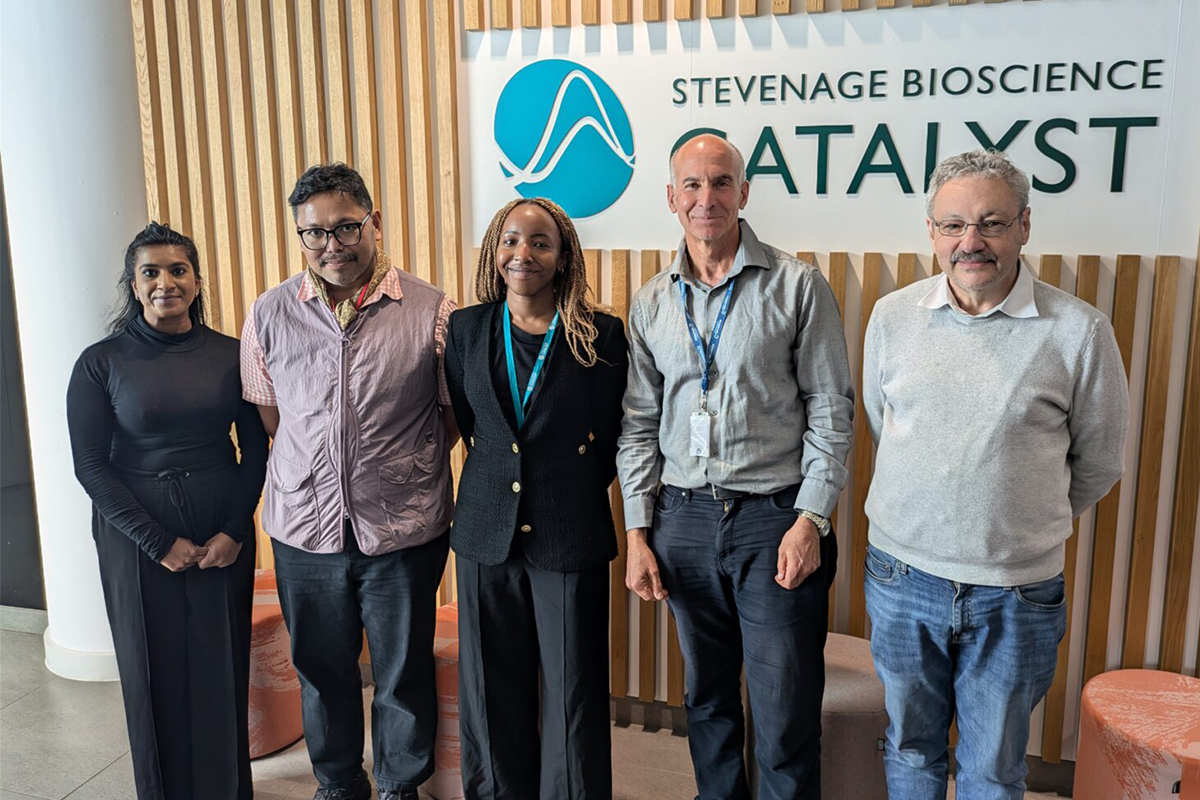
With new investor backing, the company prepares a £25m Series A to move its lead tauC3 antibody into human trials.
TauC3 Biologics, a neurodegeneration-focused biotech based at Stevenage Bioscience Catalyst, has secured around $2.5 million in new investor commitments as it prepares for a planned £25m Series A round. The funding extends the company’s operating runway to Q2 2027 and accelerates development of its lead antibody program, TBL-100, positioning the company for the transition into clinical-stage development.
The upcoming Series A is intended to initiate first-in-human studies, a critical inflection point for the company as it moves beyond preclinical research toward testing its approach in patients with devastating neurodegenerative diseases.
TBL-100 is designed to target tauC3, a truncated and particularly toxic form of the tau protein [1]. TauC3 has been increasingly linked to the early stages of several fatal neurodegenerative disorders, including frontotemporal dementia driven by tau pathology, progressive supranuclear palsy and Alzheimer’s disease.
In healthy neurons, tau plays an essential role in maintaining the internal structure of cells. However, when tau becomes abnormally modified, it can misfold, clump together and disrupt normal cellular processes. TauC3 is considered especially harmful because it is more prone to aggregation and more capable of spreading pathology between cells.
By selectively recognizing tauC3, TBL-100 aims to remove tauC3-containing protein complexes both inside and outside brain cells. The goal is to support healthier neuronal function, reduce brain inflammation and slow the spread of tau-related pathology that underpins cognitive and movement decline.
Efforts to treat tauopathies have a long history of clinical disappointment, with many candidates failing to show meaningful benefit despite promising early data. TauC3 Biologics’ strategy is built on the idea that those failures stem, at least in part, from targeting tau too broadly rather than focusing on the most toxic species.
Daniel Chain, CEO of TauC3 Biologics, said that “targeting tauC3 allows us to act directly on the toxic species that drives disease progression – addressing a fundamental limitation behind earlier failures in tauopathy drug development.”
“With this investment, we are well positioned to further advance TBL-100 toward clinical development, where we aim to translate our mechanistic insights into a therapy that could meaningfully alter outcomes for individuals affected by these devastating, fatal neurodegenerative disorders,” he added.
The company remains in preclinical development, with TBL-100 engineered as a humanized monoclonal antibody with high specificity for tauC3. This specificity is intended not only to improve therapeutic impact but also to reduce the risk of off-target effects, a key concern in central nervous system drug development.
TauC3 Biologics plans to begin clinical development in frontotemporal dementia caused by tau pathology, a condition with limited treatment options and a clear biological link to tau dysfunction.
If successful, the company intends to expand into progressive supranuclear palsy and, ultimately, Alzheimer’s disease, where tau pathology is a central driver of disease progression alongside other mechanisms.
In parallel with its therapeutic program, TauC3 Biologics is continuing work to establish tauC3 as a biomarker. Earlier and more precise diagnosis remains a major unmet need in neurodegenerative disease, where symptoms often overlap and definitive diagnosis can come too late for intervention to be effective.
Because TBL-100 is designed to recognise tauC3 with high specificity, the company believes it could also support diagnostic applications, potentially helping clinicians identify patients earlier and stratify them more accurately for clinical trials and future treatments.
The $2.5 million funding round underscores continued investor interest in disease-modifying approaches for neurodegeneration, despite a challenging funding environment for early-stage biotech.
For TauC3 Biologics, the capital provides both time and momentum as it works toward its Series A and the start of clinical testing. As the field continues to reassess how best to tackle tau-driven disease, TauC3 Biologics is betting that precision will be key to finally translating decades of tau biology into tangible benefits for patients.
