

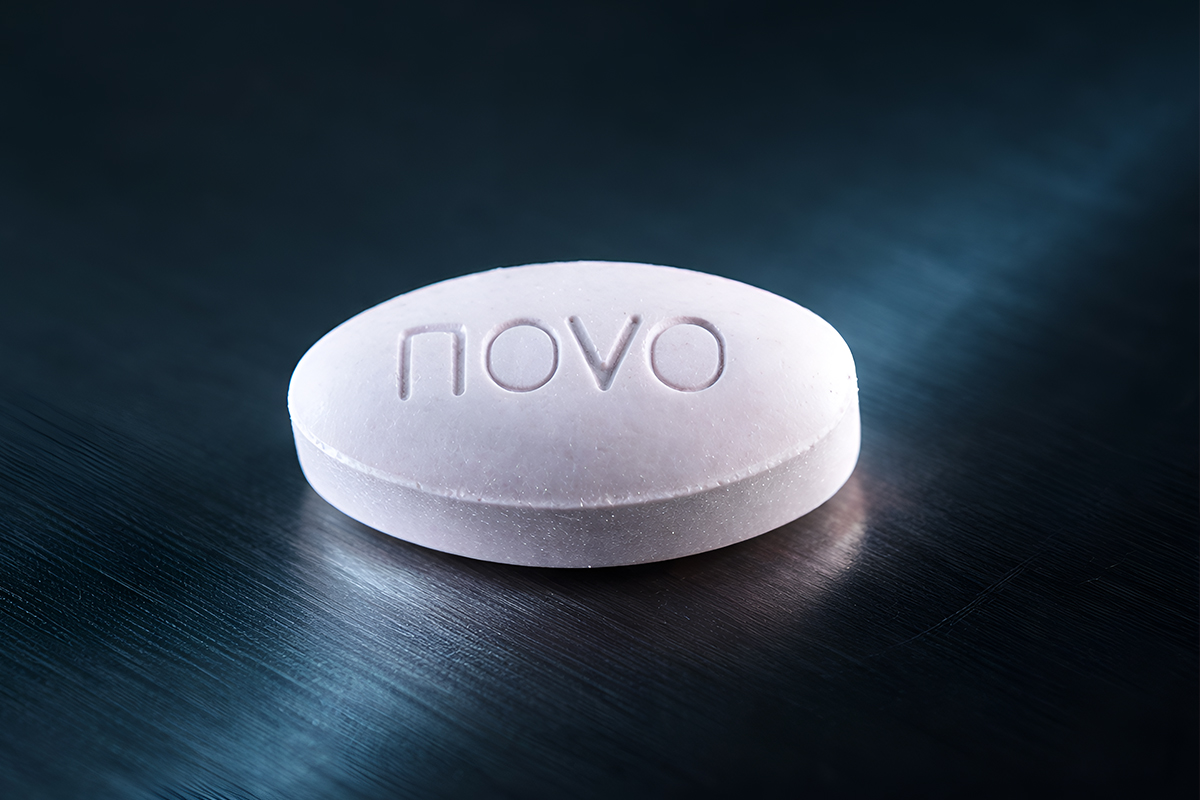
The approval marks a milestone for GLP-1 drugs, expanding access beyond injections as Novo Nordisk prepares for a competitive obesity market.
The US Food and Drug Administration (FDA) has approved an oral version of Wegovy, Novo Nordisk’s blockbuster weight loss drug, marking the first time a GLP-1 therapy for obesity has reached the market in pill form.
The decision widens the treatment landscape for obesity, a condition affecting more than 40% of US adults, and signals a shift toward more patient-friendly delivery options. Until now, GLP-1 drugs used for weight loss, including Wegovy and Eli Lilly’s Zepbound, have only been available as injections.
“This is a meaningful step forward in the field. It won’t replace injectables, but it broadens our tool kit in an important way,” said Dr Christopher McGowan, a gastroenterologist who runs a weight loss clinic in Cary, North Carolina.
GLP-1 drugs mimic a naturally occurring hormone that helps regulate blood sugar, slow digestion and suppress appetite. Initially approved for type 2 diabetes, the class has surged in popularity after trials showed substantial and sustained weight loss.
While injectable GLP-1s remain highly effective, their delivery method can be a barrier.
“Pills are familiar, nonintimidating and fit more naturally into most people’s routines. For many patients, a pill isn’t just easier, it’s psychologically more acceptable,” McGowan said.
Novo Nordisk already markets an oral semaglutide, Rybelsus, for diabetes. However, the newly approved Wegovy pill contains a higher dose designed specifically for weight loss.
In phase 3 trial results published in the New England Journal of Medicine, participants taking the highest dose of the Wegovy pill lost an average of 16.6% of their body weight after 64 weeks. By comparison, those on placebo lost 2.2%.
The results are broadly comparable to injectable Wegovy, which reduced body weight by about 15% after 68 weeks in earlier trials.
However, real-world use may prove more complex. The pill must be taken first thing in the morning, on an empty stomach, with no more than four ounces of water, and no food for at least 30 minutes afterward.
Dr Shauna Levy, medical director of the Tulane Weight Loss Center, said adherence will be a key challenge. Trial participants who struggled with the strict dosing schedule lost less weight, averaging 13.6%.
The open question is “real-world performance,” McGowan said. “Will patients tolerate the daily dosing and strict timing? Will they stay on long enough to see meaningful results? We don’t know yet.”
As with injectable GLP-1s, the most common side effects were gastrointestinal, including nausea and vomiting. McGowan noted that symptoms may feel “more intense” for some patients because the medication reaches the stomach all at once.
“The challenges we see with injectable GLP-1s don’t magically disappear with a tablet,” he said.
While the Wegovy pill performs well, newer injectable drugs still deliver greater weight loss on average. Lilly’s Zepbound helped trial participants lose 22.5% of their body weight after 72 weeks, while the company’s next-generation drug, retatrutide, reached about 24% in earlier studies.
“Zepbound maintains its status as the best medical treatment for obesity, only inferior to weight loss surgery in terms of outcomes,” Levy said.
Novo Nordisk has not yet announced the list price of the Wegovy pill, which must be taken daily. It is expected to be cheaper than weekly injections, but insurance coverage remains uncertain.
Medicare is legally barred from covering weight loss drugs, though the pill was also approved for reducing cardiovascular risk, an indication Medicare does cover.
In November, Novo Nordisk struck a deal with the Trump administration to sell the lowest dose for $149 a month to self-paying patients, in exchange for tariff relief. Eli Lilly reached a similar agreement for its own oral GLP-1 candidate.
Novo Nordisk said the pill is expected to be widely available in January. Learning from earlier Wegovy shortages, the company boosted production ahead of launch. Oral drugs are also typically easier to manufacture than injectables, which could help stabilize supply.
The approval comes as Novo Nordisk pushes forward on multiple fronts. As Longevity.Technology previously reported, the company is also seeking fast FDA approval for a higher-dose, 7.2 mg injectable Wegovy, a move that could further intensify competition in obesity and longevity medicine.
With an oral option now approved, and another pill from Eli Lilly expected in the coming months, the GLP-1 race is entering a new phase. The question is no longer whether these drugs will reshape obesity care, but how accessible, scalable and sustainable that transformation will be.
