

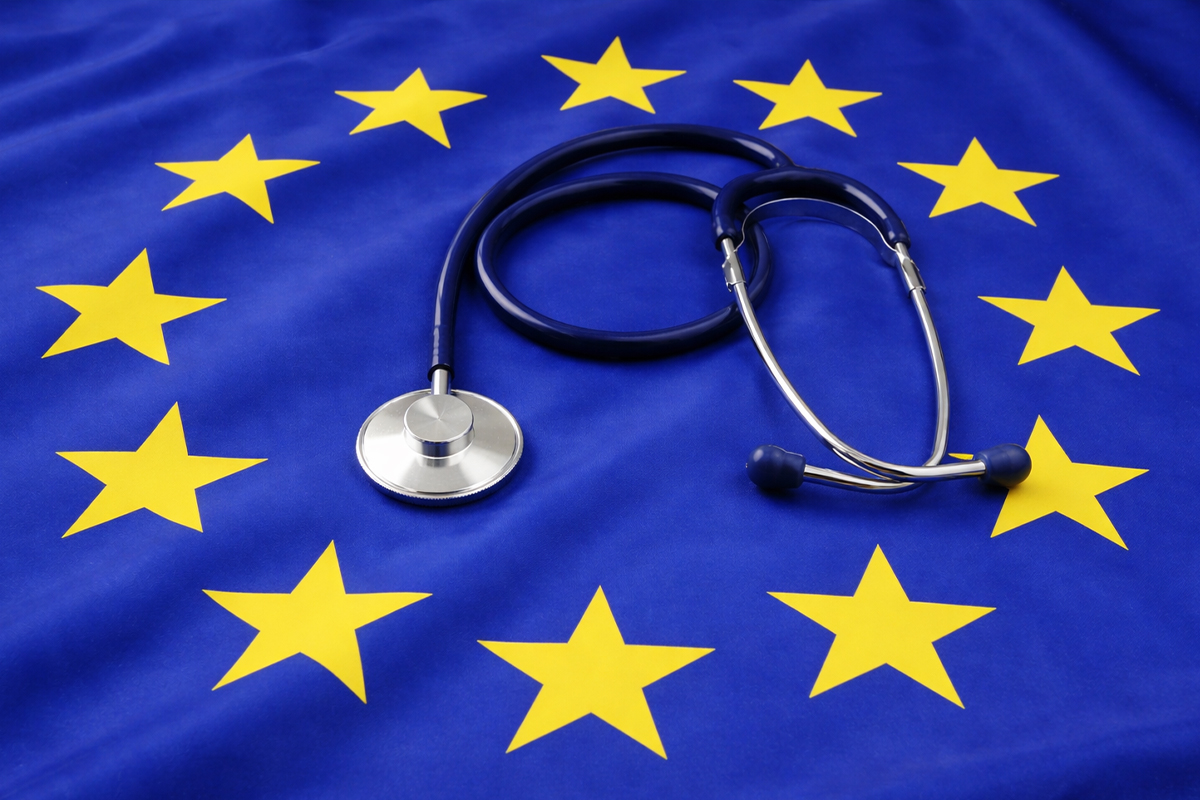
European Commission wants to speed up biotech, fix device bottlenecks and cut heart disease, while keeping Europe competitive in global race.
The European Commission has unveiled a broad, deliberately pro-innovation package designed to make the EU’s health sector sharper on three fronts: more innovative, more competitive, and more shock-resistant – while still grappling with the public health problems that keep ministers up at night [1].
At the centre of it sit three chunky pillars: a proposed Biotech Act, a push to simplify medical device rules, and a first-of-its-kind Safe Hearts Plan aimed squarely at cardiovascular disease. Together, they’re meant to do what policymakers always promise but rarely deliver at speed: move medical breakthroughs from bench to bedside faster, strip out the bureaucratic grit that slows companies down, and get patients quicker access to treatments that are both safe and genuinely effective.
And in Europe, this isn’t framed as “nice to have.” Health isn’t just a social contract issue. It’s an economic one – a productivity issue, a fiscal issue, a competitiveness issue. Big stakes. Biotechnology alone supports more than 900,000 jobs across the EU, most of them tied directly to healthcare and contributes close to $43 billion (€40 billion) to the economy. Medical devices add nearly one million more jobs and power a market worth around $200 billion (€170 billion).
Yet EU officials openly acknowledge that Europe is losing ground to global competitors, particularly the US and China. Funding gaps, slow approvals and fragmented rules have made it harder for companies to scale. The new package is meant to reverse that trend, without lowering safety standards.
The proposal includes the Biotech Act, which aims to turn Europe into what the Commission calls a “world-leading health biotech industry.” The focus is practical: help promising ideas survive the long and expensive journey from research to real-world use.
To do this, the Commission plans to work with the European Investment Bank on a new health biotech investment pilot. This would blend public and private money to support biotech companies, especially those stuck in the risky, late-stage development phase where many innovations fail.
The Act also encourages companies to run clinical trials and manufacture products inside the EU, streamlines approvals across countries and creates faster regulatory pathways for complex therapies. AI and data-driven tools are very much in the picture – but not in a Wild West way. The emphasis is on controlled environments where innovation can be tested, tweaked, and validated without turning patients into unwitting beta users. Guardrails on. Experimentation still possible.
For investors, the subtext is loud: Europe is trying to become a more predictable, more legible place to build and scale biotech – fewer regulatory potholes, more clarity on the road ahead. That kind of stability matters when you’re placing long-term bets in a sector where timelines are already brutal.
And the urgency isn’t theoretical. Europe already sits at the top of the global medical devices heap, but the current rule set has created bottlenecks – delays, uncertainty, and compliance costs that hit SMEs hardest. When smaller companies stall, the entire pipeline slows. Patients feel it first, because “innovative device” doesn’t help much if it’s still stuck in paperwork while hospitals wait.
The Commission’s proposal simplifies procedures, pushes more processes online and introduces clearer timelines for conformity assessments. A stronger role for the European Medicines Agency is meant to improve coordination and help anticipate shortages of critical devices.
Importantly, patient safety remains non-negotiable. The reform keeps strict standards in place, including for devices that use AI, while aiming to save companies time and money. Overall, the Commission estimates annual savings of $3.6 billion (€3.3 billion), much of it from reduced administrative burden.
If the Biotech Act speaks to innovation, the Safe Hearts Plan speaks to urgency. Cardiovascular disease remains the leading cause of premature death in the EU, killing 1.7 million people every year and costing the economy $305 billion (€282 billion) annually.
Without action, those deaths could rise sharply by 2050. The Safe Hearts Plan is the EU’s first comprehensive attempt to change that trajectory. It focuses on prevention, earlier detection and better treatment using digital tools, data and AI to spot risks sooner and tailor care to individuals [2].
The plan also confronts inequality head-on. Early deaths from heart disease vary widely across member states, often reflecting gaps in access to care. The Commission wants to support national heart health strategies, track disparities through EU-wide dashboards and speed up innovation in cardiovascular care, with goals set out to 2035.
The legislative proposals for the Biotech Act and medical device reforms now head to the European Parliament and Council, where debate is expected – particularly around funding, intellectual property and long-term costs. At the same time, work will begin with member states to roll out key elements of the Safe Hearts Plan.
For investors and industry watchers, the signal is strong: Europe is trying to align public health priorities with economic strategy. Whether this ambitious package delivers on both fronts will shape the continent’s health and life sciences landscape well into the next decade.
[1] https://ec.europa.eu/commission/presscorner/detail/en/ip_25_3077
[2] https://ec.europa.eu/commission/presscorner/detail/de/qanda_25_3080
