

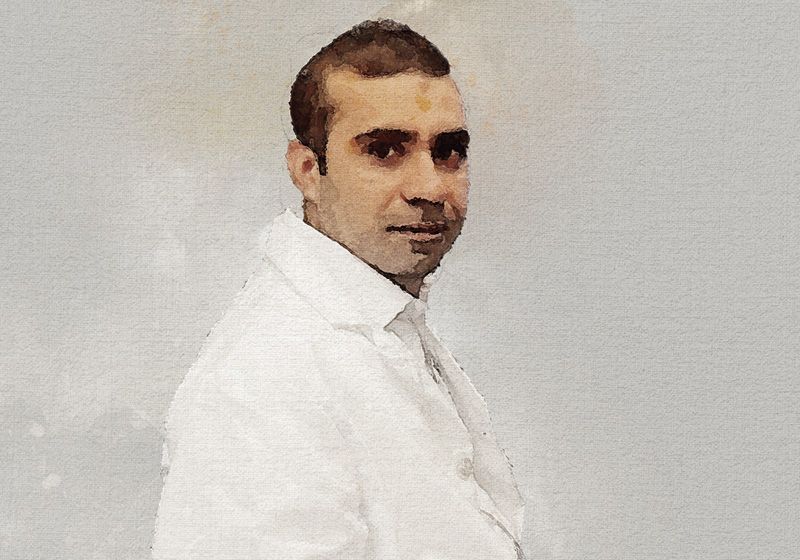
This postdoc investigates inflammatory and autophagy mechanisms behind neurodegenerative disease.
Q | Write a brief introduction to yourself including the lab you work in and your research background.
My name is Muhammad Bilal. I graduated from Nantong University, China, in 2014 with a Bachelor of Surgery and Bachelor of Medicine in clinical medicine. Shortly after my graduation, I worked to evaluate tuberculosis patients, which sparked my interest in researching tuberculosis patient recovery. Later, driven by a desire for advanced knowledge beyond clinical medicine research, I decided to pursue an MD-PhD in neurology at the Department of Neurology, affiliated hospital of Xuzhou Medical University. Being acknowledged as a capable researcher, “IL-1β/IL-1R1 signaling in the gastrointestinal tract regulates α-synuclein pathology and propagates to brain via the vagus nerve” was chosen as the topic for my thesis in 2022.
Q | How did you first get interested in science and/or your field of research?
I have always been passionate about medicine, and after completing my clinical training, I began working in the Department of Pulmonology. During this time, I developed a growing interest in neurology, particularly in the complex mechanisms behind neurodegenerative diseases. These conditions fascinated me because they remain among the most difficult to treat and understand. My curiosity led me to study the “gut–brain axis” in Parkinson’s disease, where I discovered that gastrointestinal inflammation might contribute to gradual brain cell loss. This connection between two seemingly distant systems opened my eyes to the body’s remarkable interconnectedness. I was captivated by the idea that addressing inflammation outside the brain could influence neurological outcomes. This experience not only deepened my passion for neuroscience but also inspired me to focus my research on uncovering mechanisms that could help prevent or slow the progression of neurodegenerative disorders.
Q | Tell us about your favorite research project you’re working on.
One of the projects I’m most passionate about is centered on the CYLD gene, the newest member of the Frontotemporal Dementia (FTD) gene family. What excites me about CYLD is its unique role in autophagy, the cell’s “cleanup and recycling” system, which is essential for keeping neurons healthy. Many FTD genes disrupt this process, creating a network of vulnerabilities that drive disease. My research asks a key question: how might local autophagy failure at the synapse weaken neuronal integrity and trigger FTD?
To explore this, I’m developing new somatic transgenic mouse models expressing two CYLD variants (P229S and S615F) in cortical neurons. Using a combination of molecular, cellular, electrophysiological, and behavioral approaches, along with human iPSC-derived neuron models, I aim to map how CYLD dysfunction sets neurodegeneration in motion. This project excites me because it blends cutting-edge genetics with neuroscience to tackle one of the most complex challenges in brain disease research.
Q | What has been the most exciting part of your scientific career/journey so far?
The most exciting part of my scientific journey has been diving into the unknown with my CYLD gene research in Frontotemporal Dementia. When I first learned that CYLD was the newest FTD-associated gene and realized its unique role in autophagy, I felt an immediate spark, it was as if I had stumbled onto an unexplored path in a dense forest. The idea that tiny disruptions in synaptic “cleanup” could silently set the stage for neurodegeneration fascinated me. Building my own somatic transgenic mouse models to explore this mechanism has been a deeply personal milestone, because it meant I wasn’t just following established methods; I was creating new tools to answer urgent questions. Every result, whether confirming or challenging my hypothesis, feels like opening a door to the next stage of discovery. This sense of purpose, knowing that my work could one day guide new treatments, is what drives me forward.
Q | If you could be a laboratory instrument, which one would you be and why?
If I could be any laboratory instrument, I would be a confocal microscope. Much like the microscope, I’m endlessly curious about the fine details that others might overlook. I love the idea of focusing on one tiny layer at a time, building a complete and nuanced picture from seemingly small pieces of information. Confocal microscopes reveal the hidden beauty of biology, intricate cell structures, and delicate protein networks that are invisible to the naked eye. In the same way, I strive to uncover the subtle, often unseen connections in neuroscience, like the link between autophagy and neurodegeneration. Plus, a confocal microscope is patient and methodical, but when used creatively, it can produce images that are as breathtaking as they are informative.
Are you a researcher who would like to be featured in the “Postdoc Portraits” series? Send in your application here.
