

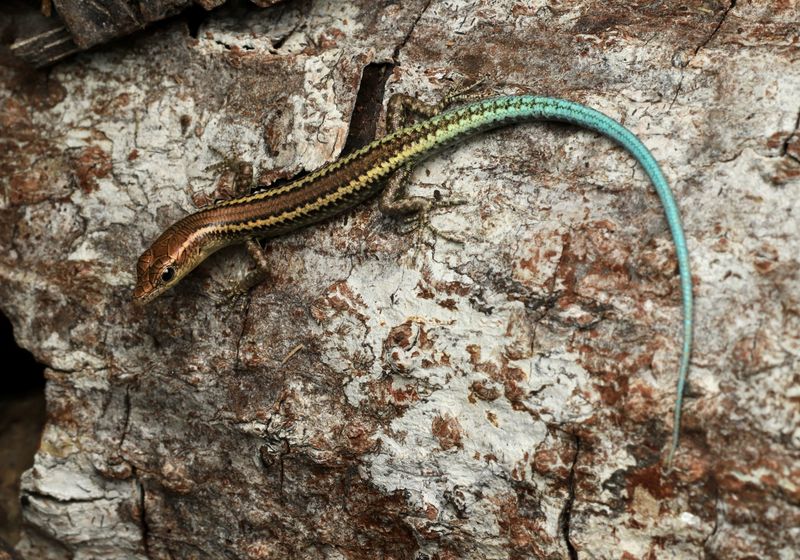
Australia boasts a menagerie of diverse wildlife, from iconic marsupials like koalas and bilbies to orange-bellied parrots. Yet despite this rich biodiversity, an alarming number of species are now at the risk of extinction. As of 2025, more than 2,200 species have been nationally listed as threatened in Australia.
Carolyn Hogg works on projects for the conservation of threatened species. These include the Tasmanian devil, the Christmas Island blue-tailed skink, and the orange-bellied parrot.
Andrew Lee
This growing crisis has galvanized researchers, conservation managers, and government agencies to step up protection efforts. For example, conservation biologist Carolyn Hogg and geneticist Katherine Belov, both at the University of Sydney, demonstrated how genetic analysis can support conservationists in managing Tasmanian devils.1,2 This motivated Hogg and her colleagues, who include population biologists, bioinformaticians, and ecologists, to launch the Threatened Species Initiative (TSI) in 2020. This project aims to develop genomic resources for multiple species to support conservation decision-making such as wildlife translocation and breeding programs.3
Initially, Hogg envisioned generating reference genomes and genetic resources for approximately 40 species over a three-year period; instead, through collaboration with conservation managers who collected samples from plants, invertebrates, reptiles, marsupials, and birds, the TSI team analyzed 125 species in just four years.
One notable project involved the Christmas Island blue-tailed skink, depicted above, a species that was extinct in the wild due to an invasive predator. In 2009 and 2010, the Taronga Zoo and Parks Australia rescued 66 skinks and bred them in captivity. A decade later, conservationists reintroduced them into the wild on the Cocos (Keeling) Islands, nearly 1,000 kilometers from their original habitat. Using retrospective genomic analysis, Hogg remarked, “We showed that the way they bred them in captivity and the recommendation we made for translocations had genetically improved the species.”
“It’s been a really positive program, and we’ve seen a huge shift in government policy action in the last couple of years where now genetics is incorporated into everything,” said Hogg.
Got an eye-catching, science image that tells a story? Submit it for a feature in our Science Snapshot column!
