

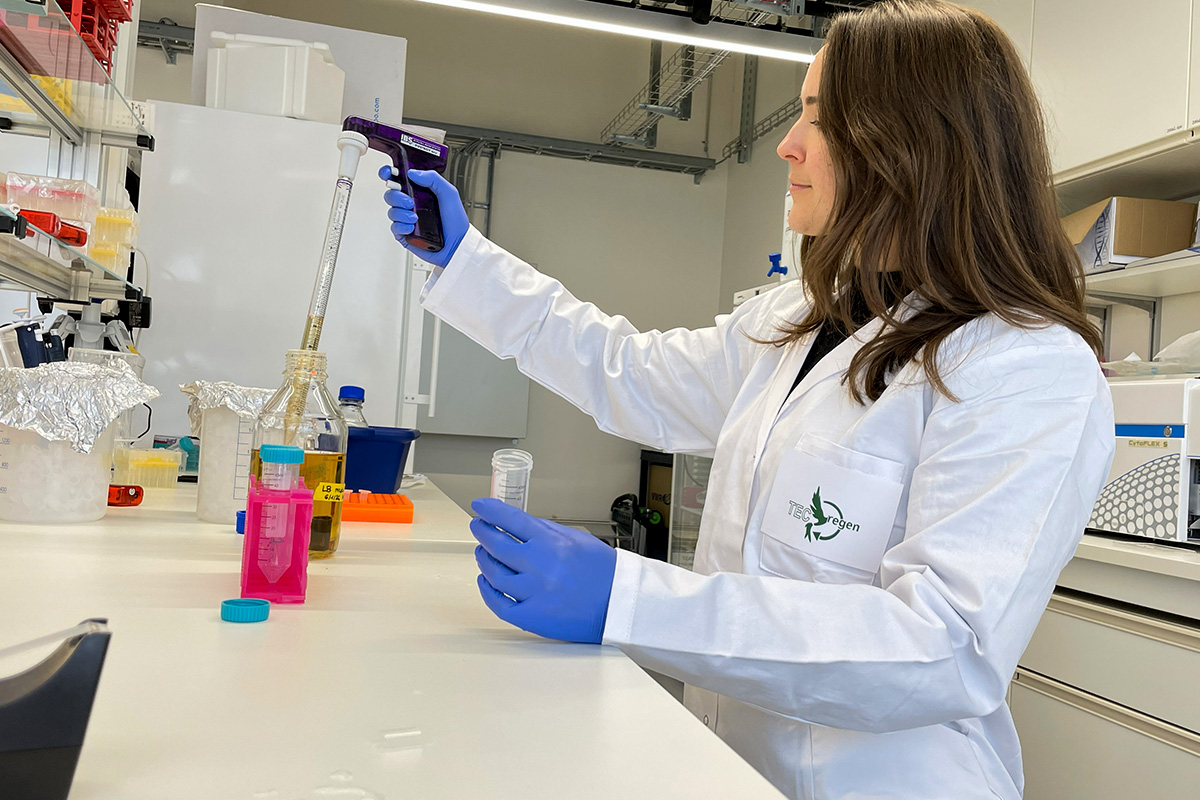
TECregen lands seed funding for mission to combat age-related immune decline by regenerating thymic epithelial cells.
Swiss biotech TECregen emerged today with $12.6 million seed financing to develop a pipeline of therapies designed to regenerate the thymus and boost the aging immune system. The Basel-based company is built around the idea that restoring the thymus can restore immune function at its source.
The thymus, a small organ that sits just behind the breastbone, functions as the immune system’s primary training ground for T cells – key immune cells that help our bodies fight infection and disease. In childhood and adolescence, the thymus produces a continuous supply of naïve T cells and teaches them how to recognize foreign threats while sparing the body’s own tissues. As people age, however, the thymus undergoes a natural process known as thymic involution. Functional tissue is gradually replaced with fat, and the output of new T cells slows dramatically. By mid-adulthood, the immune system becomes increasingly reliant on older, less flexible T cells that were generated years earlier.
This gradual loss of thymic function is increasingly viewed as a biological bottleneck for healthy aging. A shrinking thymus contributes to weaker responses to vaccines, slower recovery from infections and diminished immune surveillance against emerging cancers. Beyond aging, chemotherapy, radiation, stem cell transplantation, serious infections and certain genetic disorders can devastate thymic function, leaving patients with profoundly depleted immune systems and limited capacity to rebuild them.
TECregen is developing a class of biologic drugs it calls thymopoietics, engineered to regenerate thymic epithelial cells and rebuild the microenvironment required for effective T-cell production. Thymic epithelial cells are the structural and functional backbone of the thymus; without them, T cells cannot mature properly. By rejuvenating this cellular niche, TECregen aims to restart the production of healthy, diverse T cells and restore immune resilience across a range of conditions, from immune aging to cancer-related immune suppression.
Of course, TECregen is not the only startup seeking to harness the power of the thymus against aging and disease. In 2015, aging researcher Dr Greg Fahy, CSO of Intervene Immune, commenced the first clinical trial to explore if thymus regeneration could reverse aspects of human aging, with results showing participants’ epigenetic age was “significantly decreased” by the treatment. Since then, several companies have emerged with varying strategies, including ARPA-backed Thymmune, Tolerance Bio and Vidaregen.
The basis of TECregen’s approach involves applying advanced ligand engineering to growth factor biology. Growth factors are potent signaling molecules that influence inflammation, tissue repair and regeneration, including processes within the thymus. According to the company, historic attempts to use growth factors therapeutically have been hampered by systemic toxicity and poor tissue selectivity, as these molecules can trigger unwanted effects in multiple organs. TECregen aims to engineer these signals to be functionally selective and tissue-targeted, with the goal of concentrating their activity in the thymus while minimizing off-target effects.
The seed financing was led by the Boehringer Ingelheim Venture Fund and joined by a host of investors, including longevity-focused LifeSpan Vision Ventures.
“TECregen’s thymus-rejuvenating biologics address one of the fundamental drivers of immune aging, and their innovative approach has the potential to rebuild immune resilience and support healthy aging,” said Lifespan Vision Ventures’ Harry Robb.
Alongside the funding, TECregen also announced the appointment of Bo Rode Hansen as chairman – a biotech and pharma veteran with leadership experience at Roche, Santaris Pharma, Genevant Sciences and Scandion Oncology. Hansen told us the company’s approach is “supported by compelling preclinical biology across age- and disease-relevant models, demonstrating recovery of endogenous T-cell production.”
The seed round gives TECregen the resources to advance its thymopoietic programs, deepen its preclinical data and prepare for entry into the clinic.
“We are refining target product profiles and translational readouts, and engaging with regulators to align on development strategy ahead of IND-enabling studies,” Hansen told us. “By entering the clinic through settings with clear, measurable immune deficits, we aim to establish human proof points that can later support applications in immune resilience, aging, and long-term immune health.”
