

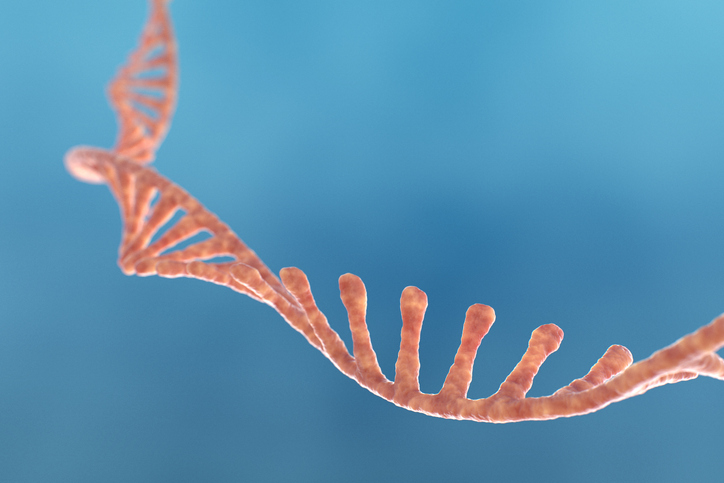
Across all domains of life, immune defenses thwart invading viruses by making it impossible for the viruses to replicate. Most known CRISPR systems target invading pathogens’ DNA and chop it up to disable and modify genes, heading off viral infections at the (cellular) pass. Scientists at Utah State University (USU), led by Ryan Jackson, PhD, now report on research with two lesser-known CRISPR systems, Cas12a2 and Cas12a3. Their studies showed that, in contrast with CRISPR-Cas9 systems that use a guide RNA to locate a specific DNA sequence, the Cas12a2 and Cas12a3 systems target tRNA.
“We’re very focused on the basic research of understanding the structure and function of the CRISPR systems we study, and helping researchers around the world work through bottlenecks that enable them to pursue therapeutic applications,” said Jackson, who is the R. Gaurth Hansen Associate Professor in USU’s Department of Chemistry and Biochemistry.
The team suggests that the discoveries, described in Nature, could lead to more efficient and accurate diagnostic tools to rapidly detect COVID-19, influenza, and RSV infections, individually or in combination, with a single test, in a single patient.
In their paper, titled “RNA-triggered Cas12a3 cleaves tRNA tails to execute bacterial immunity,” Jackson, together with doctoral student Kadin Crosby, master’s student Bamidele Filani, and collaborators in Europe, concluded that their findings “… reveal widespread tRNA inactivation as a previously unrecognized CRISPR-based immune strategy that broadens the application space of the existing CRISPR toolbox.”
“Immune defenses across all domains of life counteract viral infections by clearing the invader or disabling host processes that are essential for viral replication,” the authors wrote. “One growing theme associated with innate immune systems is the inactivation of tRNAs.” tRNAs play a key role in the process by which genetic information is transferred from mRNAs to proteins, and so inactivating tRNAs can impair viral protein synthesis or shut down cells to block viral replication.
Jackson and team are learning more about the distinctive characteristics of Cas12a2 and Cas12a3, finding that Cas12a3 has the ability to disable tRNAs’ translation ability. “Instead of making a single break in the bound target, as Cas9 does to DNA, RNA target binding by Cas12a2 and Cas12a3 changes the shape of a protein in a way that activates them to cut another nucleic acid target over and over again,” Jackson explained. “When activated, Cas12a2 indiscriminately cleaves DNA, destroying all viral DNA, but collaterally killing the host cell as well. In contrast, Cas12a3 cleaves transfer ribonucleic acids, known as tRNAs, halting virus protein production, while sparing the DNA of host cells.”
That latter ability enables Cas12a3 to target tRNA in a very precise way. Jackson and his team are trying to harness that ability to detect and target specific pathogens. “tRNA is the lynchpin of protein synthesis,” Jackson commented. “It functions as a translation device that can read code on RNA and act as a molecular bridge to link that code to the correct amino acid to allow protein production.”
The team’s studies involved the application of techniques, through which they applied techniques including cell-based and biochemical assays and direct RNA sequencing, to show that recognition of complementary target RNA by the CRISPR RNA triggers Cas12a3 to cleave the tail of tRNAs, which drives growth arrest and blocks phage spread. They commented, “Here we report a previously uncharacterized clade of Cas nucleases, which we term Cas12a3 … After target RNA recognition, these nucleases preferentially cleave the conserved 3′ CCA tails of tRNAs to drive growth arrest and block phage dissemination.”
Jackson noted that Cas12a3’s ability to cleave tRNA tails is a newly discovered CRISPR immune response. “Cas12a3 can stop protein production in its tracks by chopping off a specific region of tRNA, called the ‘tail,’ which contains the amino acid … this is a very powerful and precise way to prevent a pathogen, including a virus, from replicating in a cell, without damaging the cell’s DNA.” In their paper, the team further noted, “Integrating genetic, biochemical, sequencing, and structural studies, we propose a model … in which the nuclease undergoes a large conformational change that can then bind free tRNAs through multiple sequence-specific and shape-specific contacts.”
Co-authors Crosby and Filani played key roles in discovering and defining the specific functions of Cas12a3, and determining its ability to perform as a diagnostic tool. “By designing synthetic reporters that mimic the tRNA acceptor stem and tail, we expanded the capacity of current CRISPR-based diagnostics for multiplexed RNA detection.”
Jackson further noted, “We think being able to stop an invading pathogen, while leaving DNA unchanged, could be a therapeutic breakthrough. As we study these systems, we’re also discovering the enormous functional diversity in these bacterial defense mechanisms.”
In their report, the team concluded, “The discovery of RNA-mediated tRNA cleavage in CRISPR–Cas systems reflects the rich functional diversity of antiviral defences … Exploring the hidden functional space of Cas nucleases has the potential to further expand the CRISPR toolbox. Cas12a3 in particular is an important addition for multiplexed RNA detection.”
