

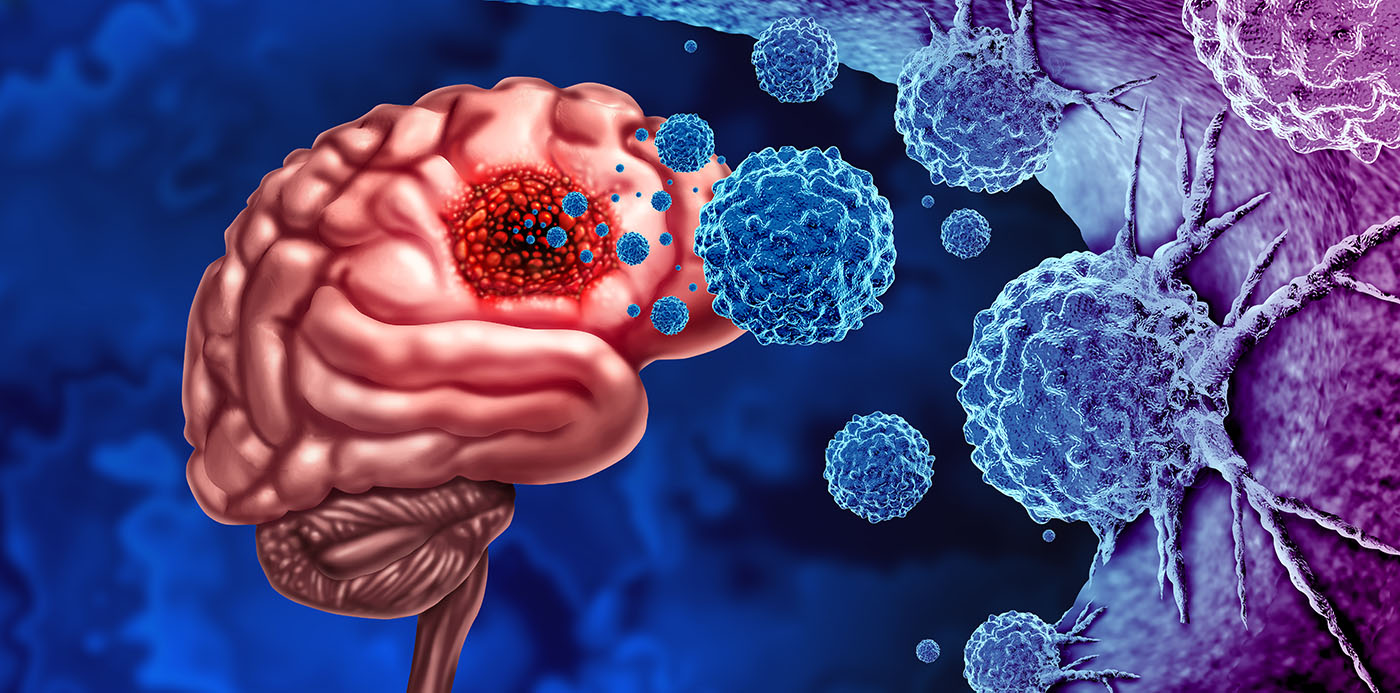
A research team at the University of Michigan has developed a machine-learning-based method to create digital twins of brain tumors that can estimate real-time metabolic activity and predict how individual gliomas will respond to specific treatments. The findings, published in Cell Metabolism, details the digital twins which integrate limited patient data with principles of biology, chemistry, and physics to simulate tumor metabolism, allowing clinicians to assess whether dietary interventions or metabolic drugs are likely to be effective before they are prescribed.
“Typically, metabolic measurements during surgeries to remove tumors can’t provide a clear picture of tumor metabolism—surgeons can’t observe how metabolism varies with time, and labs are limited to studying tissues after surgery,” said senior author Deepak Nagrath, PhD, a professor of biomedical engineering at the University of Michigan. “By integrating limited patient data into a model based on fundamental biology, chemistry and physics, we overcame these obstacles.”
The digital twin was created with an eye to overcoming the limitations of current metabolic flux analysis, which is difficult to apply in living patients because it often requires steady-state conditions or repeated sampling over time.
“Recent advancements in metabolic flux estimations in vivo are limited to preclinical models, primarily due to challenges in tissue sampling, tumor microenvironment (TME) heterogeneity, and non-steady-state conditions,” the researchers wrote. To overcome this the UM team developed a digital twin framework that combines isotopic simulations with a convolutional neural network to estimate metabolic fluxes from single time point patient samples.
To build the digital twins, the team used patient data obtained from blood draws, metabolic measurements of tumor tissue collected during surgery, and genetic profiles of the tumors. Eight patients with glioma were infused with labeled glucose during surgery, generating isotope tracing data that constrained the simulations. The researchers then trained a the neural network using synthetic patient data generated from known biological and chemical rules. “This is the first time a machine learning and AI-based approach has been used to measure metabolic flux directly in patient tumors,” said first author Baharan Meghdadi, a doctoral student in chemical engineering at UM.
Prior research from the Nagrath lab had suggested the potential this approach to creating digital twins. Earlier research showed that some gliomas depend on external sources of the amino acid serine and can be slowed by serine- and glycine-restricted diets, while others synthesize these amino acids internally and are unaffected by dietary changes.
The digital twins were tested in several ways. Computational predictions of metabolic flux were compared with independent data from six of the eight patients, which showed the virtual models were highly accurate. The team also validated the model’s predictions experimentally using mouse models. In mice, dietary serine and glycine restriction slowed tumor growth only in cases where the digital twin predicted dependence on external serine. Similarly, the digital twins forecasted tumor responses to mycophenolate mofetil, a drug that inhibits de novo purine synthesis. Some tumors in the mouse models were predicted to resist the drug by using a salvage pathway to obtain purines from their environment, predictions that were confirmed from the mouse models.
“Our models also identify metabolic heterogeneity among patients and mice with brain cancer, in turn predicting treatment responses to metabolic inhibitors,” the researchers wrote. To further delve into tumor complexity, the team developed a method called single-cell metabolic flux analysis, to integrate single-cell RNA sequencing with isotope tracing. This allowed the researchers to estimate fluxes in individual cell populations within the tumor microenvironment.
The implications for clinical care are significant. A clinician could use a patient’s digital twin to test dietary interventions or metabolic drugs virtually, reducing exposure to treatments that are unlikely to work. “This amazing tool could help doctors avoid prescribing treatments that a specific tumor is already equipped to resist, and is a way for us to move towards more targeted and personalized treatments for our patients,” said co-first author Wajd N. Al-Holou, MD, an assistant professor of neurosurgery.
The researchers now plan to expand this digital twin framework to additional metabolic pathways and tracers, and to monitor patients over time to understand how metabolic dependencies evolve during treatment and recurrence.
