
Close Menu
My Blog

    Subscribe to Updates

    Get the latest creative news from FooBar about art, design and business.

    What's Hot

    Metastatic Prostate Cancer Treatment Guidance Improved with Sequential ctDNA Testing

    March 3, 2026

    Can longevity be designed for everyone, not just the wealthy?

    March 2, 2026

    CAR Macrophages Show Preclinical Efficacy in Lung Cancer Brain Metastases

    March 2, 2026
    Facebook X (Twitter) Instagram
    X (Twitter) YouTube
    My BlogMy Blog
    Tuesday, March 3
    • Home
    • About Us
    • Healthy Living
    • DNA & Genetics
    • Podcast
    • Shop
    My Blog
    Home»DNA & Genetics»UC San Diego Launches ARPA-H Project to 3D Bioprint Patient-Specific Human Livers
    DNA & Genetics

    UC San Diego Launches ARPA-H Project to 3D Bioprint Patient-Specific Human Livers

    adminBy adminJanuary 16, 2026No Comments4 Mins Read
    Facebook Twitter Pinterest LinkedIn Tumblr WhatsApp VKontakte Email
    3D printing
    Share
    Facebook Twitter LinkedIn Pinterest Email

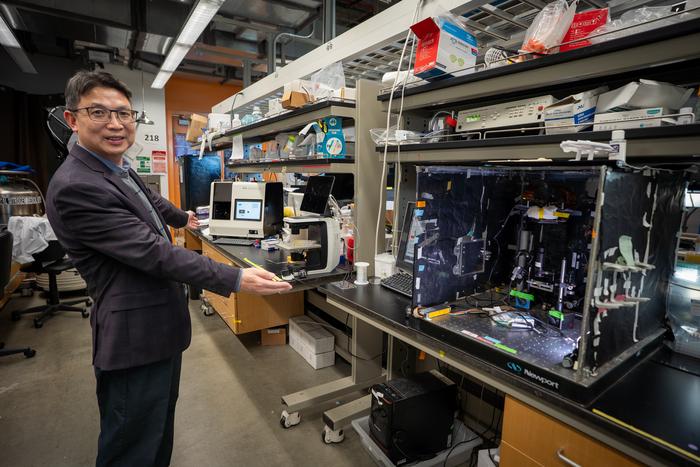
    Shaochen Chen, professor in the Aiiso Yufeng Li Family Department of Chemical and Nano Engineering at UC San Diego, stands between an early laboratory prototype of a bioprinter developed in his research lab (right) and the commercial bioprinter later built by his startup (left). This photo demonstrates the evolution of Chen’s 3D bioprinting technology from a proof-of-concept instrument to a commercial system that will be used as part of the new ARPA-H-funded project. [David Baillot/UC San Diego Jacobs School of Engineering]

    Liver failure claims thousands of lives each year as patients in the United States wait for a donor organ. Now, a research project at the University of California San Diego, funded by the Advanced Research Projects Agency for Health (ARPA-H), aims to change that by developing a fully functional, patient-specific, 3D bioprinted liver. The project, which falls under ARPA-H’s Personalized Regenerative Immunocompetent Nanotechnology Tissue (PRINT) program, provides up to $25,771,771 for a 60-month period.

    The multidisciplinary team has the goal of creating “made-to-order” livers grown from a patient’s own cells. The approach could offer a safe, scalable alternative to transplantation that eliminates the need for donor organs and lifelong immunosuppressant drugs.

    “When people think about 3D printing, they often imagine making gadgets like cellphone holders or toys, not human organs,” said Shaochen Chen, PhD, professor in the Aiiso Yufeng Li Family Department of Chemical and Nano Engineering at the UC San Diego Jacobs School of Engineering. “But the need for organ transplants is enormous, and 3D bioprinting is uniquely suited to address that challenge, as it allows us to personalize each organ to the patient. Our ultimate goal—the holy grail—is to help solve the organ shortage by printing real, living human organs that can restore health and quality of life.”

    Chen and his lab have developed a technology capable of rapidly fabricating high-resolution biological tissues with complex, multi-cellular structures in just seconds rather than hours. Recently, they integrated artificial intelligence into the design and manufacturing process to help engineer sophisticated vascular networks. This, Chen explained, is one of the key challenges in scaling up from small tissue samples to full-sized, living organs.

    The project could provide an on-demand source of functional liver tissue for transplantation, potentially saving the lives of more than 12,000 patients in the United States each year who are currently on the transplant waiting list. The approach could also significantly reduce healthcare costs and improve long-term outcomes for patients with chronic liver disease.

    “For decades, the transplant community has dreamed of a future where the fate of thousands of patients each year is no longer determined by the scarcity of donor organs,” said Gabriel Schnickel, MD, professor of surgery at UC San Diego School of Medicine, chief of the Division of Transplantation and Hepatobiliary Surgery at UC Dan Diego Health. “This work has the potential to fundamentally change countless lives by moving that vision from aspiration to reality.”

    The researchers are collaborating with Allele Biotechnology, an industry partner with expertise in personalized stem cell generation technologies and methods to efficiently produce different types of cells needed to bioprint livers for transplantation. The San Diego company also owns specialized facilities for cell manufacturing that meet regulatory standards. Together, the team plans to advance the process from laboratory-grade to clinical-grade production.

    Unlike conventional 3D printing methods, this technology uses digitally controlled light patterns to solidify cell-laden materials layer by layer, allowing researchers to precisely recreate the fine microarchitecture found in living tissues, including intricate networks of blood vessels. Chen and his team launched a startup company, Allegro 3D (now Cellink), to translate the technology beyond the laboratory. As they worked to commercialize the bioprinting platform, they progressively advanced the system from an experimental prototype to an industrial-scale printer capable of producing much larger, more complex structures.

    ARPAH Bioprint Diego Human launches Livers PatientSpecific Project San
    Share. Facebook Twitter Pinterest LinkedIn Tumblr WhatsApp Email
    Previous ArticleAging Research Takes the Spotlight at the 2026 Biotech Showcase
    Next Article ADHD Trigeminal Nerve Stimulation Treatment Ineffective
    admin
    • Website

    Related Posts

    A Video Report from AGBT

    February 27, 2026

    Novo Nordisk, Vivtex Ink Up to $2.1B Deal to Develop Oral Biologics for Metabolic Conditions

    February 27, 2026

    Increasing Rice Yields with Gene-Informed Selective Breeding

    February 27, 2026

    Mutant p53 Selective Reactivation Demonstrated in Advanced Solid Tumors

    February 27, 2026
    Leave A Reply Cancel Reply

    Our Picks

    9 Time-Saving Kitchen Gadgets for Fall at Amazon

    September 5, 2025

    Why Exercise Is So Important For Heart Health, From An MD

    September 5, 2025

    An Engineered Protein Helps Phagocytes Gobble Up Diseased Cells

    September 5, 2025

    How To Get Rid Of Hangnails + Causes From Experts

    September 5, 2025
    • Facebook
    • Twitter
    • Pinterest
    • Instagram
    • YouTube
    • Vimeo
    Don't Miss
    Microbiome

    Metastatic Prostate Cancer Treatment Guidance Improved with Sequential ctDNA Testing

    By adminMarch 3, 20260

    Credit: CreVis2 / iStock / Getty Images Plus A research collaboration led by investigators at…

    Can longevity be designed for everyone, not just the wealthy?

    March 2, 2026

    CAR Macrophages Show Preclinical Efficacy in Lung Cancer Brain Metastases

    March 2, 2026

    Food additives and your gut: what the science really says

    March 2, 2026

    Subscribe to Updates

    Get the latest creative news from SmartMag about art & design.

    About Us

    At FineGut, our mission is simple: to enhance your self-awareness when it comes to your gut health. We believe that a healthy gut is the foundation of overall well-being, and understanding the brain–gut connection can truly transform the way you live.

    Our Picks

    9 Time-Saving Kitchen Gadgets for Fall at Amazon

    September 5, 2025

    Why Exercise Is So Important For Heart Health, From An MD

    September 5, 2025

    An Engineered Protein Helps Phagocytes Gobble Up Diseased Cells

    September 5, 2025
    Gut Health

    Metastatic Prostate Cancer Treatment Guidance Improved with Sequential ctDNA Testing

    March 3, 2026

    Can longevity be designed for everyone, not just the wealthy?

    March 2, 2026

    CAR Macrophages Show Preclinical Efficacy in Lung Cancer Brain Metastases

    March 2, 2026
    X (Twitter) YouTube
    • Contact us
    • Privacy Policy
    • Disclaimer
    • Terms and Conditions
    © 2026 finegut.com. Designed by Pro.

    Type above and press Enter to search. Press Esc to cancel.