

For decades, scientists have warned that advancing paternal age can affect the health of future children. Older fathers face higher risks of passing on traits linked to obesity, stillbirth, and neurodevelopmental conditions. Until now, most explanations focused almost entirely on DNA damage. A new study suggests that another layer of biology, long overlooked, may be just as important.
Researchers at the University of Utah Health have identified what they describe as a molecular “aging clock” hidden within sperm RNA. Their findings, published in The EMBO Journal, show that sperm RNA changes progressively with age in both mice and humans, following a conserved biological pattern that may help explain why paternal age matters.
“It’s like finding a molecular clock that ticks with age in both mice and humans, suggesting a fundamental, conserved molecular signature of sperm aging,” said Qi Chen, MD, PhD, associate professor of urology and human genetics and one of the study’s senior authors. “Maybe this progressive length shift accumulates quietly, until it triggers the ‘cliff’ change at mid-life.”
Looking beyond DNA
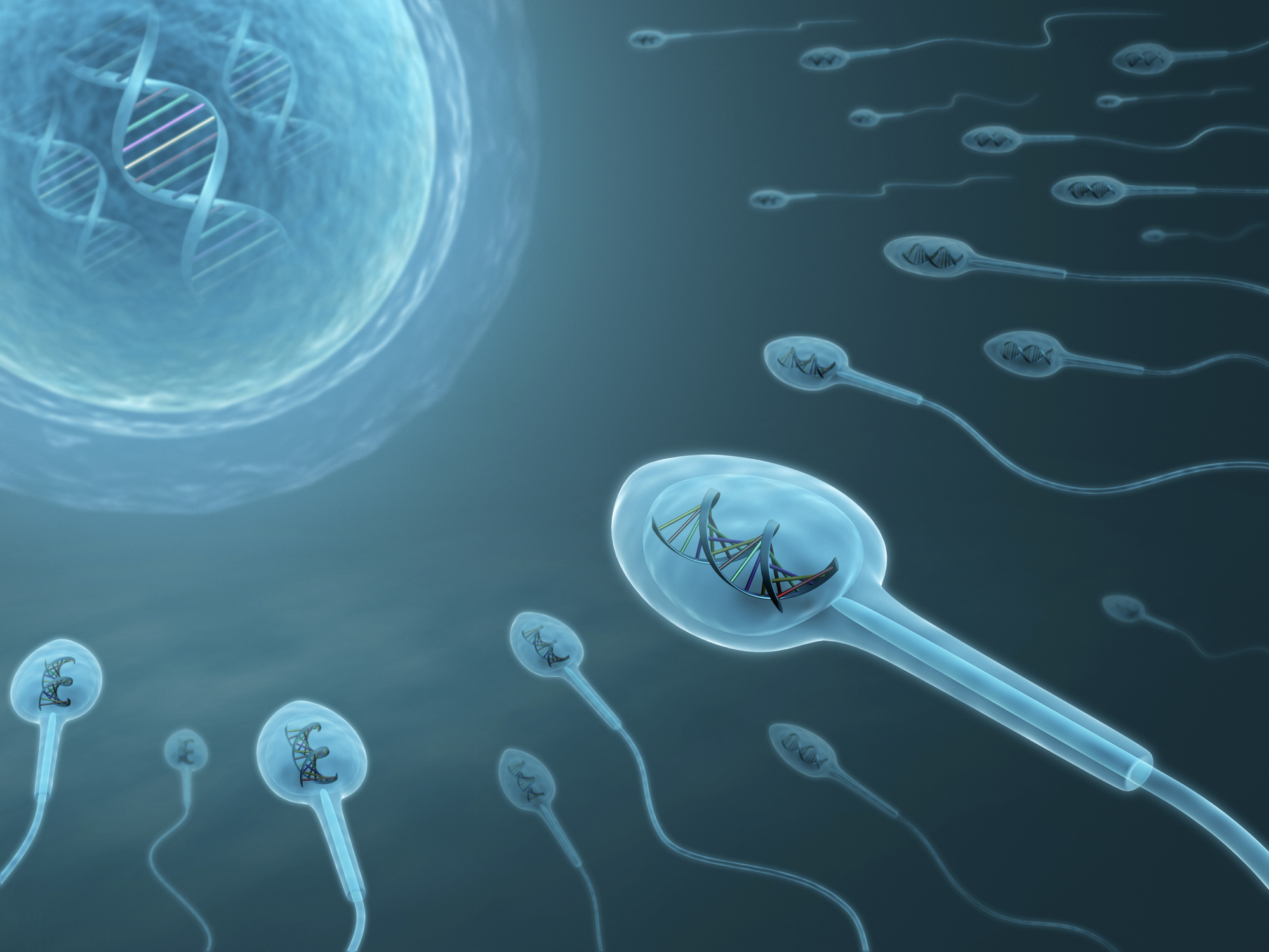
Sperm does more than deliver DNA. It also carries a diverse collection of RNA molecules that influence early development after fertilization. Previous work from Chen’s lab had already shown that sperm RNA can change in response to environmental factors such as diet, and that these changes can affect offspring health. However, many of the most biologically relevant RNAs are difficult to detect using standard sequencing techniques.
To overcome this, the team developed a new method called PANDORA-seq, allowing them to observe RNA molecules that were previously invisible. When they applied this approach to sperm samples, a striking pattern emerged.
Contrary to long-standing assumptions, RNA in sperm did not fragment with age. Instead, specific RNA fragments became longer over time.
“At first glance, this finding seems counterintuitive,” Chen said. “For decades, we have known that as sperm age, their DNA becomes more fragmented and broken. One might expect RNA to follow this pattern. Instead, we found the opposite: specific sperm RNAs actually become longer with age.”
An aging “cliff” in mid-life
In mice, the researchers observed a dramatic shift in sperm RNA composition between mid-life and later life, a sudden transition they describe as an “aging cliff.” When they examined human sperm, they found the same gradual lengthening trend, suggesting the process is conserved across species.
The signal was only detectable when researchers isolated RNA from the sperm head, the part that delivers its molecular cargo to the egg. RNA from the tail masked the pattern in earlier studies.
“This rsRNA length shift was a unique signal, specific to the sperm heads,” explained Tong Zhou, PhD, a co-senior author on the study. “Sequencing the sperm head sample is what made this discovery possible.”
Potential consequences for offspring health
To explore whether these RNA changes might matter biologically, the researchers introduced RNA from older sperm into mouse embryonic stem cells, which resemble early embryos. The cells showed changes in gene expression related to metabolism and neurodegeneration, suggesting a plausible pathway by which paternal age could influence health outcomes.
While the study does not claim that sperm RNA directly causes disease, it provides a molecular mechanism that connects aging sperm to altered developmental signaling.
“This could be an important step for translational andrology,” said James M. Hotaling, MD, chief innovation officer at University of Utah Health. “This discovery, made possible by PANDORA-seq, could lay the groundwork for future diagnostics to help guide informed reproductive decisions and improve fertility outcomes.”
Toward precision fertility medicine
The findings suggest that reproductive risk may one day be assessed using molecular markers rather than age alone. Instead of treating paternal age as a blunt risk factor, clinicians could potentially evaluate sperm quality through RNA signatures that reflect biological aging more precisely.
The research team is now working to identify the enzymes responsible for these RNA changes, an effort that could eventually lead to targeted interventions.
“If we can understand the enzymes driving this shift, they could become actionable targets for interventions to potentially improve sperm quality in aging males,” Chen said. “Stay tuned.”
By revealing an RNA-based aging clock hidden inside sperm, the study reframes how scientists think about paternal age, inheritance, and reproductive risk. It also signals a broader shift in precision medicine, one that looks beyond DNA alone to understand how molecular history shapes the health of future generations.
