

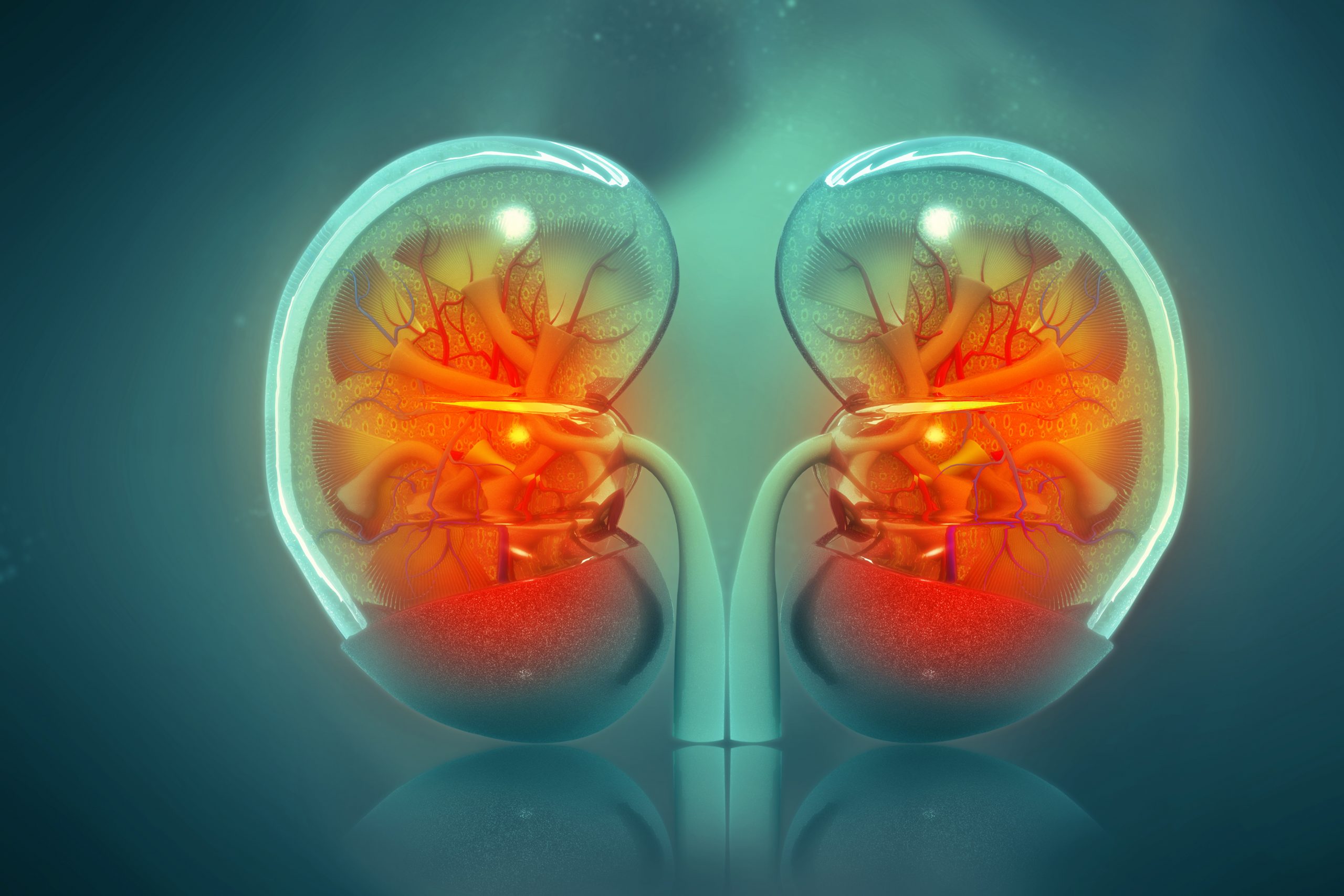
University of Virginia and Mount Sinai researchers report they have identified the mechanism that helps explain why cardiovascular disease accounts for more than half of deaths in patients with advanced chronic kidney disease (CKD). The study, published in the journal Circulation, shows that diseased kidneys release circulating extracellular vesicles (EVs) that contain cardiotoxic microRNAs that impair cardiac function, induce cardiomyocyte death, and contribute directly to heart failure and solve a long-standing riddle of why so many patients with CKD ultimately die from cardiovascular events.
“Kidney and heart disease can develop silently, so they are often discovered only after damage has already been done,” said researchers Uta Erdbrügger, MD, an internal medicine physician-scientist with the University of Virginia School of Medicine’s division of nephrology. “Our findings can help to identify patients at risk for heart failure earlier, enabling earlier treatment and improved outcomes.”
The association between CKD and cardiovascular disease has long been recognized, with cardiovascular risk and mortality rising as kidney function declines. The usual cardiovascular risk factors such as hypertension, diabetes, hyperlipidemia, and smoking are common in patients with CKD, yet their presence does not account for the disproportionate cardiovascular effects in kidney disease patients.
For their work, the UVA investigators focused on extracellular vesicles because of their established role in long-distance cell-to-cell communication and mediation of organ crosstalk. EVs are lipid-bound particles released by most cell types and carry molecular cargo that reflects the physiological or pathological state of their cells—and organs—of origin. Prior studies had linked EVs to vascular calcification and endothelial dysfunction in CKD, but “significant knowledge gaps remain about whether circulating CKD-EVs from kidneys directly affect cardiomyocyte and cardiac function,” the researchers wrote.
The current research sought to find out whether EVs could explain kidney-specific cardiotoxicity independent of comorbidities and other risk factors. Using a cross-sectional approach, the researchers analyzed plasma samples from patients with CKD and healthy controls, as well as samples from a mouse model of adenine diet–induced CKD with heart failure.
The data showed that CKD-derived EVs induced apoptosis in cardiomyocytes, impaired calcium handling, and reduced contractility in adult cardiomyocytes of the mouse models tested. Similar effects were observed with EVs isolated from the plasma and kidneys of CKD mice. When circulating EVs were pharmacologically depleted in CKD mice, cardiac function improved and heart failure was lessened even in the presence of kidney disease.
The cardiotoxic effects were traced to specific microRNAs enriched within CKD-EVs. Experiments showed these miRNAs disrupted contractile gene expression and impaired function in human induced pluripotent stem cell–derived cardiomyocytes. Levels of these miRNAs in the EVs synched with established markers of myocardial injury, including NT-proBNP and high-sensitivity troponin I.
The direct connection between the miRNAs and cardiac injury could provide a future avenue for developing a blood test for CKD patients to identify those are higher risk of heart failure. In addition, targeting the release circulation, or uptake of EVs could provide a new strategy to head off the cardiac effects to CKD.
“Potentially, our work will improve precision medicine for CKD and Heart failure patients, so that each patient gets the exact treatment they need,” Erdbrügger said.
While the research identified the role of miRNAs, the team noted that there are an array of other elements contained in EVs such as proteins, lipids, and other RNA that may also play a role in cardiotoxicity. The researchers also intend to better understand how the EVs may affect other, non-cardiomyocyte cells in the heart.
