
Close Menu
My Blog

    Subscribe to Updates

    Get the latest creative news from FooBar about art, design and business.

    What's Hot

    Mammograms Reviewed with AI Could Help Detect Heart Disease in Women

    March 9, 2026

    Under Fire from FDA, uniQure Stock Roller-Coasters

    March 8, 2026

    Partnership brings new AI model promising faster drug discovery

    March 8, 2026
    Facebook X (Twitter) Instagram
    X (Twitter) YouTube
    My BlogMy Blog
    Monday, March 9
    • Home
    • About Us
    • Healthy Living
    • DNA & Genetics
    • Podcast
    • Shop
    My Blog
    Home»DNA & Genetics»Cell Lines That Make Their Own Amino Acids
    DNA & Genetics

    Cell Lines That Make Their Own Amino Acids

    adminBy adminJanuary 21, 2026No Comments2 Mins Read
    Facebook Twitter Pinterest LinkedIn Tumblr WhatsApp VKontakte Email
    cell culture
    Share
    Facebook Twitter LinkedIn Pinterest Email

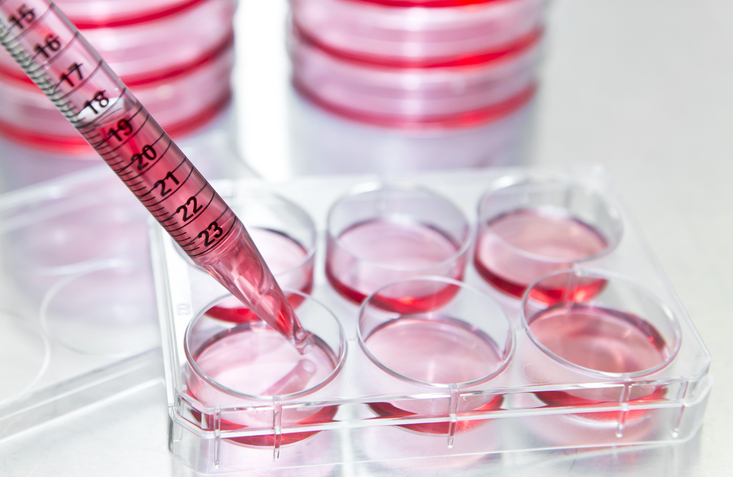
    Danish researchers have created new cell lines that need a less tailored feeding schedule and produce fewer waste products.

    The team, from the Technical University of Denmark (DTU), says they’ve designed Chinese Hamster Ovary (CHO) cell lines that produce two essential amino acids and produce no lactate and little ammonia, both key waste metabolites.

    “Process optimization right now involves fine-tuning the feeding schedule and composition so the cells remain happy, but if a cell can produce everything on its own, then that’s a leaner process,” explains Hooman Hefzi, PhD, an associate professor in DTU’s Department of Biotechnology and Biomedicine.

    According to Hefzi, CHO cells can only produce 7–8 essential amino acids for themselves and require the rest to be provided in the culture media.

    To get around this, the team engineered a cell line that also produces threonine and histidine, so they don’t need to be added and controlled as an extra feed during the biopharma production process.

    In addition, the team engineered a cell line that doesn’t produce lactate under a wide range of circumstances, including in both producing and nonproducing clones, and which only produces ammonia under certain circumstances.

    “As long as the CHO cells are growing, they don’t produce ammonia. They only produce ammonia when they reach a stationary phase (and we think we know why),” he explains.

    The team has also tested their lactate strategy in Human Embryonic Kidney (HEK) 293 cells. “We wanted to make sure this wasn’t an idiosyncrasy of CHO,” says Hefzi.

    The team now plans to have three Master’s students expand on this work. One student will work on adding the ability to create additional amino acids to the cell line that produces its own amino acids. Another student will also work on testing existing cell lines for antibody production and product quality, while a third student will focus on adding threonine and histidine production to the low-waste-metabolite cell line.

    “We’re starting to move our strategies [between cell lines],” says Hefzi. When asked if he was going to do additional testing, add new amino acids, or combine his existing cell lines together, he adds, “We’re going to do all at once, and feel confident we’ll make significant progress in the coming year.”

    The team’s lactate work was published in Nature Metabolism.

    Acids Amino Cell Lines
    Share. Facebook Twitter Pinterest LinkedIn Tumblr WhatsApp Email
    Previous ArticleA Comic-Style Poster Engages Conference Attendees
    Next Article Childhood ADHD Tied to Higher Risk of Physical Health Problems by Midlife
    admin
    • Website

    Related Posts

    Under Fire from FDA, uniQure Stock Roller-Coasters

    March 8, 2026

    At CNBC Cures, Becky Quick Leads Clarion Call for Rare Disease Research

    March 7, 2026

    Cryo-EM Drug Discovery Center in Bay Area Opened by Thermo Fisher Scientific

    March 7, 2026

    Upping the Profiling of Chemical Exposures in the Omics Sciences

    March 7, 2026
    Leave A Reply Cancel Reply

    Our Picks

    9 Time-Saving Kitchen Gadgets for Fall at Amazon

    September 5, 2025

    Why Exercise Is So Important For Heart Health, From An MD

    September 5, 2025

    An Engineered Protein Helps Phagocytes Gobble Up Diseased Cells

    September 5, 2025

    How To Get Rid Of Hangnails + Causes From Experts

    September 5, 2025
    • Facebook
    • Twitter
    • Pinterest
    • Instagram
    • YouTube
    • Vimeo
    Don't Miss
    Microbiome

    Mammograms Reviewed with AI Could Help Detect Heart Disease in Women

    By adminMarch 9, 20260

    Credit: gorodenkoff/Getty Images Using artificial intelligence (AI) to analyze X-ray mammogram scans from standard breast…

    Under Fire from FDA, uniQure Stock Roller-Coasters

    March 8, 2026

    Partnership brings new AI model promising faster drug discovery

    March 8, 2026

    Toray out-licenses novel Parkinson’s therapy

    March 8, 2026

    Subscribe to Updates

    Get the latest creative news from SmartMag about art & design.

    About Us

    At FineGut, our mission is simple: to enhance your self-awareness when it comes to your gut health. We believe that a healthy gut is the foundation of overall well-being, and understanding the brain–gut connection can truly transform the way you live.

    Our Picks

    9 Time-Saving Kitchen Gadgets for Fall at Amazon

    September 5, 2025

    Why Exercise Is So Important For Heart Health, From An MD

    September 5, 2025

    An Engineered Protein Helps Phagocytes Gobble Up Diseased Cells

    September 5, 2025
    Gut Health

    Mammograms Reviewed with AI Could Help Detect Heart Disease in Women

    March 9, 2026

    Under Fire from FDA, uniQure Stock Roller-Coasters

    March 8, 2026

    Partnership brings new AI model promising faster drug discovery

    March 8, 2026
    X (Twitter) YouTube
    • Contact us
    • Privacy Policy
    • Disclaimer
    • Terms and Conditions
    © 2026 finegut.com. Designed by Pro.

    Type above and press Enter to search. Press Esc to cancel.