

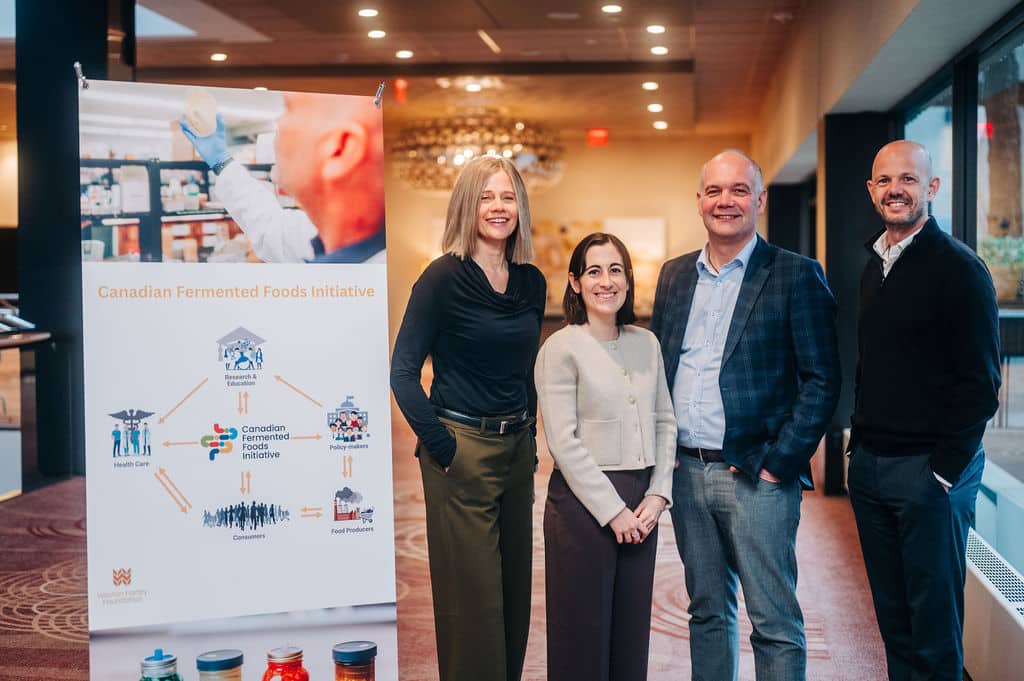
On November 17–18th 2025, Toronto hosted the inaugural workshop of the Canadian Fermented Foods Initiative (CFFI), a new effort designed to support and advance research, education and innovation on fermented foods in Canada. Co-led by Dr. Jeremy Burton (St. Joseph’s Health Care London – Lawson Research Institute / Western University), Dr. Raylene Reimer (University of Calgary), and Dr. Ben Willing (University of Alberta), with Dr. Carla Liria serving as coordinator, CFFI aims to foster interdisciplinary collaboration and build a foundation for future advancements in this evolving field.
The workshop brought together approximately 40 invited participants, carefully selected for their expertise across academia, healthcare, industry, policy and regulation, lived experience (patients) and culinary arts. The group included mainly Canadian stakeholders but also international experts from the United States, Europe, and Latin America. This intentionally small gathering created an environment conducive to thoughtful discussion, open dialogue, and knowledge sharing. Among participants, several ISAPP former and present board members were invited to join this initiative: Bob Hutkins, Gregor Reid, Mary Ellen Sanders, Hannah Holscher and Gabriel Vinderola. In addition, several European initiatives supporting fermented foods were represented, including PIMENTO, HealthFerm, and Food4Mood, highlighting ongoing research efforts across Europe.
Exploring Canada’s fermentation heritage
The meeting opened with reflections on the deep cultural roots of fermentation in Canada, highlighting the long-standing traditions of Indigenous communities, who have used fermentation to preserve foods (such as fish, berries, and roots), practices shaped by geography, seasonality, and community knowledge. It also explored the fermentation customs brought by settlers from Europe, adding to the country’s diverse history of dairy, vegetable, and grain fermentations.
Contributions from microbiology-focused presenters emphasized the extraordinary diversity of fermented foods worldwide, moving far beyond familiar products like yogurt or sauerkraut. These talks highlighted the complex microbial ecosystems that drive fermentation, the variability of microbial composition across products, and the resulting challenges for standardization, research, and regulatory assessment. It also underscored substantial gaps in clinical evidence and encouraged broader research that embraces both microbial characterization and real-world product diversity.
The program also featured a session led by a local Canadian chef and a Swiss cheesemaker. They reflected on the cultural importance of fermentation knowledge within culinary and artisanal traditions, noting that many practices are at risk of being lost. Their discussion highlighted the essential role of fermentation practitioners as educators, and the need to pass on fermentation skills to younger generations to ensure these traditions continue to evolve rather than disappear.
Understanding the regulatory landscape
One of the central components of the workshop was a panel discussion with Canadian regulatory representatives. The panel offered participants the opportunity to learn how fermented foods intersect with existing regulatory categories, including conventional foods, natural health products, and novel foods. Clarifying regulatory pathways and understanding the considerations that influence product classification sparked significant dialogue among participants. Rather than seeking consensus, the session aimed to map the landscape by identifying areas where additional discussion, research, or engagement may be beneficial as interest in fermented foods continues to grow.
Policy ambition: Inclusion of fermented foods in dietary guidelines
Given that the Canada Food Guide (like many dietary guidelines worldwide) does not currently mention fermented foods, despite a growing scientific evidence base, the workshop explored how these foods might eventually fit within national dietary guidance. Participants learned from Health Canada’s representative from the Bureau of Healthy Eating Policy and Promotion about the high evidentiary standards required for inclusion, notably the need for systematic reviews conducted by credible, authoritative bodies. The discussion highlighted the cautious approach, driven by the need to avoid premature recommendations that could later require reversal and undermine public trust. Additional challenges included inconsistent and heterogeneous evidence across different fermented food products, as well as the need to ensure that any guidance is appropriate and safe for vulnerable populations. Although fermented foods are not currently emphasized, Health Canada expressed openness to revisiting their inclusion once sufficiently robust, standardized, and methodologically aligned evidence becomes available. Overall, the discussion underscored that the limited inclusion of fermented foods reflects a lack of admissible evidence under current standards rather than skepticism about their potential value. This clarification provides the scientific community with a clear starting point and direction for how to move forward.
Scientific questions and research opportunities
Across presentations and breakout groups, participants explored current scientific approaches to studying fermented foods and the methodological challenges associated with them. Fermented foods are inherently diverse, shaped by differences in ingredients, microbial communities, production methods, and cultural practices. This diversity raises important questions about how best to characterize these foods, evaluate their components, and design studies that reflect real-world consumption. The discussion also addressed ways to strengthen the clinical evidence base to inform future dietary guidance, highlighting the need for well-defined interventions, appropriate comparators, and careful selection of study populations. Outcomes should balance clinical relevance, feasibility, and participant-centered measures, including aspects of physical and mental health. Recognizing the limitations of traditional randomized controlled trials for studying complex dietary exposures, participants emphasized the utility of complementary approaches, such as pragmatic trials, observational studies, and citizen science initiatives, which can capture real-world dietary patterns, support inclusive participation, and generate population-level evidence to complement mechanistic research. These insights, along with the gaps, priorities, and recommendations identified during the workshop, were compiled into a report that will be published in the future by the initiative, providing a comprehensive resource for researchers, practitioners, and policymakers.

Fermented foods and public awareness
Another theme woven throughout the workshop was the growing public interest in fermented foods, particularly in the context of gut health. Participants discussed the prominence of fermented foods in media and consumer trends, and the challenges that arise when scientific terminology is used inconsistently or conflated. Misconceptions, such as equating all fermented foods with probiotics or assuming uniform health benefits, are reinforced by limited access to reliable resources and gaps in training among dietitians and other healthcare providers. While the workshop did not aim to define specific communication strategies, attendees emphasized the value of clear, contextualized information to help the public navigate an increasingly diverse fermented food landscape. These discussions align with the initiative’s goals of publishing accessible, evidence-based resources to educate the public, support practitioners, and promote informed dietary choices.
An emphasis on dialogue and collaboration
A defining characteristic of the workshop was the emphasis on cross-sector collaboration. Stakeholders from academia, government, industry, and healthcare brought complementary perspectives and questions, providing a multidimensional view of the field. Breakout sessions allowed participants to explore emerging themes, share experiences, and identify areas where deeper engagement could be valuable, including research priorities, methodological challenges, regulatory considerations, public health integration, and science communication strategies. Conversations highlighted the importance of sustained engagement across sectors to ensure that emerging evidence is translated into accessible educational resources, regulatory frameworks, and public health recommendations.
Insights from these discussions on collaborative opportunities will be included in an upcoming white paper by the initiative, outlining how Canada can follow the lead of European initiatives and establish partnerships, as well as explore potential approaches for new collaborations with diverse national stakeholders to address identified priorities.
Laying the groundwork for the future
The Toronto workshop marked an important milestone for fermented foods and microbiome research. While rooted in Canada, the gathering set the tone for a collaborative, inclusive, and forward-looking approach that can inform and inspire fermented food research and policy worldwide. CFFI is poised to support future activities that strengthen Canada’s capacity to study, innovate, and educate about fermented foods, offering a model that other countries can adapt to their own contexts. As global interest in fermentation continues to rise, CFFI’s inaugural workshop signals Canada’s commitment to shaping the international conversation with scientific rigor, cultural awareness, and broad stakeholder engagement.
To learn more about upcoming activities, resources, and opportunities to get involved, visit fermentedfoods.ca.
