

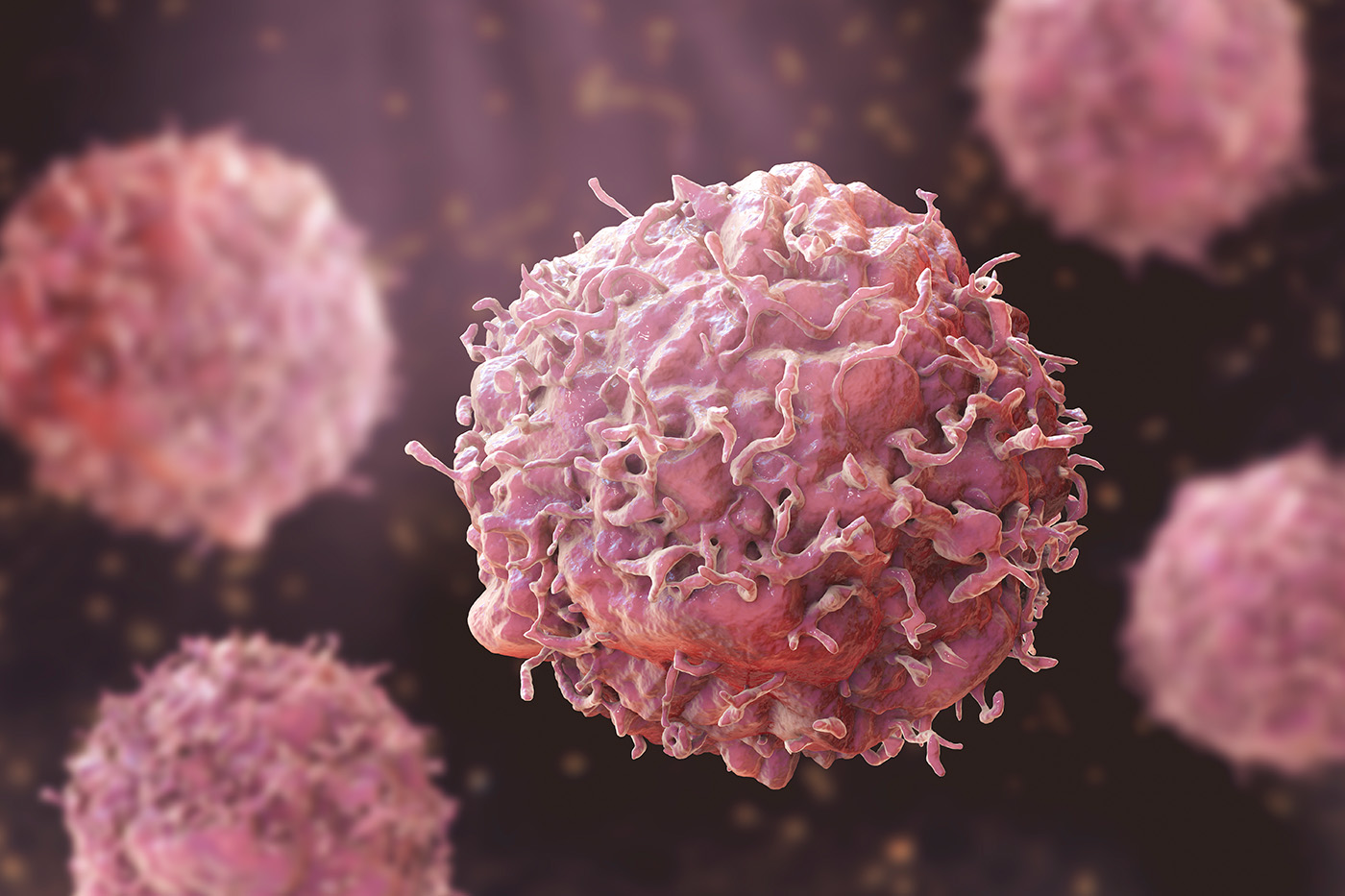
Researchers at Moffitt Cancer Center say they have mapped how cancer cells move through different chromosomal states over time and show that these changes don’t occur at random. The research, published in Nature Communications, details the use of a new computational tool called ALFA-K to discover that gains and losses of whole chromosomes shape tumor growth, and that cancer evolution follows measurable rules of adaptation that can be used to predict how cancers evolve and potentially inform ways to guide treatments by predicting chromosomal changes before treatment resistance occurs.
“Cancer evolves. As tumors grow, their cells constantly make mistakes when copying and dividing their DNA. Many of those mistakes involve gaining or losing whole chromosomes. This creates a mix of cancer cells with different chromosome combinations inside the same tumor,” said senior author Noemi Andor, PhD, an associate member of Moffitt’s Integrated Mathematical Oncology Program. “The problem was that researchers had no reliable way to determine which of those combinations help cancer cells survive.”
Andor said the new approach using ALFA-K reconstructs how cancer cells move through chromosome states over time and identifies which configurations are favored by evolution, showing that “without that understanding, cancer progression and treatment resistance can appear unpredictable. Our work shows they follow measurable rules.”
For this study, the Moffitt team focused on aneuploidy, the gain or loss of whole chromosomes, which is present in most solid tumors and alters hundreds or thousands of genes at once. The researcher noted that, “aneuploidy provides a substrate for tumor evolution,” by reshaping cellular behavior through a series of changes in gene expression and protein production. While aneuploidy is often harmful to cells, it can also offer selective advantages under specific genetic or environmental conditions, which contribute to tumor heterogeneity and survival.
Current cancer evolution thinking has mostly assumed that chromosome gains or losses in cancer cells had fixed effects, or that fitness could be inferred from the number of oncogenes or tumor suppressor genes carried on a chromosome. “All of these previous models of aneuploidy fail to account for how environmental influences and genomic background impact the relationship between karyotype and fitness,” the researchers wrote. Because the number of possible chromosomal configurations is so large, it has been a daunting task to measure how a chromosomal configuration shapes cancer growth.
ALFA-K, short for Adaptive Local Fitness landscapes for Aneuploid Karyotypes, uses longitudinal, single-cell copy number data to reconstruct local regions of what are known as karyotype fitness landscapes.
“ALFA-K tracks thousands of individual cells over time, accounting for ongoing chromosome instability and reconstructs local fitness landscapes,” Andor said. “These landscapes describe how advantageous or harmful a chromosome change is given a cell’s current chromosome configuration.” In this study, ALFA-K estimated the fitness of more than 270,000 distinct chromosome configurations, enabling predictions about karyotypes that had not yet been observed experimentally.
The data developed by ALFA-K provides a rethinking of several prior assumptions. One is the role of whole-genome doubling, a process in which a cell duplicates all of its chromosomes. Earlier work had pointed to genome doubling potentially being protective, but ALFA-K allowed the team to quantify its effects. Rather than simply increasing chromosome error rates, genome doubling appears to protect cells against the harmful consequences of those errors.
In addition, the research also showed that the fitness effects of chromosome changes depend strongly on parental karyotype and environment. Cisplatin treatment and in vivo conditions can drastically alter the fitness landscapes, but the same chromosome change could be beneficial in one environment and harmful in another, an important finding to help unravel what is currently the unpredictable path of cancer growth.
“Our mathematical model introduces the flexibility needed to begin reconstructing adaptive fitness landscapes, allowing us to extrapolate the fitness of thousands of karyotypes based on the dynamics of just a few subclones,” the researchers wrote.
The team is now looking to use ALFA-K across longitudinal studies including hematological malignancies to include patient-specific chromosomal instability data. The hope is that continued research will provide clinical insights that can help oncologists anticipate how a patient’s cancer will change with time and choose targeted treatments before resistance develops that can address specific chromosomal changes.
