

A functional genomics analysis using CRISPR-based screening, led by the Wellcome Sanger Institute in the U.K., has identified the loss of expression in two genes—CHD1 and MAP3K7—as potential biomarkers for response to immune checkpoint blockade (ICB) in people with cancer.
The findings could be used to predict which patients are most likely to benefit from immunotherapy and open new ways to improve personalized treatment, and outcomes, for these individuals.
Although ICB is an effective treatment for many cancer types, including melanoma and tumors with faulty DNA repair systems known as microsatellite instability, response rates in other solid tumors are below 35%.
“Immunotherapy can be life-changing for some people with cancer, but for many patients it simply doesn’t work, and it’s been a mystery why that is the case,” said Mathew Garnett, PhD, from the Wellcome Sanger Institute, one of the study’s co-senior authors. “Understanding the mechanism behind why some tumors respond and others resist treatment is one of the biggest conundrums that our research is one step closer to helping to solve.”
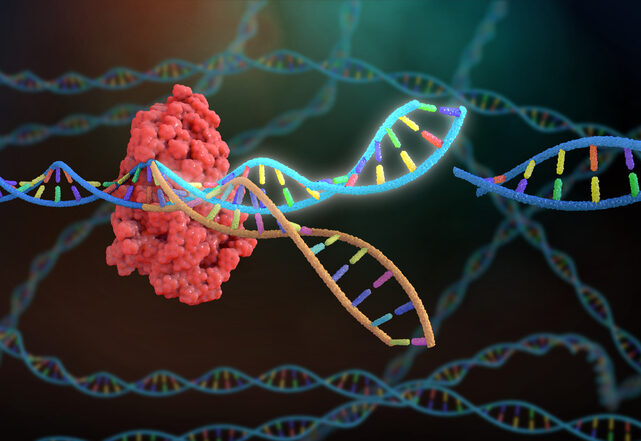
The study was a collaborative effort among researchers from Wellcome Sanger Institute, Open Targets, Netherlands Cancer Institute, and Cancer Research UK. Together they used genome-wide CRISPR-Cas9 screening to systematically switch off genes in patient colorectal cancer tumor samples that were co-cultured with immune cells from the same patient to see how the cancer cells responded to immune signals.
Among the 155 CRISPR screening samples the team carried out, two genes, CHD1 and MAP3K7, were highlighted as potential biomarkers. When these genes were switched off the cancer cells were more sensitive to attack by tumor-reactive T cells. The effect was apparent for each gene individually but was greater when both were switched off at the same time.
Alex Watterson, co-first author formerly at the Wellcome Sanger Institute, and now based at the Babraham Institute, said: “We found that when cancer cells lose two genes, CHD1 and MAP3K7, they become much easier for the immune system to attack, as without these active genes, cancer cells respond very differently to immune signals. This loss exposes a weakness that immune cells can take advantage of.”
CHD1, which encodes chromodomain helicase DNA binding protein 1, and MAP3K7, encoding transforming growth factor β-activated kinase 1 (TAK1), have both previously been proposed as tumor suppressor genes due to their recurrent mutation and association with aggressive disease and therapy resistance in up to 17% of prostate cancers. Loss at lower frequencies has also been described in other cancer types including thyroid cancer, melanoma, and meningioma.
To assess the potential relevance of their findings, the investigators treated melanoma-bearing mice with ICB (a combination of anti-PD-1 and anti-CTLA-4 monoclonal antibodies). They found that tumors with loss of Chd1 and Map3k7 grew more slowly and regressed more frequently than those with normal gene expression. The improved response was associated with a heightened anti-tumor adaptive immune response following ICB, the researchers report in Cell Reports Medicine.
The team also compared tumor CHD1 and MAP3K7 mRNA expression levels in samples from patients with prostate cancer, lung cancer, or melanoma. This analysis revealed that CHD1 and MAP3K7 mRNA expression in tumors was significantly correlated with clinical responses to ICB in patients with prostate cancer.
Furthermore, individuals with lung cancer who derived clinical benefit from ICB had significantly lower tumor MAP3K7 expression than non-responders, while ICB responders with melanoma had lower tumor CHD1 expression than non-responders.
Watterson et al. say that CHD1 and MAP3K7 outperformed known biomarkers of response such as CD274 and CD8A in lung cancer and CCND194 in lung cancer and melanoma.
“Taken together, these data suggest that reduced tumor CHD1 and MAP3K7 expression could serve as biomarkers of ICB response,” they comment.
Matthew Coelho, PhD, senior author at the Wellcome Sanger Institute and Open Targets, said: “We saw that patients whose tumors have low expression of these genes are more likely to benefit from immunotherapy. In the future, these new biomarkers could guide doctors by predicting who will respond to treatment and enable more personalized cancer care.”
The researchers note that although selective inhibitors for CHD1 have only recently been developed, several TAK1 inhibitors already exist, including takinib and 5(Z)-7-oxozeaenol, which were developed to treat inflammatory diseases, including rheumatoid arthritis.
“Notably, the TAK1 inhibitor HS-276 has recently been shown to selectively kill glioma stem cells with elevated [interferon] signaling,” write the authors, but they caution that “potential off-target effects of these inhibitors and the profound impact of MAP3K7 deletion on T and B cell signaling warrant caution when considering systemic administration with ICB.”
