

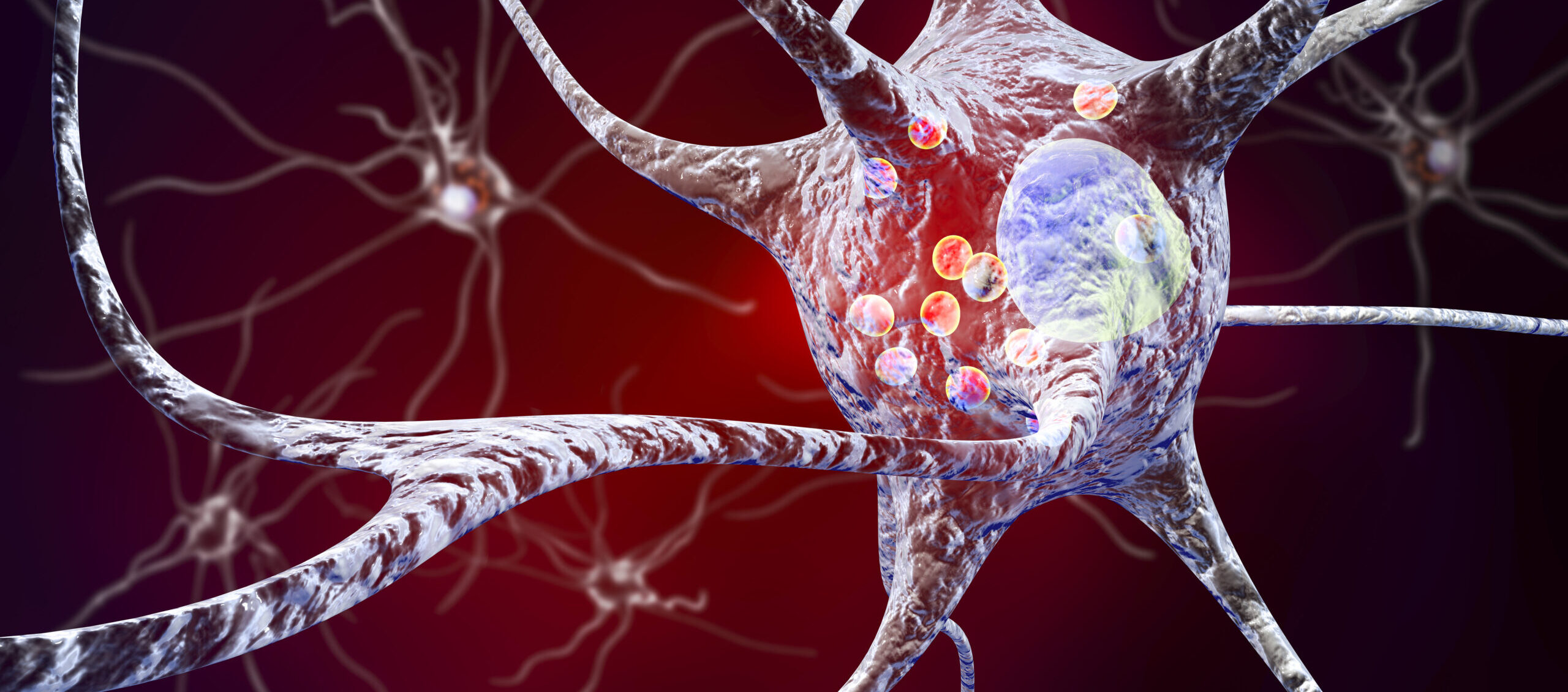
A new research collaboration aims to study the connection between the alpha-synuclein (aSyn) protein and Parkinson’s disease (PD). Armed with $1.6 million in grant funding from the Michael J. Fox Foundation, the initiative will combine research from the lab of Hilal Lashuel, PhD, a professor of neuroscience at Weill Cornell Medicine-Qatar (WCM-Q), with Nautilus’ single-molecule proteomics platform.
Understanding the many forms and modifications adopted by the aSyn protein is one of the priorities of the MJFF. That’s because studies suggest that the protein may be an important driver of Parkinson’s. The data also indicates that post-translational modifications (PTMs) of the protein such as truncation and phosphorylation might drive pathogenesis and serve as diagnostic biomarkers.
Lashuel’s lab at WCM-Q has studied PTMs of aSyn for decades, and the group has developed proteoform standards as well as antibodies that target specific PTMs. Under the terms of the research collaboration, these tools will be combined with Nautilus’ single-molecule platform and iterative mapping method to develop an assay that measures a large panel of aSyn proteoforms.
“Deciphering alpha-synuclein proteoforms at the single-molecule level holds tremendous promise for advancing Parkinson’s disease diagnostics and therapies,” said Lashuel, adding that the partners plan to develop “innovative assays and technologies that will enable precise mapping of the post-translational modification signatures of alpha-synuclein in health and neurodegenerative disease.”
For Parag Mallick, PhD, co-founder and chief scientist at Nautilus, the collaboration helps to highlight the various benefits of his company’s proteomics technology, which has been validated for aSyn and tau proteins. Some of the data supporting that validation was published in a bioRxiv preprint in July 2025.
That article describes how their method, dubbed Iterative Mapping of Proteoforms, enables “the massively-parallel interrogation of millions to billions of single-protein molecules through iterative probing with fluorescently labeled antibodies.” It includes examples from different neuronal models including organoids and mouse brains as well as human brain samples.
Earlier this month, Nautilus launched an early access program (EAP) for its iterative mapping approach with a tau proteoforms assay as its first offering. According to the company, researchers can use the tool to map combinatorial patterns of PTMs on individual proteins and study how these evolve as neurodegenerative disorders like Alzheimer’s develop. Nautilus claims that its assay provides a high level of resolution that lets researchers uncover biological insights that are challenging for traditional affinity-based method and mass spectrometry.
As part of the EAP, the company is offering exclusive development partnerships focused on creating custom assays for specific research applications. Participants also get guidance from Nautilus on data interpretation, quantification, and analysis.
