

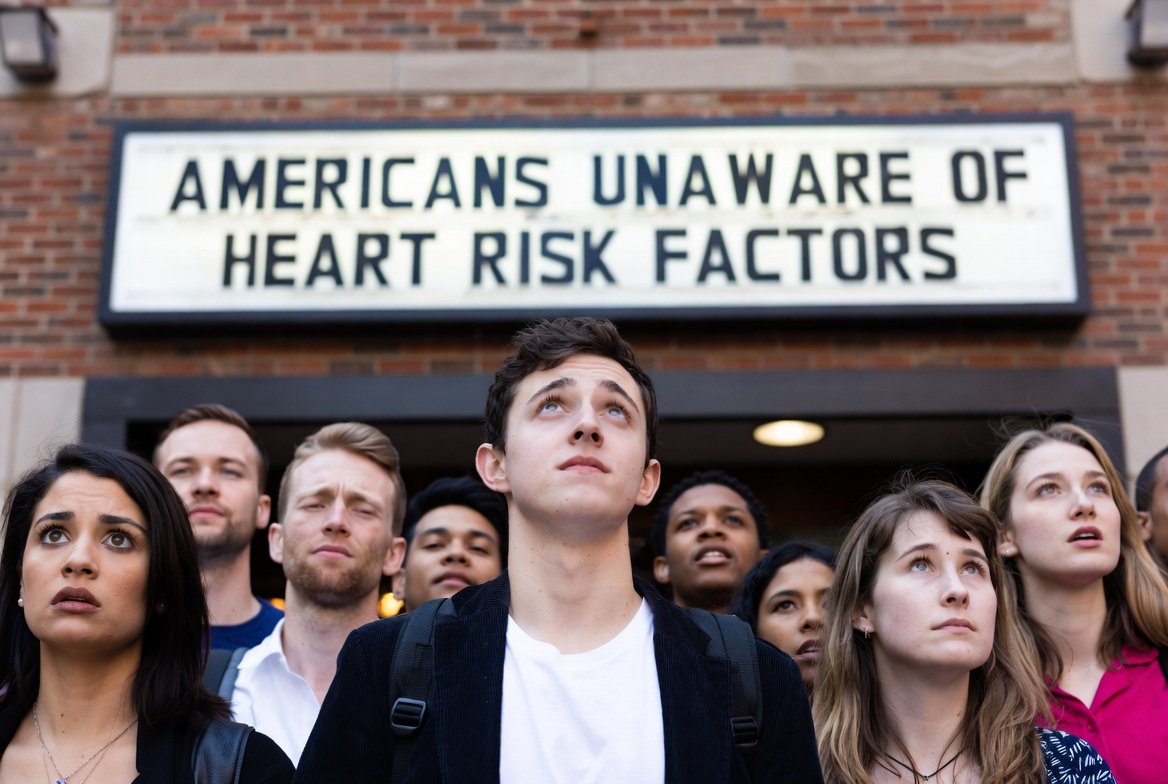
Hey there. Did you know that heart disease remains the number one killer in the United States? It is a scary thought.
Yet, many people do not realize they are actually in danger. A massive number of Americans unaware of heart risk factors are walking around every single day.
They feel fine, so they assume their hearts are healthy. Unfortunately, this silence is often what makes the condition so deadly. We are currently facing a major US heart disease awareness crisis. Most of us focus on things like accidents or rare illnesses.
However, the real threat is often hiding in our own lifestyle choices and genetics. In this guide, I want to break down why this gap exists. We will look at the facts and how to protect yourself.
Heart Disease Awareness in America — The Alarming Reality
We often think we understand our health. Most Americans believe they know what causes a heart attack. They might point to fried foods or a lack of exercise. While these are true, the reality is much more complex.
Current data shows a massive gap in public knowledge. Many people think heart disease only affects the elderly.
This is a dangerous myth. In fact, younger adults are seeing rising rates of hypertension and obesity.
Furthermore, many people assume that “feeling good” means “being healthy.” You cannot feel high cholesterol.
You often cannot feel high blood pressure until it is too late. Consequently, people skip screenings. They ignore the silent signals their bodies send.
Americans also misunderstand the role of gender. For a long time, many viewed heart issues as a “man’s problem.”
This misunderstanding costs lives every year. Heart disease is the leading cause of death for women too.
Awareness has not kept up with our changing risks.
Our modern world is full of stress and processed foods. These factors change how our hearts function. Yet, our general education about heart health remains stuck in the past.
We need a shift in how we view prevention. Knowing the risks is the first step toward living longer.
Without this knowledge, we are essentially flying blind. This lack of heart health awareness US citizens face is a silent emergency.
Heart Disease by the Numbers — Statistics Americans Can’t Ignore
The numbers are truly staggering. According to the CDC, one person dies every 33 seconds from cardiovascular disease in the US. That is nearly 700,000 people every single year.
Heart disease leading cause of death USA statistics show no signs of slowing down.
About 1 in every 5 deaths is linked to heart issues. Even more concerning is how many people do not see it coming.
A recent heart disease awareness survey USA report found something shocking.
Nearly 40% of adults did not know their target blood pressure levels. Furthermore, many were unsure about their cholesterol numbers.
Let’s look at the demographic breakdown. Statistics show that risk varies by group.
- Non-Hispanic Black Adults: About 59% of Black men and 57% of Black women have some form of cardiovascular disease.
- Non-Hispanic White Adults: Roughly 52% of men and 43% of women face these risks.
- Hispanic Adults: Approximately 51% of men and 42% of women are affected.
These heart disease statistics United States researchers provide show clear disparities.
Many of these groups lack access to regular checkups. Therefore, they remain Americans unaware of heart risk factors.
Also, consider the economic impact. Heart disease costs the US healthcare system about $240 billion annually.
This includes the cost of medicines and lost productivity.
Experts highlight that 80% of premature heart disease is preventable.
This is the most important cardiovascular disease data America needs to hear. We have the tools to stop this, but we lack the awareness to act.
| Category | Statistic | Source |
| Annual Deaths | ~700,000 | CDC |
| Frequency | 1 death every 33 seconds | AHA |
| Preventability | 80% of cases | WHO |
| Unaware Adults | ~40% don’t know BP goals | National Survey |
The Hidden & Overlooked Heart Risk Factors Americans Miss
Most people know about smoking and weight. However, several hidden heart disease risk factors go unnoticed. These “silent” dangers can damage your arteries for years without a single symptom.
First of all, let’s talk about chronic inflammation. You might not feel it, but it irritates your blood vessels. This can lead to plaque buildup. Many people never get their C-reactive protein (CRP) levels checked.
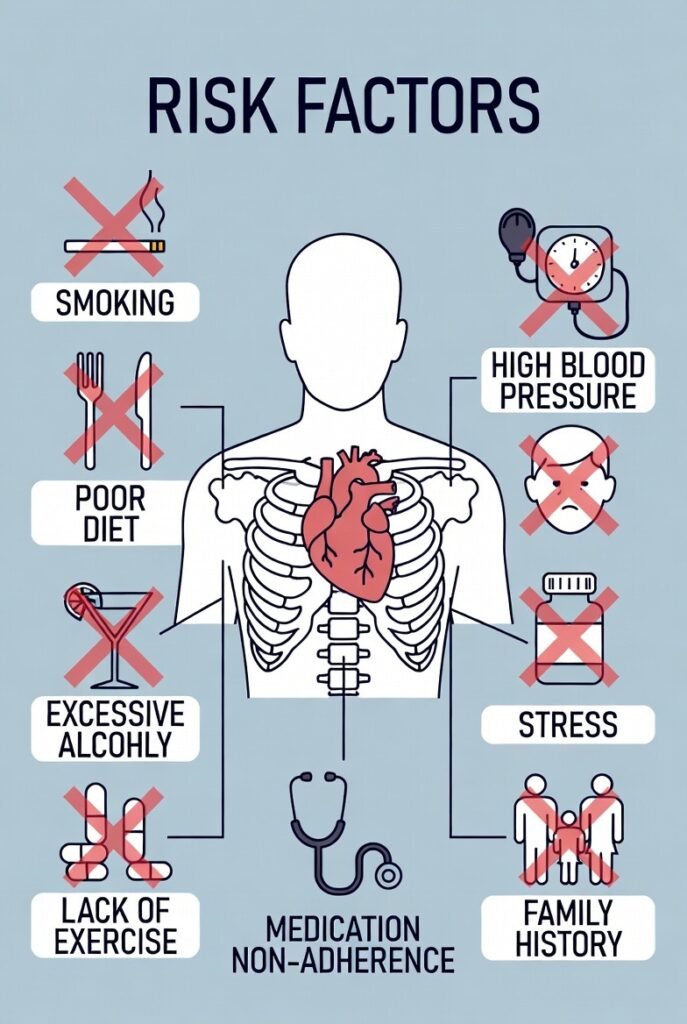
Another overlooked factor is sleep apnea. If you snore loudly or feel tired all day, your heart might be struggling. Poor sleep puts immense strain on your cardiovascular system. It raises your blood pressure during the night.
Genetics also play a major role. You can eat perfectly and still have high risk. Some people have a genetic condition called Familial Hypercholesterolemia. This causes high cholesterol from birth.
Furthermore, stress is a silent killer. High levels of cortisol can damage the heart lining.
Many Americans view stress as a normal part of life. They do not realize it is a physical threat to their longevity.
Common heart risk factors Americans miss also include “lonely heart syndrome.”
Social isolation is linked to higher heart attack rates. Your mental health and social life are deeply tied to your physical heart.
Finally, consider environmental factors. Air pollution and noise pollution are rising risks. These elements can trigger oxidative stress in the body. Most people do not think about the air they breathe as a heart risk.
Lifestyle Choices Fueling America’s Heart Disease Problem
Our daily habits define our heart health. Unfortunately, the modern American lifestyle is a perfect storm for heart trouble. We move less and eat more processed items than ever before.
Diet is a primary driver of this crisis. Many of us consume too much added sugar and sodium.
These ingredients lead to obesity and diabetes. In fact, the diabetes and heart disease connection is very strong.
High blood sugar damages the nerves and blood vessels. This makes heart disease much more likely.
Yet, many people do not realize they are pre-diabetic. They continue to consume sugary drinks and refined grains.
Sedentary behavior is another major issue. Many jobs require sitting for eight hours a day. This lack of movement slows down your metabolism. It also makes it harder for your heart to pump blood efficiently.
Smoking and heart disease awareness has improved, but vaping is a new concern. Many young people think vaping is harmless. However, nicotine still constricts blood vessels. It still raises your heart rate.
Alcohol consumption is also a factor. Excessive drinking can lead to cardiomyopathy. This weakens the heart muscle over time. Many Americans underestimate how much they actually drink in a week.
Lastly, we must look at stress and heart disease risk factors. We live in a “hustle culture.” This leads to chronic exhaustion. Without proper rest, the heart cannot repair itself.
Major Cardiovascular Risk Factors Explained Simply
Medical terms can be confusing. I want to break these down into plain English. Understanding these terms helps you take control of your health.
High blood pressure is often called the “silent killer.” Think of your blood vessels like garden hoses.
If the pressure is too high, the hose starts to wear out. Eventually, it might leak or burst.
Cholesterol awareness in America is also vital. There are two main types: LDL and HDL.
Think of LDL as “litter” that clogs your arteries. Think of HDL as a “helper” that cleans the litter away.
You want low litter and high help. If the litter piles up, it forms plaque. This makes the path for blood very narrow. This is how most heart attacks actually begin.
Triglycerides are another type of fat in your blood. Your body creates them from extra calories. High levels can harden your arteries. Most people ignore this number on their lab reports.
Fortunately, these are preventable heart disease risk factors. You can change your numbers with the right steps.
Small changes in your diet can make a huge difference. Adding a 20-minute walk can lower your blood pressure.
Don’t let the big words scare you. Your doctor is there to help you interpret these numbers. Knowing your “stats” is just like knowing the score in a game. It tells you if you are winning or losing.
Why Americans Are Unaware of Heart Risk Factors
You might wonder why so many people are in the dark. There are several reasons for low heart disease awareness in the US. It is not just about personal responsibility.
First, our education system has gaps. Most schools do not teach health literacy in a deep way.
Students learn about the food pyramid but not how to read a blood panel.
Second, the media often focuses on “exciting” health news. They might report on a rare virus for weeks. Meanwhile, heart disease kills more people every single day. This creates a false sense of what is actually dangerous.
The healthcare system also has limitations. Many doctors only have 15 minutes with a patient.
This is not enough time to explain complex risks. Therefore, the heart disease education gap in America continues to grow.
Also, many people avoid the doctor due to cost. Without insurance, a simple blood test feels expensive.
Consequently, they wait until they have chest pain. By then, the damage is already done.
Lack of cardiovascular education in schools means we grow up with bad habits.
We don’t learn how to manage stress or cook healthy meals. We are taught to fix problems, not prevent them.
Finally, there is a cultural aspect. We celebrate “overworking” and “indulging.” We see these as signs of success or fun. We rarely talk about the long-term cost to our hearts.
Age, Gender & Demographic Gaps in Heart Disease Awareness
Risk is not the same for everyone. Different groups face unique challenges and myths. Understanding these gaps is essential for a better public health response.
Awareness by Age
Many young adults think they are invincible. They believe heart disease risk factors by age only apply to seniors. However, plaque can start building in your 20s.
Young adults unaware of heart risks often ignore high blood pressure.
They might attribute heart palpitations to caffeine or stress. In reality, it could be a sign of an underlying issue.
Middle-aged Americans often feel the “squeeze.” They are busy with kids and careers. They put their own health on the back burner. This is when many silent risks turn into loud problems.
Awareness by Gender & Community
Heart disease awareness among women USA stats are improving, but slowly. Women often have different symptoms than men. They might feel nausea or jaw pain instead of chest pressure.
Because of this, women are often diagnosed later. We must bust the myth that this is only a man’s disease.
Heart disease risk for men in America is high, but women are equally at risk after menopause.
Minority heart disease awareness USA data shows systemic issues. As mentioned before,
Black and Hispanic communities face higher rates of hypertension. This is often due to a lack of access to fresh food and quality care.
Rural Americans heart health awareness is also a concern. People in small towns may live far from a cardiologist. They might rely on fast food because it is the only option nearby.
Urban lifestyle heart disease risk is different. City dwellers face more pollution and noise. They might have high stress from commuting and high costs of living. Both environments have their own set of heart traps.
Media, Misinformation & the Awareness Gap
Our modern world is flooded with information. Unfortunately, not all of it is accurate or helpful.
In fact, misinformation is a major reason why we see so many Americans unaware of heart risk factors. You might see a viral video claiming a specific fruit cures heart disease. These “miracle” claims are often false and dangerous.
Social media platforms thrive on clicks and engagement. Sensational stories about rare side effects often get more attention than basic health tips. People end up fearing the wrong things. For instance, they might worry about a rare supplement reaction. Meanwhile, they ignore their skyrocketing blood pressure.
Click-driven health coverage also plays a role. Traditional news outlets sometimes simplify complex studies. They might use a catchy headline that misleads the reader. This creates a “whiplash” effect where people stop trusting all medical advice.
Furthermore, many influencers promote “biohacking” trends that lack evidence. They might suggest extreme diets that actually stress the heart. As a result, the public becomes confused about what is truly healthy.
We also see a lack of preventive narratives in mainstream media. We celebrate stories of people surviving massive heart attacks. However, we rarely celebrate the person who took their medication for 20 years. Prevention is not always “exciting” to watch.
The role of media in heart health awareness should be educational. Instead, it often feels like a marketplace for the loudest voices. This makes it hard for the average person to find the truth.
To bridge this gap, we must look for verified sources. Always check if a claim is backed by a board-certified MD. Look for references to major health organizations like the AHA or NIH. Don’t let a catchy headline dictate your heart health strategy.
News, Reports & Expert Warnings on Heart Disease Awareness
Recent headlines are sounding the alarm across the country. A 2026 heart disease awareness report shows that risk factors are rising in younger populations. This is a national heart health concern USA officials are taking very seriously.
Public health warnings now focus on “lifestyle inertia.” This means people know they should change but feel stuck. Experts warn about heart disease awareness because the gap is widening. We have better medicine, yet more people are getting sick.
Breaking health news heart disease USA outlets recently featured a study on “silent” risks. This study found that even “fit” people can have dangerous plaque buildup. It reminded us that looking healthy is not enough.
New studies on heart disease awareness also point to environmental stressors. Doctors are now looking at how city noise affects heart rates. This is a relatively new area of research for many.
Shocking heart disease statistics America faces are leading to policy changes. Some states are pushing for more screenings in workplaces. They want to catch high blood pressure before it causes a crisis.
Rising heart disease risk in America is often linked to the “loneliness epidemic.” Experts now categorize social isolation as a major cardiovascular threat. This highlights how our social lives impact our physical bodies.
Public health warnings also emphasize the need for regular checkups. You cannot manage what you do not measure. This is the core message of every new report in 2026.
We must listen to these expert warnings. They are not meant to cause fear. Instead, they are meant to spark action and save lives. Staying informed is your first line of defense.
Consequences of Ignoring Heart Disease Risk Factors
Ignoring your heart risks can lead to devastating outcomes. The most obvious consequence is a heart attack or stroke. These events change your life in an instant.
How lack of awareness increases heart attacks is simple. If you don’t know your risk, you won’t take steps to lower it. Plaque continues to build up until a blockage occurs.
Americans underestimate heart disease danger because it is a “slow” disease. It doesn’t happen overnight. It is the result of years of small choices and ignored signals.
A late diagnosis often means your treatment options are limited. You might require invasive surgery or lifelong heavy medication. Early detection, on the other hand, allows for much simpler fixes.
There is also a massive economic impact. A heart attack can lead to thousands of dollars in medical bills. It can also force you to take months off from work. This puts an incredible strain on American families.
The emotional toll is equally heavy. Heart disease can limit your ability to play with your kids. It can make traveling or exercising difficult and scary. It steals your quality of life long before it steals your life.
Furthermore, heart issues can lead to other complications. Kidney failure and vascular dementia are often linked to heart health. Your body is an interconnected system. When the pump fails, everything else suffers.
Consequences of ignoring heart disease risk factors are entirely preventable. You have the power to change your path today. Don’t wait for a “wake-up call” that might be fatal.
Prevention Starts with Awareness — What Americans Can Do Now
The good news is that you can take action today. The importance of knowing heart disease risk factors cannot be overstated. Knowledge is the foundation of a long, healthy life.
First of all, you need to schedule a regular heart checkup. Ask your doctor for a full lipid panel and a blood pressure reading. Ensure you understand what every number on that report means.
Early detection of heart disease USA experts say is the “gold standard.” If you find a problem early, you can often reverse it. This might involve simple lifestyle changes instead of surgery.
How to reduce heart disease risk starts in the kitchen. Focus on a diet rich in vegetables, lean proteins, and healthy fats. Minimize your intake of ultra-processed foods and added sugars.
Physical activity is another vital component. Aim for at least 150 minutes of moderate exercise each week. This could be as simple as a brisk walk after dinner.
Importance of regular heart checkups also includes monitoring your stress. Find a way to relax that works for you. Whether it is meditation, reading, or gardening, your heart needs a break.
Don’t ignore your sleep quality either. If you feel tired constantly, ask about a sleep study. Fixing sleep apnea can drastically lower your heart risk.
Finally, consider your habits. If you smoke or vape, seek help to quit. This is the single best thing you can do for your heart. There are many resources available to help you succeed.
Lifestyle changes to prevent heart disease are powerful tools. They give you control over your future. You are not just a passenger in your health journey. You are the driver.
Public Health Response & National Solutions
Addressing this crisis requires more than just individual effort. We need a strong public health response to heart disease USA. This involves government and community action.
National heart disease awareness strategy plans are currently being updated. Organizations like the American Heart Association awareness efforts are reaching more people. They use community events and digital campaigns to spread the word.
CDC heart disease prevention initiatives are also expanding. They are working to make healthy food more accessible in “food deserts.” They also fund programs that train community health workers.
Improving cardiovascular health nationwide involves better school programs. We need to teach kids about nutrition and movement from a young age. This builds a foundation for a healthier generation.
Healthcare system and heart disease education must also improve. We need to give doctors more time with their patients. This allows for deeper conversations about prevention and risk.
Government heart health awareness programs can also use policy. For example, taxes on sugary drinks have shown some success. Also, mandates for clearer food labeling help consumers make better choices.
Reducing heart disease burden in America is a team sport. It requires the cooperation of doctors, patients, and lawmakers. We must prioritize heart health as a national security issue.
Heart disease awareness policy USA changes are a step in the right direction. By making the “healthy choice” the “easy choice,” we can save millions of lives. We are finally seeing a shift toward proactive care.
Frequently Asked Questions
What are the most common heart risk factors Americans miss? Many people overlook high blood pressure and high cholesterol. They also forget about the impact of chronic stress and poor sleep. These factors often have no obvious symptoms.
How often should I get my heart checked? Most adults should have a heart checkup at least once a year. If you have existing risks, your doctor may want to see you more often. Regular monitoring is key to early detection.
Is heart disease strictly a result of bad lifestyle choices? No, genetics also play a massive role. You can be very healthy and still have a high risk. This is why medical screenings are so important for everyone.
Can I reverse heart disease once it starts? In many cases, you can manage or even reverse early damage. This usually requires significant lifestyle changes and sometimes medication. Consistency is the most important factor in recovery.
Why is heart disease awareness so low in the US? Low awareness is caused by education gaps and media misinformation. Many people also lack access to affordable healthcare. This creates a cycle where risks go unnoticed for years.
What is the best diet for heart health? The Mediterranean and DASH diets are highly recommended. They focus on whole foods, healthy fats, and low sodium. These eating patterns are backed by years of clinical research.
How does stress affect the heart specifically? Stress triggers the release of hormones like cortisol and adrenaline. These can raise your blood pressure and heart rate. Over time, chronic stress damages the lining of your arteries.
Do women have different heart attack symptoms than men? Yes, women may experience nausea, fatigue, or back pain. They do not always have the classic “chest clutching” pain. This often leads to a dangerous delay in seeking help.
Final Verdict
The US heart disease awareness crisis is a challenge we can overcome. We have the data and the medical tools to change lives. However, these tools are useless if people do not know they need them.
Being among the many Americans unaware of heart risk factors is a dangerous position. It leaves you vulnerable to a preventable tragedy. You must take the initiative to learn your numbers and understand your risks.
Educating Americans about heart disease is a lifelong mission. It starts with you and your family. Share what you have learned with your loved ones. Encourage them to see a doctor and make healthy choices.
Remember that heart disease awareness saves lives. Every small step you take today adds up to a healthier tomorrow. Don’t let your heart health be a mystery.
Take charge of your health right now. Your heart works hard for you every single second. Give it the care and attention it truly deserves. A longer, more vibrant life is within your reach.
Stay curious, stay informed, and stay healthy. Your future self will thank you for the choices you make today.
Authoritative Reference:
1. American Heart Association (AHA) – 2026 Statistics Update
2. Centers for Disease Control and Prevention (CDC) – Heart Month 2026 Toolkit
3. National Institutes of Health (NIH/NHLBI) – The Heart Truth®
4. Cleveland Clinic – 2026 National Heart Health Survey
5. American College of Cardiology (ACC) – JACC Stats Report 2026
