

For patients who stop taking GLP-1 drugs, weight loss rarely fades quietly—it snaps back. Hunger returns first, often as an intrusive “food noise,” followed by intense cravings for sugar and, soon after, a steady climb on the scale. The biology that once defended obesity reasserts itself with remarkable speed, exposing the central paradox of the GLP-1 era: medicine has learned how to drive weight loss, but not how to maintain it.
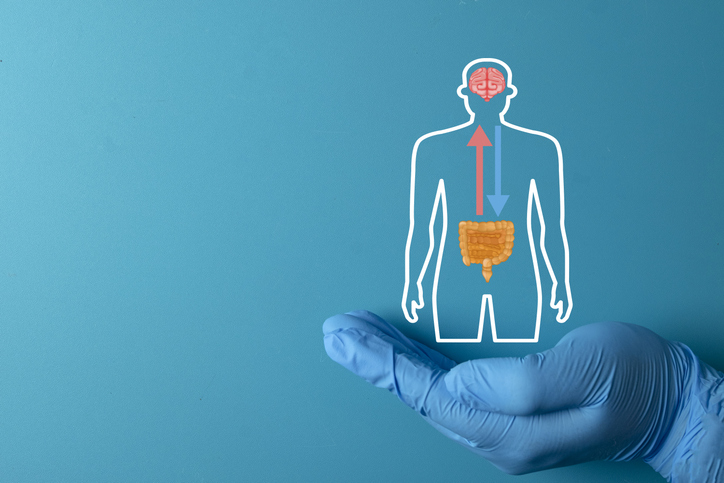
Fractyl Health believes that paradox originates not in willpower or fat cells, but in disrupted communication between the gut and the brain. This week, the company released six-month randomized, sham-controlled data suggesting its endoscopic therapy, Revita, may blunt that rebound after GLP-1 discontinuation by intervening directly in the duodenum, where nutrient signals help determine the brain’s defended weight and metabolic set point.
“Revita is addressing a root cause of obesity and metabolic dysfunction,” Fractyl’s CEO and co-founder Harith Rajagopalan, MD, PhD, told Inside Precision Medicine. “It has real potential here in what is going to be the transformative blockbuster new indication in obesity, which is post-GLP-1 weight maintenance.”
Clinically testing the post-GLP-1 reality
REMAIN-1 is a 45-patient, prospective, randomized, double-blind, sham-controlled study enrolling people with obesity but without type 2 diabetes. Its design deliberately mirrors the real-world clinical scenario now playing out in millions of patients.
The study design involved starting patients on tirzepatide (sold under the brand names Mounjaro and Zepbound), a once-weekly injectable medication that treats type 2 diabetes, weight loss, and obstructive sleep apnea. The synthetic polypeptide—which mimics the effects of two gut hormones, GLP-1 and GIP that regulate blood sugar, digestion, and appetite—was titrated to achieve at least 15% total body weight loss. On average, patients lost around 40 pounds. Then the drug was stopped.
Rajagopalan bluntly described the moment after GLP-1 withdrawal, saying, “We took the tirzepatide away from them, and we made them the world’s hungrier humans.” What happened next, he said, provided a rare glimpse into the biology of weight regain and a test of whether targeting the gut could silence the food noise before the weight returned.
Following the procedure, patients remained off GLP-1 drugs and were followed for six months. The results, according to Fractyl, show a consistent and durable treatment effect favoring Revita, with 4.5% weight regain in the treatment arm compared to 7.5% regain in the sham arm. Rajagopalan said, “We’re continuing to see an excellent treatment effect.”
The headline result is weight maintenance, but the more nuanced story lies in who benefits most. “The individuals who lose the most weight are the ones who are at highest risk of rebound, and it’s there where Revita really shines,” Rajagopalan said.
This finding aligns with what clinicians observe: the greater the weight loss, the stronger the biological drive to regain it. Hormonal changes, altered energy expenditure, and heightened appetite all push patients back toward their previous weight.
“This is entirely consistent with the core biological hypothesis for how intervening in the gut can prevent weight regain,” said Rajagopalan. “But it also shows that Revita may be most helpful to the people who need it the most.”
Signals beyond the scale
While the study is small, Fractyl also reported randomized cardiometabolic data for the first time in an obesity-only cohort.
“Point number two is we’re presenting randomized cardiometabolic lipid profiles for the very first time,” the CEO said. “And even though this is a very small study, we see statistical significance and an improvement in HDL, which, as a cardiologist, I can tell you, is a very substantial HDL increase.”
The company also reported a reduction in the triglyceride-to-HDL ratio, a marker associated with insulin resistance.
“All of which speaks to improvement in insulin sensitivity and metabolic dysfunction,” Rajagopalan said. “All completely consistent with what we’ve seen in prior studies in type 2 diabetes, now with excellent pull-through in obesity.”
Together, the lipid and insulin sensitivity signals support the idea that Revita’s effects may extend beyond calorie intake to deeper metabolic regulation.
Perhaps the most attention-grabbing data point is one that patients immediately recognize: food cravings. “One of the earliest signals of weight regain for people who stop a GLP-1 is that they hear this like profound food noise,” Rajagopalan said. “And in particular they start craving sugary foods very soon after stopping taking these medicines.”
REMAIN-1 included a prospective patient-reported outcome assessing cravings after GLP-1 discontinuation. Rajagopalan said, “What we are showing today is that Revita prevents the sugary food craving that occurs after the discontinuation of the GLP-1 drug.” The CEO added, “Who among us doesn’t wish that we craved sugary foods a little bit less than we do?”
From a mechanistic standpoint, the craving data reinforce Fractyl’s core hypothesis. “It ties nutrient sensing and signaling from the gut to the brain as a core way to drive the biological effect of Revita,” Rajagopalan said.
Recalibrating the metabolic set-point
Fractyl argues that Revita works by influencing the brain’s defended weight set point—a concept long discussed in obesity research but difficult to manipulate therapeutically. “We think it’s at a neural level—we think it’s sort of gut-brain, neural level,” Rajagopalan said. “No one’s figured out a way in the field to measure that.”
Those pieces include hunger, cravings, insulin sensitivity, lipid profiles, and weight itself. “The only conclusion you can draw,” he said, “is that this has profound durable effects on whatever the brain thinks your weight and your metabolic set point should be.”
The biological rationale centers on the duodenum. Nutrient signals from the duodenal wall travel via the vagus nerve to brain centers that control hunger and metabolism. Chronic exposure to high-fat, high-sugar diets, Rajagopalan argues, disrupts this signaling. “What our ablation is aimed to do is a superficial treatment to the mucosa,” Rajagopalan said, “allowing the mucosa to regenerate a healthy new lining.”
Durability remains a key question for any obesity intervention, but Fractyl points to prior data. “In prior studies, we’ve seen like two years of durable efficacy after a single Revita treatment,” Rajagopalan said. “Revita is designed to be potentially repeatable, should that be necessary after several years. We do not yet know what the repeat treatment frequency will need to be.”
Regulatory ramp, market reality check
Alongside the clinical data, Fractyl announced plans to pursue the FDA’s de novo pathway rather than a premarket approval (PMA), the typical FDA process of scientific and regulatory review to evaluate the safety and effectiveness of Class III medical devices. “We believe the FDA will support the idea that this is a moderate-risk rather than a high-risk device,” Rajagopalan said, noting the potential to accelerate approval timelines.
Despite the scientific narrative, investors were unconvinced. Fractyl’s stock fell sharply following the announcement. In a market dominated by blockbuster GLP-1 drugs with headline-grabbing weight-loss numbers, a weight-maintenance story, particularly from a 45-patient study, may be harder to value. The small study didn’t have wildly convincing statistical significance when comparing treatment to sham (p=0.07, one-sided).
Fractyl’s release highlighted an exploratory analysis of patients who achieved above-median weight loss during GLP-1 run-in, showing that Revita-treated participants experienced 4.2% weight regain versus 13.3% with sham at six months. While that corresponds to approximately a 70% relative reduction in post-GLP-1 weight regain, it’s hard to get behind by looking at a subset of 20 patients.
Structural challenges also remain: Revita is a procedure, not a pill, and scaling endoscopic interventions presents logistical and reimbursement hurdles, the latter of which is important when comparing to bariatric surgeries. While Revita is not invasive and can be performed in an outpatient setting, whether it will be cost-effective and covered by insurance will dictate commercial success. As it stands, bariatric surgeries are more effective and possibly just as safe—even though Fractyl reported no safety events between months three and six, bariatric surgery is safer than comparable common procedures like gallbladder removal or hip replacements.
Still, Rajagopalan is betting on Revita, standing behind the data. “We think that this is a really good way for us to kick off the new year with Revita and weight maintenance,” said the CEO. A lot can happen in 2026 with Revita, as Fractyl expects one-year REMAIN data and topline six-month randomized data from the REMAIN-1 Pivotal Cohort in the second half of the year with the hope of a potential FDA marketing application submission in post-GLP-1 weight maintenance.
Whether a gut-level reset can become the missing second act of the obesity era will depend on whether weight maintenance finally gains scientific and commercial respect as weight loss.
