

CEO, Revalia Bio
In recent years there has been a lot of interest in new technology to improve the preclinical testing space by innovative use of cell culture and tissue engineering, as well as with computing advances like artificial intelligence. Greg Tietjen, PhD, CEO of Revalia Bio, aims to go one step further by using these new techniques and testing candidate drugs on donated human organs that are not suitable for transplant.
Preclinical research has traditionally relied on animal testing as a first step before moving a potential medicine into clinical trials. However, estimates suggest that up to 90% of drug candidates ultimately fail when they reach human trials, primarily due to lack of efficacy or high toxicity, highlighting limitations with animal testing.
The FDA Modernization Act 2.0 became law in the U.S. in late 2022. It removes the historical requirement that animal studies must be used to develop every new drug and authorizes alternatives to animal testing such as organoids, organ-on-a-chip technology, computer-based in silico systems, and other similar options. Other policy makers and regulators around the world are moving in a similar direction.
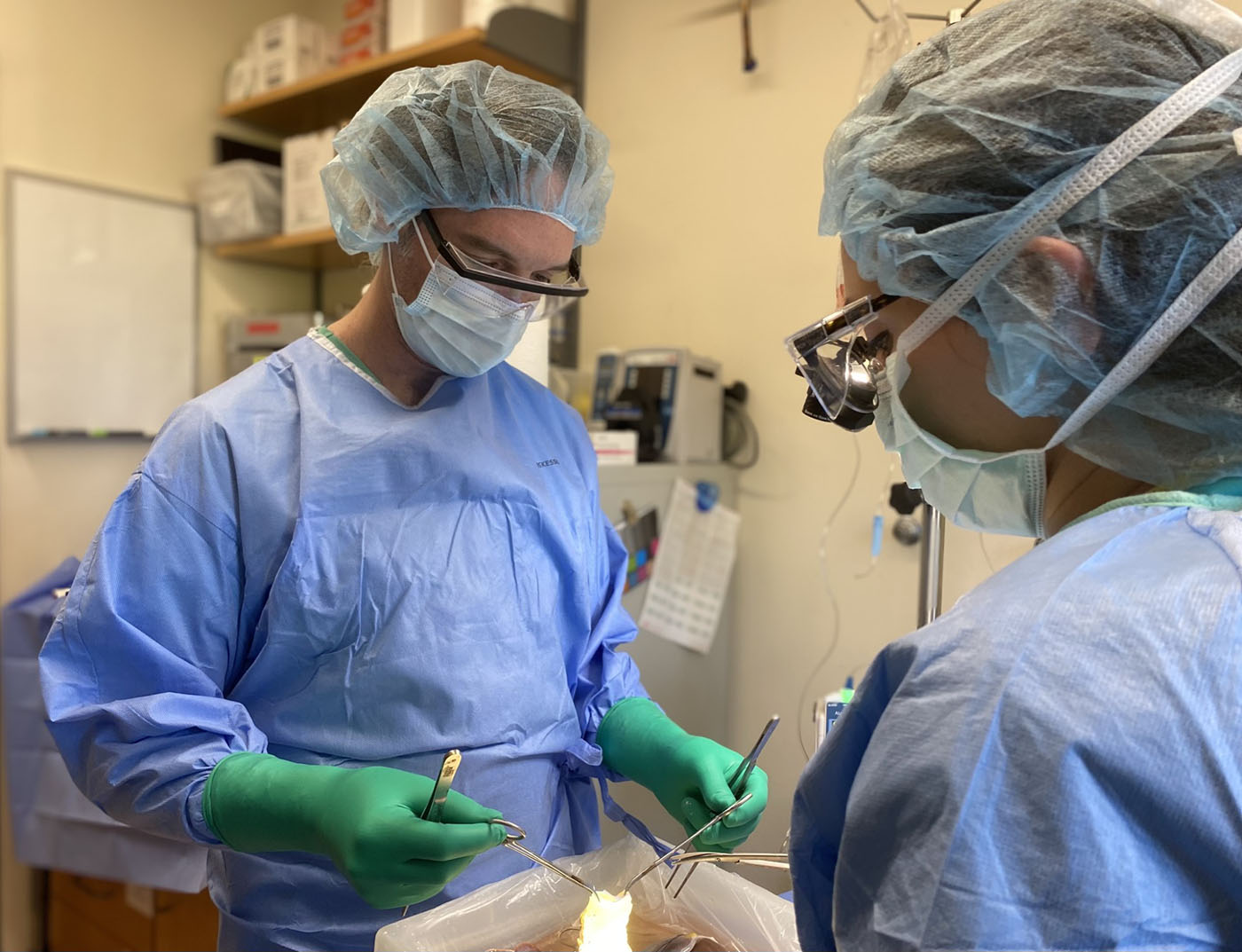
Revalia’s platform is based on donated human organs rather than animal models, with the aim of making preclinical drug development more human‑relevant, faster, and safer. Many registered organ donors in the U.S. do not end up donating organs for transplantation when they die because diseases such as cancer rule them out. Revalia is aiming to prevent these donations from being wasted and allow the donors to contribute to future research.
Tietjen trained as a biophysicist, after an earlier period as a musician, and went on to become a transplantation scientist at Yale University. His laboratory helped pioneer the use of technology known as normothermic machine perfusion to keep donated human organs alive outside the body for days at a time.
Tietjen and colleagues at Yale expanded use of this technology to keep transplant‑declined human organs functioning for around five days, turning them into models that could be dosed, monitored, and sampled for testing new drugs. After this technology became popular and it became clear that scaling up would be difficult in an academic setting, Tietjen and several team members decided to found the company, which formally launched in early 2023.
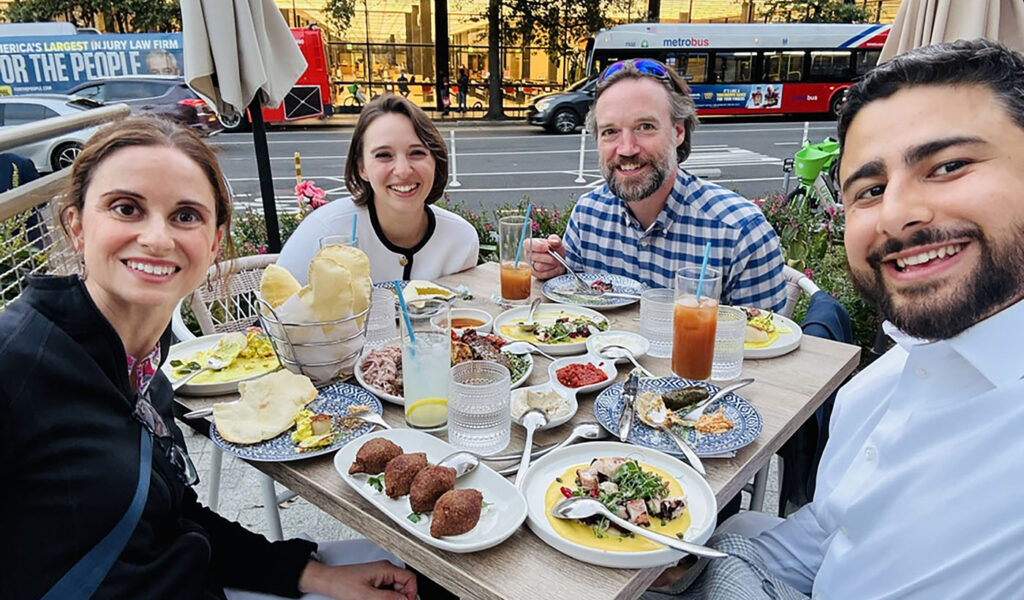
Tietjen discusses his career inspirations and motivations for founding the company with Inside Precision Medicine’s senior editor Helen Albert, and outlines what he hopes Revalia will achieve going forward.
Q: What made you decide to become a scientist, because I understand you started out as an English major?
Tietjen: I did, yes. It has been a winding path! It took me a long time to figure out who I wanted to be. I’m from a really small town in Northwestern Pennsylvania that was very rural without a lot going on. I loved science that made my brain hurt, things that opened a portal to a different world outside of what my environment was. For me, that was Stephen Hawking’s Brief History of Time or reading about Einstein. I was really interested in cosmology and astrophysics, and I thought that would be my path. I went to Wake Forest with the intention to do a five-year astrophysics program. But at that moment the early physics class was really not my cup of tea and my 2 PM English class was amazing! I had never really connected to literature and communications, but I found I loved it. I think in retrospect, what I realized was it wasn’t just the science, it was complicated science made accessible that I loved.
Following on, I considered writing for a bit, but I had a lot of friends who were musicians, and I realized that writing was a bit solitary, and I actually like the connective aspects of performing. I ended up deciding to commit myself to becoming a musician and studied jazz guitar for many years. Unfortunately, I’d always had some neck and back issues and as part of a prep for a performance, I ended up with nerve issues. I was 25 years old and couldn’t feel my hands, and no doctor could tell me what was wrong with me. Finally, fate intervened. I was playing an indoor soccer game and just snapped my elbow backwards, dislocated and destroyed it. I had to have an eight-hour reconstructive surgery. When I woke up, the surgeon said, “You’ll be lucky to hold the guitar, let alone make a living off of it.”
At this point, I just felt complete relief. I knew I had to pick a new path. Physics was that itch I had never scratched and so I decided to go back and get my science degree. I was at the University of Oregon, and because I already had an English degree, I could pivot it over and get a physics degree in two years. After that, I went to the University of Chicago to join a new PhD program in biophysics that was sitting at the interface of different disciplines. I worked at the intersection of applied physics and immunology, developing new tools, and I just found that I absolutely loved that world.
Q: How did you get into the work you are doing now?
Tietjen: I came to Yale about 12 years ago to do a postdoc in Mark Saltzman’s lab. It was there that I ultimately got introduced to the world of the things that we do today. When I came to Yale, it was a time when lots of exciting technologies came out. There were lots of great papers, lots of spin-out companies, but unfortunately, not a lot of impact in the clinic. I come from the world of molecular biophysics and biochemistry, where you have got to understand the equation right to get the conditions right. I thought “I don’t think we’re seeing this clearly.” It was largely because the systems that we had to optimize were not the right systems. Doing things in mice for this level of complexity is not going to work.
I was really fortunate. I spoke with another postdoc adviser, a really pioneering vascular immunologist named Jordan Pober, MD, PhD, who had deep connections at the University of Cambridge, U.K., where some pioneering transplant surgeons had just moved from Leicester. They did the first-in-human kidney perfusion using a bypass system, previously used for support during heart procedures, retrofitted to support a kidney outside the body. The reason they did that was because they had the feeling that a lot of the organs that they were not using for transplantation could be used. They just didn’t have enough good information, and what has been known for a long time is that if you give an organ what it needs outside the body—oxygen, blood, nutrients—it’ll function like an autonomous unit.
They started using that system and they had good success. They also realized along the way that while there were a lot of organs you can make transplantable, actually the vast majority of the time, when an organ donor passes away in the hospital under conditions that will support donation, they’ll never be able to become a donor because they have the very diseases that we don’t understand how to develop treatments for, like cancer or fibrosis. But that doesn’t mean that those organs don’t have transformative potential as a new source of data.
My postdoc work connected me to those folks. We did a first experiment on nanomedicines that worked beautifully in a petri dish to bind really potently to endothelial cells. We had the opportunity to scale it up, put the drugs in a non-transplantable human kidney. We made the particles, shipped them over to Cambridge, tested them, and they failed miserably. But what was really powerful and unique about this was that this was failure in a real-world setting. So, rather than it being a catastrophic end in a clinical trial, it was a catalytic end in this new human organ platform. It taught us fundamental new things about the biology of response to lack of oxygen and cold temperatures that were relevant in transplant. It taught us new things about how to redesign the systems, which we eventually did. But it was that first failure and the realization that this was a really profound system of learning that then was launched into my lab.
I was recruited at Yale in a unique translational position into the department of surgery to rebuild the infrastructure that they had in the U.K. … to do this work as a 24/7 operation where you can receive organs any time of day or night and then do high-end science on them. Initially, we were in that drug development mold, but then pretty quickly realized this was more powerful as a platform for other people to bring their ideas to, rather than just the ideas that we had. The final element of it was that it’s this profound opportunity to learn from a living human system outside the body in ways where you’re not artificially contriving the system so much. You’re letting biology happen, and you get to observe as you perturb and study that. And as you are running an experiment, there’s a family that’s grieving the loss of their loved one. The act of donation in and of itself can be a life-saving event for those donor families. Donation for science that has really transformative potential, especially in cancer and in other areas where people want to be able to donate because of altruism, can provide the thing that matters most at the end of life.
It’s the most beautiful profound area of medicine, in my opinion. I think that is what drew me to this, not least because at that same time, I went through a series of losing a number of close loved ones under a number of different circumstances. Being able to create a profound and powerful source of human data that I truly believe has revolutionary potential. But even more important is the ability to provide healing and care in the form of a transformation and a legacy that helps people in that most vulnerable moment of losing a loved one.
Q: Why did you decide to transition out of academia to start Revalia?
Tietjen: I was a professor at Yale University for six years. I really enjoyed that and it was an amazing time of growth, but ultimately I realized that I had a calling outside of academia. We had a lot of NIH funding. We were doing well. I was pretty close to tenure, but we decided to shut it all down. That was in late 2022 and then we formally launched the company in March of 2023. We were running this 24/7 operation, but the operation that we were developing wasn’t sustainable or scalable within an academic setting. We had to make a decision. We either had to focus and go smaller and follow a more traditional academic path, or we had to break out and go in a different direction. We just felt like this was too big an opportunity to not take the chance and I think we just felt a weight of responsibility. The moment we started receiving organs for research, we made a promise. We made a promise that we would do whatever it took to unlock the most possible potential for those organs to impact the world. That’s the promise that we make to every donor family. We were a pretty weird academic lab. We were wired for intensity and 24/7 and chaos. It turns out that’s called being an entrepreneur!
Q: How has the experience of running the company been so far?
Tietjen: We ended up getting funded through the Creative Destruction Lab. It was our very first time in a room full of entrepreneurs. It was a fresh new challenge to figure out, “Can we actually learn how to be fundraisers? Can we learn how to build a business? Can we learn how to build a business model that will actually take this science and operations that we know how to do and make it actually sustainable and impactful in the world?” Those were really exciting new problems to work on.
It’s been amazing. I think we’ve been very, very fortunate. When you find someone that you know you can learn a ton from and they care, you just latch yourself onto them. For us, he became a co-founder, our first investor, a guy named Milad Alucozai, PhD, who has an amazing arc himself as an immigrant from Afghanistan. He is a multi-time founder, had successful exits, and became an angel investor. He helped get us up the mountain of understanding and then we had wonderful investors after that. We were lucky that we had customer contracts and we were generating revenue from day one. We started as a boutique R&D trial service, like a boutique contract research organization. That gave us the chance to learn and figure out the right economic model that would stay true and ethically appropriate for where we’re going and meet everyone’s needs. That was an exciting new challenge for me, which I threw myself into as much as I did being a musician or all these other things.
Q: How is Revalia helping to change the preclinical model of drug development?
Tietjen: I think, to me, it’s a couple of different things. I think the biggest change that has to happen needs to be human-centered and that should be the driver throughout. Additionally, we need an integrated human data approach. The reason why I think that hasn’t fully happened yet is because we’ve been missing the “Rosetta stone” that allows us to integrate and interpret data from across demographic-level skills down to molecular levels in between. And that’s what this human organ model represents, because what’s really unique about an organ that’s donated for research is it actually enables every layer of data to be generated all from one individual human. An organ that comes in has de-identified medical history. So you get that patient-level data, and then you can bring it to life on these perfusion systems. We can do 3D renderings. We get both anatomy and physiology, unique physiology because it’s just from that organ, so you’re not getting noise from the rest of the system. Then you can take biopsies, similar to what you do with patients but you’re not trying to keep a patient alive. So you can take more biopsies … over time so you can get a window into direct data and then to source for organoids or organ-on-chip testing.
What we’re building is an infrastructure, something we call the human data stack, to create the access points to gather all of that information—software, hardware, high fidelity data—and then you have the artificial intelligence capabilities that sit on top of that to build interpretability.
The history of science from a technology perspective has been about building better tools for experts. But I think the idea that you can just give all the raw data to experts and they’ll figure it out is starting to become antiquated when the data is getting so complicated and there’s so many different things to integrate. This is where we have to leverage the capabilities of this technology to support the scientists’ ability to do what they can uniquely do, which is create an insight. This has been showing up in the tech world, where we’re moving away from tools for experts and into outcomes for end users. What we want to do is create a platform that supports the fundamental scientific activity of creating that insight.
Q: Why does the preclinical model need to be changed?
Tietjen: We need to develop therapies that are better and more transformative, but we can’t get there if we’re stuck with the legacy model systems that worked well for things like insulin and for more ancient types of pathways that are conserved between animals and man. We need more sophisticated, holistic, integrated human systems to be able to develop, I think, the next wave of major therapeutic breakthroughs. And it’s got to be in a system that’s faster and cheaper than what it is that we have today.
I think replicability is a real problem. I think that failure rates of trials remain really high. In some cases, 90% or above of trials are failing once they get into Phase I. The amount of waste and failure in the system is just too high. We have a model of science that starts with academic labs, and we have this infrastructure that you turn students over all the time. I just think that the way the whole system is architected is for a different era. It was wonderful and phenomenal, but we can now feel the cracks. There’s been changes in how science is funded. There’s a lot of things that are changing. When I was in academic health institutions, you can see it’s really difficult to support some of the infrastructure needs of traditional methods. I think all of that contributes to the inability to have reproducibility. It’s just getting too complicated. And I think we need to evolve the models beyond how we’ve done it traditionally.
Q: Do you think technology like Revalia’s is going to bring the number of animal experiments down?
Tietjen: It’s happening. The mandate has been pushed out there, and I think it’s been pushed out faster than everyone anticipated. The question now is: how do we build the right infrastructure and support around it? In the U.S. there’s been the FDA Modernization Act, which has been a policy-level driving force. Then this year, in April, the FDA announced animal models are no longer necessary for monoclonal antibody filings and others. It has been so fast and that’s where I think there’s a new opportunity.
Q: What has the response to Revalia been like since you were founded, do you have any competitors?
Tietjen: We work with multiple top ten pharma, with biotechs, and with academics. I think this notion of, “We need an integrator that can help everybody work more effectively together,” is popular, we’re seeing a lot of traction for that. I think the traditional competitors have been ones that use the single layer, like hardware and chips or just data. So it’s a new category, but I think folks like that could jump in for sure. We are ultimately creating a new technology scalable platform that effectively provides a new type of insight delivery service. I think as of yet, we don’t have competitors that are trying to do the same thing because I do honestly feel like we are in a moment in medicine that is parallel to what the late ’90s were for the internet. There are major changes happening. There’s going to be new economic models, new business models, and things that arise out of this as the market conditions really change. What we’re hoping is that we’ve identified an approach here that the market needs. It’s a time of change. I think what we all need to be doing is focus on learning and not stick to what has served us before. That said, this is an area where lives are at stake and a lot matters, so we have to practice a really particular type of evolution, where we make incremental moves that feel safe and can be adopted, but it’s exponentially better for everyone involved so that we actually get somewhere.
Helen Albert is senior editor at Inside Precision Medicine and a freelance science journalist. Prior to going freelance, she was editor-in-chief at Labiotech, an English-language, digital publication based in Berlin focusing on the European biotech industry. Before moving to Germany, she worked at a range of different science and health-focused publications in London. She was editor of The Biochemist magazine and blog, but also worked as a senior reporter at Springer Nature’s medwireNews for a number of years, as well as freelancing for various international publications. She has written for New Scientist, Chemistry World, Biodesigned, The BMJ, Forbes, Science Business, Cosmos magazine, and GEN. Helen has academic degrees in genetics and anthropology, and also spent some time early in her career working at the Sanger Institute in Cambridge before deciding to move into journalism.
