

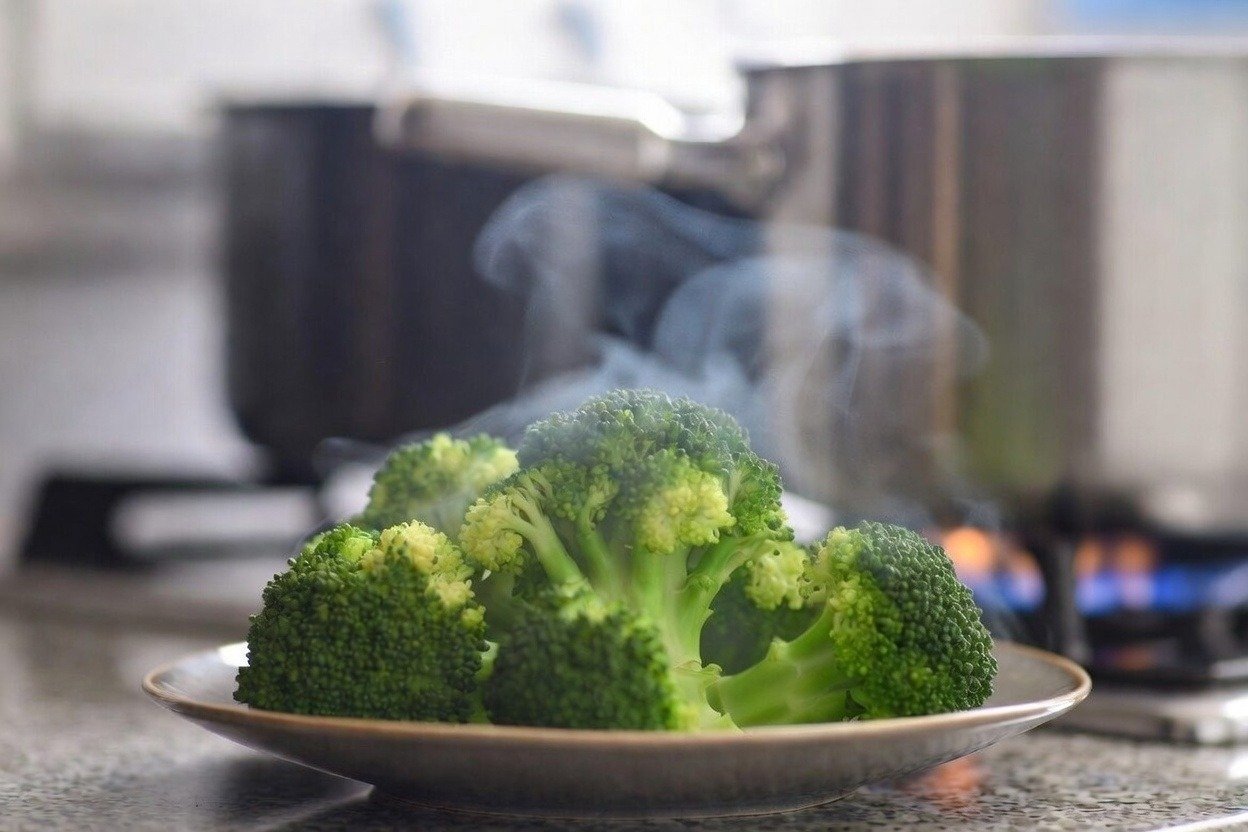
If you have ever sat down to a plate of greyish, mushy, waterlogged broccoli, you know the disappointment of a side dish gone wrong.
Broccoli is one of the most versatile and nutrient-dense vegetables in the produce aisle, yet it is arguably the one most frequently ruined in the kitchen.
If your broccoli always turns out soggy, dull green, or tasteless—you’re not alone. The line between “perfectly tender-crisp” and “inedible mush” is thinner than a floret.
Learning how to steam broccoli correctly is a fundamental kitchen skill that elevates your meal prep from basic to gourmet. Whether you are a busy parent trying to sneak greens into a toddler’s diet or a fitness enthusiast looking to maximize nutrient density, steaming is your best friend.
But many home cooks struggle with the “how.” Do you need a fancy broccoli steamer? How long does it take for broccoli to steam before it loses its bite? And perhaps most importantly, is it better to boil or steam broccoli for health?
In this ultimate guide, we will break down every possible method—from the classic stovetop to the lightning-fast microwave—ensuring you never have to settle for a sad side dish again.
What Is Steamed Broccoli?
At its simplest level, steaming is a moist-heat cooking technique that employs water vapor (steam) to cook food.
Unlike boiling, where the vegetable is completely submerged in a hot liquid, steaming keeps the broccoli suspended above the water. This distinction is crucial for both texture and nutrition.
When you learn how to boil broccoli, you are essentially inviting the water to leach out the vegetable’s water-soluble vitamins. In contrast, steaming uses the energy of the steam to break down the fibrous cellulose of the broccoli stalks without stripping away its essence.
There are two primary ways to approach this:
- Using a Broccoli Steamer: A dedicated basket (usually metal or silicone) that sits inside a pot.
- The “Pan Steam” Method: Using a small amount of water directly in a skillet with a tight-fitting lid.
Whether you are using fresh, large heads of broccoli or a bag of frozen florets, the goal remains the same: use the power of 212°F vapor to soften the plant’s cell walls while keeping the flavor locked inside.
Why Steam Broccoli? (Nutrition & Benefits)
If you are wondering whether it is better to boil or steam broccoli, the science leans heavily toward the steamer.
Broccoli is a powerhouse of sulforaphane—a sulfur-rich compound studied for its potential anti-cancer properties and heart-health benefits. However, sulforaphane is created when an enzyme called myrosinase is activated.
Boiling broccoli for just five minutes can reduce its glucosinolate levels (the precursors to sulforaphane) by as much as 30% to 50%. Steaming, however, preserves these compounds much more effectively.
Key Nutritional Advantages:
- Vitamin C Preservation: Broccoli is packed with Vitamin C, which is highly sensitive to heat and water. Steaming keeps the Vitamin C in the floret rather than discarding it in the boiling water.
- Vibrant Color: Chlorophyll stays intact during a short steam, resulting in a bright, appetizing emerald green rather than a drab olive.
- Texture Control: Because the process is slightly slower and less aggressive than boiling, you have a much larger window of time to stop the cooking at your preferred level of “crunch.”
The Science: Cooking Method Breakdown
Understanding the physics of your kitchen can help you choose the right method for your schedule.
| Method | Avg. Time | Nutrient Retention | Best Use Case |
| Microwave | 3–5 min | High | Fast weeknight dinners; single portions. |
| Stove top | 5–7 min | High | The “Gold Standard” for texture. |
| Instant Pot | 0–1 min | Moderate | Batch cooking for large families. |
| Air Fryer | 6–8 min | Moderate | When you want a slightly “roasted” steam hybrid. |
The Role of Heat and Vapor
When water reaches its boiling point, it transitions into a gas. This gas carries a significant amount of latent heat.
When the steam hits the cool surface of the broccoli, it condenses, releasing that heat directly into the vegetable. This is why steam can actually cook faster and more evenly than boiling water, despite not “soaking” the food.
The primary challenge is timing. Because steam is so efficient, the transition from “perfect” to “overcooked” happens in about 60 to 90 seconds.
How Does Steaming Broccoli Work?
Steaming works by weakening the hemicellulose and pectin in the cell walls of the broccoli. Fresh broccoli is rigid because its cells are full of water and held together by these tough structures. As the steam penetrates the florets, those structures soften.
However, if you steam for too long, the cells completely collapse. This is when the broccoli becomes mushy and begins to release a strong, sulfuric odor (often compared to overcooked eggs).
This odor is a sign that you have broken down the healthy sulfur compounds too far. To avoid this, you must understand the specific timings for different tools.
How to Steam Broccoli on the Stove
Steaming broccoli on the stove top is the traditional method preferred by chefs. It gives you the most control over the process, allowing you to lift the lid and “poke” the stems for doneness easily.
Using a Steamer Basket
- Prep the Broccoli: Wash the head and cut it into uniform florets. Don’t throw away the stalks! Peel the woody outer layer and slice the tender inner stalk into rounds—they steam beautifully.
- Boil the Water: Add about 1 to 2 inches of water to your pot. Ensure the water level is below the bottom of your steamer basket. Bring it to a boil.
- Add Broccoli: Place the florets into the basket. Once the water is boiling vigorously, place the basket into the pot.
- Cover and Wait: Secure a tight-fitting lid. This traps the steam.
- Timing: For “tender-crisp” results, steam for 5 minutes. If you prefer it softer, go for 7 minutes.
- The Shock (Optional): If you aren’t eating it immediately, plunge the broccoli into an ice bath to stop the cooking process and lock in the green color.
How to Steam Broccoli in a Pan (The “Skillet” Method)
If you don’t have a broccoli steamer, you can use a wide skillet.
- Place florets in the pan and add roughly 1/2 cup of water.
- Cover with a lid and turn the heat to medium-high.
- The small amount of water will turn to steam and cook the broccoli in about 3 to 4 minutes. This is often called “steam-sauteing.”
How to Steam Broccoli Without a Steamer
You don’t need to run to the store for a specialized broccoli steamer basket to get great results. There are several “hacks” using common household items.
The Aluminum Foil Method
- Roll three or four large balls of aluminum foil (about the size of a golf ball).
- Place them at the bottom of a large pot.
- Set a heat-safe plate on top of the foil balls.
- Add an inch of water to the pot (making sure it doesn’t touch the plate).
- Place your broccoli on the plate, cover the pot, and steam as usual.
The Heat-Safe Colander
If you have a metal colander or strainer that fits inside one of your larger pots without touching the bottom, you have a makeshift steamer. Simply rest the colander handles on the rim of the pot, add your lid, and proceed.
Note: If the lid doesn’t fit tightly because of the colander handles, cover the whole top with a piece of foil to trap the steam.
The “Small Amount of Water” Technique
This is the simplest way of steaming broccoli without a basket. Put your broccoli in a pot with just enough water to cover the bottom (about 1/4 inch). Cover it tightly. The bottom of the broccoli will technically “boil,” but the bulk of the florets will be cooked by the steam trapped in the pot.
How to Steam Broccoli in the Microwave
The microwave is often unfairly maligned, but when it comes to vegetables, it is actually one of the best tools for nutrient retention because it cooks so quickly. Steaming broccoli in the microwave is the ultimate “life hack” for busy people.
The Bowl and Plate Method
- Place your florets in a microwave-safe glass bowl.
- Add 2 to 3 tablespoons of water.
- Cover the bowl with a microwave-safe ceramic plate or a damp paper towel. (Avoid plastic wrap if possible, as it can melt or leach chemicals if it touches the food).
- Microwave on high for 3 minutes.
- Carefully lift the “lid” (watch out for the steam blast!) and check for tenderness. If needed, continue in 30-second intervals.
Microwave Steaming Bags
Many grocery stores now sell broccoli specifically in “steam-in-bag” packaging. While convenient, you are often paying a premium for the packaging. You can achieve the same effect by using a reusable silicone steaming bag.
Why this works:
Microwaves excite water molecules. By adding a small amount of water to the bowl, you create a localized steam chamber.
Because the heat is generated within the food and the surrounding water vapor, how long does it take for broccoli to steam in a microwave? Usually, half the time of the stovetop.
How to Steam Broccoli in the Instant Pot
The Instant Pot has revolutionized meal prep, but it can be a double-edged sword when it comes to delicate vegetables. If you’ve ever tried to steam broccoli in an Instant Pot using a standard 5-minute pressure setting, you likely ended up with broccoli soup.
Because the Instant Pot uses high-pressure steam, it works incredibly fast—so fast, in fact, that the recommended cook time is often zero minutes.
The “Zero-Minute” Method
This sounds like a glitch, but it’s a legitimate technique.
- Add Water: Pour 1 cup of water into the inner pot.
- Use the Trivet: Place your steamer basket or the metal trivet that came with the pot inside. Ensure the broccoli is not sitting in the water.
- Add Broccoli: Pile your florets into the basket.
- Set to Zero: Close the lid, set the valve to “Sealing,” and select Manual/Pressure Cook on High for 0 (zero) minutes.
- The Science: The broccoli actually cooks during the time the pot is “coming up to pressure.”
- Quick Release: As soon as the timer beeps, perform an immediate Quick Release. Do not let it sit on “Keep Warm,” or the residual heat will overcook it within seconds.
This method is ideal for batch cooking or “meal prep Sunday” when you have three large heads of broccoli to process at once. It results in a perfectly tender-crisp texture every time.
How to Steam Broccoli in a Rice Cooker
If you have a rice cooker, you likely have a built-in broccoli steamer. Most modern rice cookers come with a plastic or metal basket that nests at the top of the machine. How to steam broccoli in a rice cooker effectively depends on whether you are cooking rice simultaneously or steaming the vegetables solo.
Steaming While Cooking Rice
This is the ultimate “one-pot” efficiency hack.
- Start your rice as usual (rinse the rice, add the correct water ratio).
- Wait until the rice is about 10 minutes away from being done. (Most rice cookers take about 20-30 minutes total).
- Open the lid carefully, place the steamer basket with the broccoli inside, and close the lid.
- The steam from the boiling rice water will cook the broccoli perfectly by the time the rice “clicks” to the warm setting.
Steaming Solo
- Add 1 cup of water to the rice cooker.
- Place the basket inside and press the “Cook” or “Steam” button.
- Check the broccoli after 5 minutes of active steaming. Note that the timer on some rice cookers doesn’t start until the water is boiling, so keep an eye on it.
How to Steam Broccoli in an Air Fryer
While an air fryer is technically a high-powered convection oven, you can achieve a “steam-style” finish by using a few tricks.
Pure steaming broccoli in an air fryer is difficult because the machine relies on dry air, but you can create a hybrid texture that is crispy on the edges and tender in the middle.
The Foil Packet Method
- Toss your broccoli florets with a tablespoon of water and a drizzle of oil.
- Wrap them tightly in a foil packet.
- Place the packet in the air fryer basket at 375°F (190°C) for 8 to 10 minutes. The moisture trapped inside the foil creates a localized steam environment.
The “Ramekin” Hack
Place a small, oven-safe ramekin filled with water in the corner of the air fryer basket alongside your broccoli. The water will evaporate, increasing the humidity in the air fryer and preventing the broccoli from becoming too “leathery” or dry.
Steaming Variations
Not all broccoli is created equal, and different culinary goals require slight adjustments to your technique.
How to Steam Frozen Broccoli
You do not need to thaw frozen broccoli before steaming. In fact, thawing often leads to a mushy mess.
- Microwave: Place frozen florets in a bowl with 2 tablespoons of water, cover, and microwave for 4-5 minutes.
- Stove: Steam for about 1-2 minutes longer than fresh broccoli.
- Tip: Frozen broccoli is blanched before freezing, so it is technically par-cooked. It only needs enough heat to warm through and finish the softening process.
How to Steam Broccoli Until Soft
While “tender-crisp” is the culinary standard, some people prefer their vegetables much softer (often referred to as “southern style” or “well-done”). To achieve this without losing all the color:
- Steam on the stove for 9 to 11 minutes.
- The florets should be soft enough to mash with the back of a fork but should not be “falling apart” in the basket.
How to Steam Broccoli for Baby
When making homemade baby food or following Baby Led Weaning (BLW), safety and texture are paramount.
- The Squeeze Test: Steam the broccoli for 10-12 minutes. You should be able to easily mash a floret between your thumb and forefinger with zero resistance.
- Shape: For BLW, keep the stalks long. They act as a “handle” for the baby to hold while they gum the soft florets.
- Keywords to remember: When learning how to steam broccoli for baby, always prioritize a mushy texture to avoid choking hazards.
How to Steam Broccoli and Carrots
Carrots are much denser than broccoli. If you put them in at the same time, you’ll end up with perfect carrots and mushy broccoli, or perfect broccoli and raw carrots.
- The Staggered Method: Cut carrots into thin coins. Start steaming the carrots first. After 3-4 minutes, add the broccoli florets to the basket. Steam for an additional 5 minutes.
How to Steam Broccoli and Cauliflower
Since these are cousins, their cook times are very similar. However, cauliflower is slightly denser.
- Cut cauliflower into slightly smaller pieces than the broccoli.
- Steam them together for 6-7 minutes. They are a perfect pair for a colorful, low-carb side dish.
How to Season Steamed Broccoli
Steamed broccoli is a blank canvas. While a pinch of salt is the bare minimum, you can transform it into a “crave-able” dish with the right additions.
The Classics
- Lemon & Garlic: Toss the hot broccoli with a squeeze of fresh lemon juice, a teaspoon of zest, and some sautéed minced garlic.
- Butter & Pepper: A simple pat of grass-fed butter and a generous crack of black pepper is a timeless favorite.
Health-Focused Toppings
- Nutritional Yeast: For a vegan “cheesy” flavor that adds B-vitamins and protein.
- Toasted Sesame Oil & Soy Sauce: Gives the broccoli an Asian-inspired umami kick. Great for pairing with salmon or tofu.
- Red Pepper Flakes: For those who like a little heat to balance the earthiness of the greens.
Keto and Paleo Options
- Extra Virgin Olive Oil & Sea Salt: Keep it simple and high-fat.
- Everything Bagel Seasoning: A trendy and delicious way to add texture and saltiness.
My Experience / What Users Say
In my years of testing various kitchen methods, I’ve found that the microwave is the winner for speed, but the stovetop steamer basket is the winner for flavor. Many home cooks in our community agree:
“I used to boil my broccoli until it looked like seaweed. Once I switched to the 5-minute stovetop steam, my kids actually started eating their vegetables!” — Sarah, Meal Prepper
Common feedback from users suggests that the biggest “ah-ha” moment is realizing that the stalks are edible. Once people learn to peel and steam the stalks, they realize they’ve been throwing away the sweetest part of the vegetable for years.
Safety and Side Effects of Steamed Broccoli
While broccoli is a nutritional superstar, there are a few considerations to keep in mind regarding safety and digestive health. Because broccoli is a cruciferous vegetable, it contains a complex sugar called raffinose.
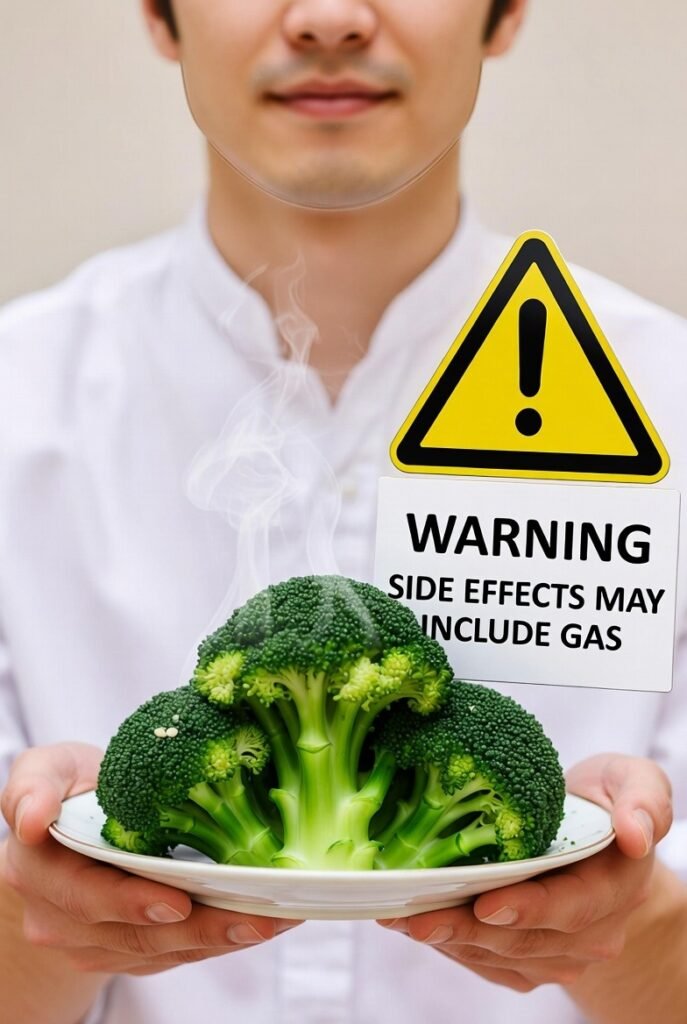
Unlike simple sugars, raffinose is not broken down by the stomach; it travels to the large intestine, where bacteria ferment it, which can lead to gas and bloating.
For individuals with thyroid issues, there is often concern regarding goitrogens. These are naturally occurring substances that can interfere with iodine uptake.
However, the good news is that the heat involved in steaming significantly reduces the goitrogenic activity compared to eating raw broccoli. If you have a known thyroid condition, steaming is actually the preferred method of preparation.
Finally, for those on blood-thinning medications like Warfarin (Coumadin), consistency is key.
Broccoli is high in Vitamin K, which plays a vital role in blood clotting. You don’t necessarily need to avoid it, but you should aim for a consistent daily intake to avoid interfering with your medication’s effectiveness.
Pros & Cons of Steaming Broccoli
| Pros | Cons |
| Nutrient Dense: Best way to keep Vitamin C and Sulforaphane. | Easy to Overcook: Requires a timer; you can’t just “walk away.” |
| Speed: Most methods take under 7 minutes. | Plain Flavor: Requires seasoning after cooking to taste great. |
| Vibrant: Keeps the kitchen looking colorful and the plate appetizing. | Equipment: Ideally requires a steamer basket (though hacks exist). |
| Low Calorie: No oil is required for the actual cooking process. | Smell: Overcooked broccoli can linger in a small kitchen. |
How to Use: Timing & Portions
Precision is the difference between a five-star side dish and a kitchen fail. How long does it take for broccoli to steam? The answer depends entirely on your desired texture and the size of your florets.
Mastering the Timer
- Tender-Crisp (The Goal): 5 minutes. The broccoli should be vibrant green and offer a slight resistance when bitten.
- Soft (Kid-Friendly): 7 to 8 minutes. The “bite” is gone, and the broccoli is easy to chew.
- Puree-Ready (For Baby): 10 to 12 minutes. The stalks should be completely soft.
Serving Sizes and Portions
A standard serving of steamed broccoli is roughly 1 cup of florets, which weighs approximately 90 grams. When shopping, keep in mind that a large head of broccoli usually yields about 2 to 3 cups of florets once the main heavy stalk is removed.
For meal prepping, a single large head is usually sufficient for two adults as a generous side dish. If you are serving it as a main component of a bowl (like a Buddha bowl), plan for 1.5 cups per person.
Customer Reviews & Complaints
When looking at feedback from home cooks and meal preppers, a few common themes emerge regarding the steaming process.
The “Soggy” Complaint
The number one complaint from beginners is that the broccoli feels “waterlogged.”
This almost always happens when the broccoli is allowed to sit in the water rather than being elevated by a basket, or when the lid isn’t tight enough, forcing the cook to add more water that eventually touches the vegetables.
The “Smell” Issue
Some users complain about a pungent, sulfur-like smell in their kitchen. This is a classic sign of over-steaming. When the cells break down too far, they release hydrogen sulfide gas. To fix this, always set a timer and vent your kitchen.
The “Bland” Verdict
Critics of steaming often say it tastes “like hospital food.” This is a failure of seasoning, not the method. Unlike roasting, which creates caramelization, steaming relies on the natural sweetness of the vegetable. Adding a pinch of high-quality sea salt and a fat (like olive oil or butter) after steaming is the secret to getting rave reviews.
Final Comparison: Steaming vs. Boiling
Is it better to boil or steam broccoli? To settle this debate once and for all, we have to look at the “leaching” effect.
| Feature | Steaming | Boiling |
| Nutrient Loss | Minimal (10-15% loss of Vit C) | Significant (up to 50% loss of Vit C) |
| Flavor | Concentrated and sweet | Diluted and watery |
| Texture | Crisp and structural | Often mushy or water-heavy |
| Speed | 5–7 minutes | 3–5 minutes (once water boils) |
Boiling is essentially making “broccoli tea” and then throwing the tea down the drain. Unless you are making a soup where you intend to consume the cooking liquid, steaming is the objectively superior choice for both health and culinary enjoyment.
Where to Buy a Broccoli Steamer
If you’re ready to graduate from the “foil ball hack,” investing in a dedicated broccoli steamer is a low-cost way to improve your kitchen workflow.
Metal Folding Baskets
These are the classic “daisy” style baskets. They are inexpensive (usually under $10) and fit almost any size pot.
- Pros: Durable, dishwasher safe, fits multiple pots.
- Cons: Can scratch non-stick pans; can be tricky to clean between the “petals.”
Silicone Steamer Baskets
A modern favorite, these are flexible and often have long handles that make them easy to lift out of a hot pot.
- Pros: Safe for non-stick cookware; heat-resistant handles.
- Cons: Can be flimsy if overloaded with heavy vegetables.
Bamboo Steamers
Ideal if you also enjoy making dumplings. These stackable units sit on top of a wok or wide pot.
- Pros: Can steam multiple things at once (broccoli on one level, fish on another).
- Cons: Hand-wash only; requires more storage space.
Scam or Legit: Is Steaming Really “Healthier”?
You might wonder if the “steaming is best” narrative is just another wellness-culture myth. In this case, it is 100% legit.
Peer-reviewed studies in journals like the Journal of Agricultural and Food Chemistry have consistently shown that steaming is the best method for preserving glucosinolates.
While “superfood” marketing is often overblown, the science behind how heat and water affect broccoli’s molecular structure is solid. Steaming isn’t a scam; it’s just smart chemistry.
Frequently Asked Questions
How do you steam broccoli without a steamer?
You can use a microwave with a bowl and a small amount of water, or create a makeshift rack using aluminum foil balls and a heat-safe plate inside a standard pot.
How do you steam broccoli on the stove?
Place a steamer basket over an inch of boiling water, add the florets, cover with a lid, and cook for 5 to 7 minutes until tender-crisp.
How long does it take for broccoli to steam?
On the stove, it takes 5–7 minutes. In the microwave, 3–4 minutes. In an Instant Pot, 0 minutes with a quick release.
Is it better to boil or steam broccoli?
Steaming is better. It preserves nearly double the amount of Vitamin C and sulforaphane compared to boiling, and it results in a much better texture.
Can you steam frozen broccoli?
Yes! Steam it directly from frozen for about 5-6 minutes. Do not thaw it first, as this will lead to a mushy texture.
Why is my steamed broccoli bitter?
Bitterness is often a sign of old broccoli. Look for tight, dark green florets. If it’s already bitter, a squeeze of lemon juice or a dash of balsamic vinegar can help neutralize the flavor.
The Expert Conclusion
Steaming broccoli is more than just a cooking method; it’s a way to honor the nutritional integrity of one of the world’s healthiest foods.
Whether you choose the traditional steaming broccoli on the stove approach or the high-tech how to steam broccoli in an instant pot method, the goal is the same: vibrant color, crisp texture, and maximum health benefits.
If you are new to the kitchen, start with the microwave method—it is foolproof and fast. As you gain confidence, experiment with different seasonings like nutritional yeast or chili-lime salt to find your favorite flavor profile.
The best method is the one that actually gets you to eat your greens!
Try steaming broccoli tonight using the method you already have in your kitchen. Your body (and your taste buds) will thank you.
References :
- USDA FoodData Central
- Harvard Health Publishing
- PubMed / Journal of Food Science (Sulforaphane Research)
- National Institutes of Health (NIH)
- Cornell University (Water-Soluble Vitamin Preservation)
