

Company’s new benchtop system promises a clearer view of proteins following validation at a leading aging research institute.
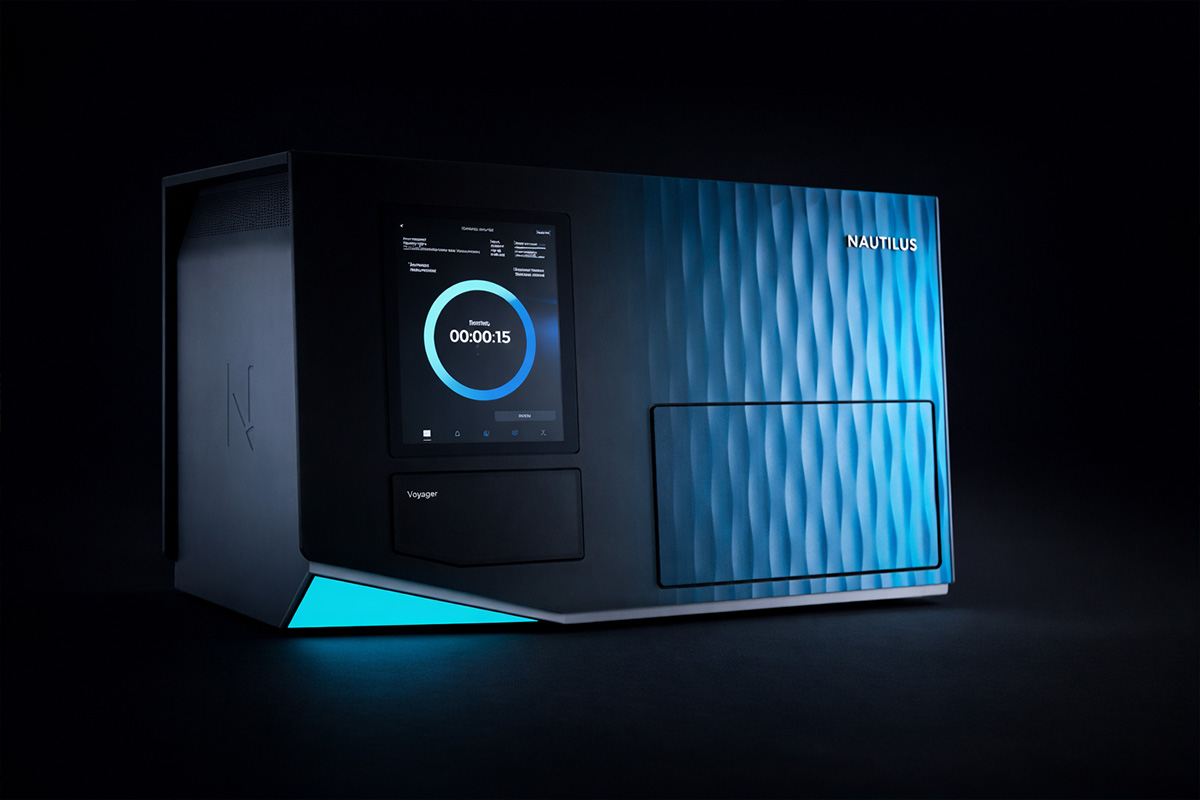
When Seattle-based life sciences company Nautilus Biotechnology stepped onto the stage at US HUPO 2026 in St Louis, the announcement was technical by design. But the implications reach far beyond the conference hall. The company unveiled Voyager, a new proteomics platform that aims to make one of biology’s most complex layers of proteins more readable, repeatable and accessible [1].
Where the difference between healthy aging and disease often lies in subtle molecular shifts, that clarity could matter more than almost any other metric.
Genes tend to get the spotlight, but proteins do the actual work. They regulate metabolism, repair damage and keep cells functioning. As we age, it’s not just that proteins change; it’s how they change. Small variations, called proteoforms, can alter function in ways that tip the balance toward neurodegeneration, inflammation or resilience.
Most existing tools only capture a fraction of this picture. Voyager is Nautilus’ attempt to widen the frame. The platform is designed to analyze billions of intact protein molecules at once, looking at them individually rather than averaging them into a blur.
A helpful analogy: imagine trying to understand a city by listening to crowd noise from a distance. You get volume, not detail. Voyager moves closer, listening to individual voices – at scale.
Voyager’s debut wasn’t purely theoretical. Before the conference, Nautilus installed its first field evaluation unit at the Buck Institute for Research on Aging. There, the platform generated highly reproducible insights into tau proteoforms, a protein family deeply linked to neurodegenerative diseases.
It’s validation. Aging research is notoriously noisy, and reproducibility is often the first casualty. Demonstrating consistent results in a real-world lab setting signals that Voyager is moving beyond prototype status and toward practical deployment.
One of Nautilus’ quieter bets is usability. Voyager is a benchtop instrument with a touchscreen interface and minimal facility requirements. No bespoke lab buildouts. No exotic connections.
“We’re excited to bring our vision of democratizing access to proteomics to fruition and share the Voyager Platform first with researchers seeking deeper insight into protein biology,” said Dr Parag Mallick, cofounder and chief scientist of Nautilus. “After years of intensive development, Voyager is designed to be a benchtop tool that can help advance biomarker discovery, diagnostics, and therapeutic innovation.”
Here, democratizing access is not just a matter of philosophy. In longevity science, breakthroughs increasingly come from interdisciplinary teams and smaller labs that don’t always have access to high-end infrastructure. Tools that travel well tend to spread faster.
Nautilus launched its Iterative Mapping Early Access Program in January 2026, offering researchers an early opportunity to use the technology ahead of full commercial availability, expected in late 2026. Initially, access is provided on a fee-for-service basis, with limited instrument placements planned for later.
The first assay focuses on tau proteoforms, enabling quantification of up to 768 full-length groups that standard methods can’t reach. These “invisible” variants may hold clues to earlier diagnosis and more precise drug targeting in Alzheimer’s disease and related disorders.
“We are thrilled to extend early access to our technology to a select group of researchers who want to be at the forefront of single-molecule proteomics,” said Sujal Patel, cofounder and CEO of Nautilus. “With Voyager, our goal is to empower scientists to ask and answer biological questions that were previously out of reach.”
From an investment and strategy perspective, Voyager arrives at a moment when longevity science is shifting from correlations to mechanisms. Knowing that a protein is involved is no longer enough. The next wave depends on understanding which version, in what quantity, and when it changes over time.
If Voyager delivers on its promise, it could become part of the infrastructure layer for aging research – less a single product than a platform that feeds multiple discovery pipelines, from biomarkers to therapeutics. Longevity, after all, is about understanding the molecular decisions our bodies make every day.
