

Brain metastases remain one of the most devastating complications of advanced lung cancer, affecting nearly one in three patients. While systemic therapies for metastatic lung cancer have improved, the brain remains a sanctuary site—protected by the blood–brain barrier (BBB), which prevents many drugs and immune therapies from reaching tumor deposits.
Now, a preclinical study published in Nature Biomedical Engineering from researchers at Wake Forest University School of Medicine reports a novel strategy: engineering macrophages, innate immune cells that naturally traffic into the brain, to recognize and attack metastatic tumor cells.
The approach represents a conceptual shift in immunotherapy for central nervous system (CNS) disease: Instead of forcing lymphocytes such as CAR T cells across the BBB, the team leveraged macrophages’ intrinsic ability to cross it.
“Brain metastases are incredibly difficult to treat because most therapies simply can’t get inside the brain,” said Shih-Ying Wu, PhD, assistant professor of radiation oncology and corresponding author. “Macrophages, however, naturally know how to cross into the brain. So, we asked: ‘What if we could give them the ability to recognize and destroy cancer cells once they get there?’”
Designing a brain-penetrant cellular therapy
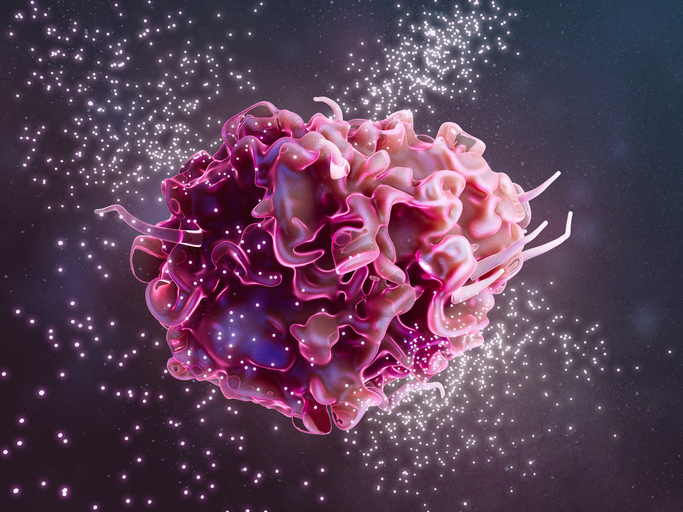
The team engineered macrophages to express a chimeric antigen receptor (CAR) targeting mesothelin, a cell-surface protein overexpressed in lung cancer and enriched in metastatic lesions. These engineered cells, termed CAR macrophages (CARMA), were further enhanced with MyD88, an intracellular signaling adaptor that amplifies inflammatory and activation pathways downstream of Toll-like receptors.
The rationale was twofold: improve tumor recognition via CAR specificity and boost macrophage cytotoxicity and immune activation via MyD88 signaling.
In contrast to CAR T cells, macrophages possess intrinsic phagocytic capacity and are capable of antigen presentation and cytokine secretion—properties that could allow them not only to kill tumor cells directly but also to reprogram the tumor microenvironment.
In murine models of lung cancer brain metastasis, systemically administered MyD88-CAR macrophages successfully crossed the BBB and accumulated within tumor regions. Importantly, the MyD88-enhanced constructs demonstrated stronger antitumor activity compared with non-enhanced CAR macrophages.
Direct killing—and immune remodeling
The engineered macrophages did more than phagocytose mesothelin-positive tumor cells.
According to the study, CARMA cells released inflammatory mediators including TNF-α, which exerted cytotoxic effects even on neighboring tumor cells that did not express the target antigen. This “bystander effect” is particularly relevant in heterogeneous metastatic lesions, where antigen-negative escape variants often undermine targeted therapies.
“These macrophages didn’t just find the tumors; they reshaped the entire immune environment in the brain,” said Kounosuke Watabe, PhD, professor of cancer biology and co-corresponding author. “We were excited to see that they activated other immune cells and helped sustain a long-term anti-tumor response.”
Preclinical models treated with MyD88-CAR macrophages demonstrated significant reductions in brain tumor progression and prolonged survival compared with controls. The therapy also appeared to promote infiltration and activation of endogenous immune cells within the tumor microenvironment—suggesting a coordinated, multi-layered immune response.
For neuro-oncology, where immune privilege and immunosuppressive microenvironments have long limited immunotherapy success, this immune remodeling effect could be especially important.
A potential safety advantage over CAR T
CAR T therapies targeting brain metastases have been explored, but concerns remain regarding neurotoxicity, cytokine release syndrome, and cerebral edema. In the current study, CARMA showed fewer signs of toxicity in preclinical comparisons than CAR T approaches evaluated in parallel.
Macrophages may offer safety advantages because they are less prone to uncontrolled proliferation and massive cytokine surges characteristic of activated T cells. Additionally, their physiological role in tissue homeostasis and debris clearance may allow more controlled immune engagement in delicate CNS environments.
However, translation to humans will require careful evaluation of neuroinflammatory risk, particularly given the MyD88 amplification strategy designed to heighten activation.
Implications for precision oncology
The work has broader implications beyond lung cancer. Mesothelin is expressed in several solid tumors, including pancreatic and ovarian cancers, which also metastasize to the brain in certain contexts. Moreover, the platform is modular: Different CAR constructs could be substituted depending on tumor antigen expression.
This raises the possibility of personalized macrophage-based immunotherapies tailored to the antigenic profile of a patient’s metastatic disease.
For patients with limited treatment options, particularly those who have progressed after radiation and systemic therapy, brain-penetrant cellular immunotherapies could fill a significant unmet need.
“Our ultimate goal is to translate this into a treatment option for patients,” Watabe said. “There is a tremendous need, and we believe this technology has potential.”
From concept to clinic
Before clinical translation, key questions remain. How durable is macrophage persistence in the human brain? Will systemic delivery suffice, or will intrathecal or intracavitary routes be required? How will tumor antigen heterogeneity influence efficacy? And critically, can immune activation be titrated to balance efficacy and neurotoxicity?
Nonetheless, this study represents an important step in rethinking CNS immunotherapy. Rather than viewing the blood–brain barrier as an obstacle to overcome, the Wake Forest team leveraged cells that already know how to cross it.
If successful in early-phase trials, CAR macrophages could inaugurate a new class of brain-directed immunotherapies—one that merges innate immune biology with engineered precision.
