

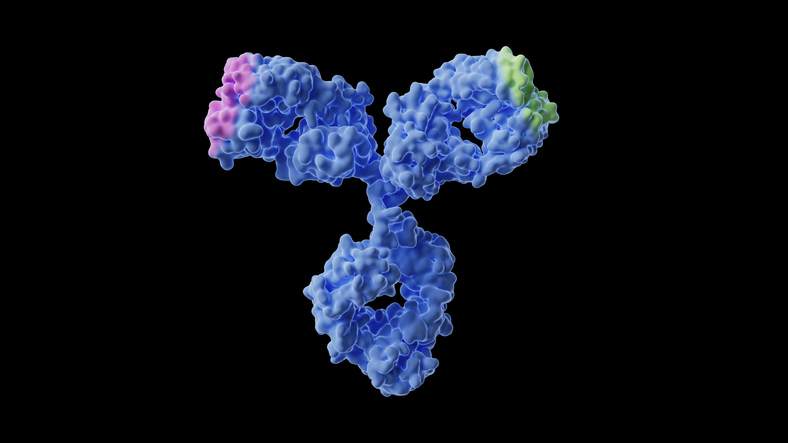
The past few years have seen a striking upward trend in regulatory approvals and industry investment for bispecific antibodies (BsAbs). The global BsAb market is predicted to grow at a CAGR of over 44% through 2030.1 A recent article in Nature highlighted them as accounting for a quarter of the top 20 highest-grossing deals in 2025, potentially marking the start of a new default modality.2
The unique ability of BsAbs to target two molecules and drive synergistic effects opens new options for refractory cancers and autoimmune diseases, potentially addressing numerous medical unmet needs. However, with hundreds of BsAb candidates in clinical trials, first-mover advantage is pivotal. Accelerating BsAb development, without sacrificing quality and safety, has become an urgent priority. However, BsAb development is accompanied by inherent complexities that pose substantial barriers.
For example, unlike mAbs, which rely on a single, homogeneous heavy-light chain pair, BsAbs need two distinct heavy and light chains, which randomly form mismatched byproducts that complicate purification, increase structural constraints that cause protein degradation, aggregation, or fragmentation, and reduce yields. These challenges translate into longer development timelines, higher manufacturing costs, and greater technical uncertainty.
Analytical control
Effective development mandates an integrative approach blending comprehensive analytical controls, molecular engineering, cell line development (CLD) and manufacturing, and process optimization, as well as project management to ensure fast track development.
Before initiating assay development, critical quality attributes (CQAs) should be identified and prioritized based on the quality target product profile (QTPP), ensuring that analytical methods and control strategies are fit-for-purpose, risk-based, and aligned with clinical and regulatory expectations. A proactive, QTPP-driven approach enables early detection, monitoring, and control of quality-related risks, supporting robust clone selection, process optimization, and consistent product quality from early development to commercial manufacturing.
Against this framework, developing reliable bioassays for BsAbs presents distinct analytical challenges due to the unique designs that reflect their complicated and innovative mechanism of action (MoA), as well as dual targets/epitopes. Mismatched byproducts, unassembled chains/half molecules, and high levels of aggregates cannot be completely avoided. Among them, mismatched species frequently occur in forms that are similar to the target proteins in ways that make them indistinguishable by conventional methods.
FDA guidance for BsAb development emphasizes specific considerations for different formats, including aggregates, fragments, homodimers, and other mismatched species, antigen specificity, affinity, avidity, potency, and on/off rates. Phase-appropriate approaches, per regulatory guidance, are widely adopted.
A combination of potency assays is highly preferable to address scientific, medical, and regulatory aspects of biological activities. For example, driven by the MoA, dual binding enzyme-linked immunosorbent assays (ELISA) that reflect simultaneous binding can be well-developed as robust and QC-friendly release assays in early phases. Characterization bioassays, such as single binding ELISA and binding kinetics by surface plasmon resonance (SPR), can provide a comprehensive understanding of biological activities.
More complex and MoA-reflective cell-based assays can be established as characterization assays in early phases or developed into robust and QC-friendly release assays in later phases.
The existence of mismatched byproduct species needs to be experimentally confirmed and evaluated at an early stage. Each existent mismatch species needs to be monitored by appropriate analytical methods to guide clone selection and process development. However, the greatest analytical challenge lies in monitoring mismatched species like heavy chain-heavy chain homodimers and heavy chain-light chain mismatches.
For instance, a four-chain BsAb, composed of two distinct heavy chains and two distinct light chains, could theoretically form nine different four-chain byproducts. Among these, the light chain-swapped species could display the same molecular weight and similar physiochemical features as the target molecule, challenging the limits of conventional analytical capabilities such as mass spectrometry.
It is necessary to screen separation mechanisms and select fit-for-use methods that differentiate between target molecules and mismatched byproducts, according to the QTPP.
In a case study of an asymmetric four-chain BsAb, intact mass spectrometry (MS) was utilized in the chain ratio study and focused on heavy chain mispairing. When the project entered CLD, a subunit MS method was added to monitor light chain-heavy chain mispairing. At process development, a hydrophobicity interaction chromatography (HIC) method was developed to enable fast testing turnaround. The HIC method was continuously optimized to establish the QL as 2% and became QC ready when the process was locked and ready to move into GMP production (Figure 1).

A powerful analytical toolbox is essential. A smart analytical strategy based on advanced technologies can provide guidance to accelerate process development and realize QTPP-based quality risk management (Figure 2).

Molecular assembly and stability
Producing high-quality BsAb requires the assembly of stable molecules while avoiding common issues that reduce yields and increase immunogenicity risk, such as chain mispairing and homodimer formation. This involves systematic tuning of key parameters to establish a foundation for successful cell line generation, alongside the development of analytical methods that ensure early detection of CQAs and key byproducts.
Systematic tuning can be performed in early-stage “research pool” studies. Over a period of about six weeks, these studies use a multi-parametric evaluation framework to select optimal stable transfection conditions.
Figure 3 illustrates a case study evaluating the effects of key parameters (vector design, codon usage, signal peptides, chain expression ratios) on product quality and productivity. Such systematic analysis enables the identification of optimal conditions for stable transfection. Meanwhile, the proactive development of suitable analytical methods, such as those described above, ultimately delivers cell lines with optimized performance, while establishing essential quality control measures.

Building on the foundation established by research pool studies, the choice of host cell platform further boosts the efficiency and stability of BsAb production. For example, the Chinese hamster ovary (CHO) WuXia™ cell line, which has been utilized in the development of over 1,000 cell lines for clinical and commercial manufacturing applications, is extensively used for BsAb.
A new cell line, WuXia TrueSite, leverages site-specific integration technology to rapidly develop stable cell lines with high productivity. It has demonstrated considerable titer improvement and >99% stability, with less than 20% titer reduction after 60 population doubling levels (PDLs). See Figure 4.

This means that cell line stability is no longer a rate-limiting step for final clone selection, and it may even be possible to eliminate the need for cell line stability studies from the critical path, directly accelerating development timelines. Specifically, WuXia TrueSite enables acceleration of Master Cell Bank (MCB) establishment to 9–10 weeks, cutting the overall conventional development timeline in half (Figure 5).
To date, WuXia TrueSite has been applied to eight BsAb development programs, with an average pool titer of 6.5 g/L (range: 5.8–7.9g/L) and a monomeric purity of at least 90%.

With a robust and high-performing host cell platform secured, supported by optimized cell culture conditions that maximize yield while preserving BsAb stability, integrated bioengineering and cell culture strategies address the intrinsic complexities of BsAb, facilitating efficient transition from clone selection through to downstream processing and manufacturing.
Different BsAb formats necessitate different downstream processes using highly perceptive, tailored approaches. Establishing which processes are suited to which molecules can be a daunting task. However, experience with nearly 200 BsAb projects reveals that some commonalities can be leveraged for greater efficiency.
For example, some BsAbs might share similar engineering strategies or key features such as T cell receptor (TCR) constant domains, single-chain variable fragments (scFv), common light chains, knobs-into-holes (KIH), or charge pairing. Prior experience with common elements can guide tailored downstream strategies that can be tested on new BsAbs with similar designs.
For instance, ScFv typically causes 10–20% aggregates that can be efficiently removed by mixed-mode chromatography, while VHH sometimes triggers truncated variants that can be removed through polishing steps. This kind of insight, based on extensive direct experience from a large number of BsAb projects, can greatly accelerate the development of appropriate analytical control processes.
In particular, the capability of chromatographic techniques to remove various byproducts has been intensively investigated, helping to accelerate the development of the BsAb purification process (Table 1). By relying on a comprehensive suite of techniques, including extensive expertise in chromatography technology and a database of nearly 200 BsAb projects, successful downstream processes can be developed within a markedly reduced timeline. 
Conclusion
From analytical control to cell line development, through downstream processes to manufacturing, BsAbs present challenges in protein expression, purity, and stability. Addressing these issues throughout the BsAb lifecycle requires in-depth knowledge, expertise, and a suite of modern tools and technologies that enable the optimization of molecular assembly, stability, purity, and manufacturability.
The impact of an integrative multidisciplinary approach cannot be overestimated. By blending molecular engineering and cell line development with process analytics and optimization, developers can shorten timelines with minimal risk and without compromising product quality. These strategies pave the way for faster development and the delivery of more novel therapeutics to patients in need more quickly than ever before.
Sherry Gu is executive vice president and CTO at WuXi Biologics.
References:
- Grand View Research. Bispecific Antibodies Market (2023–2030), www.grandviewresearch.com.
2. Marshall A. The year of the bispecific in oncology and beyond. Nature, December 1, 2025.
