

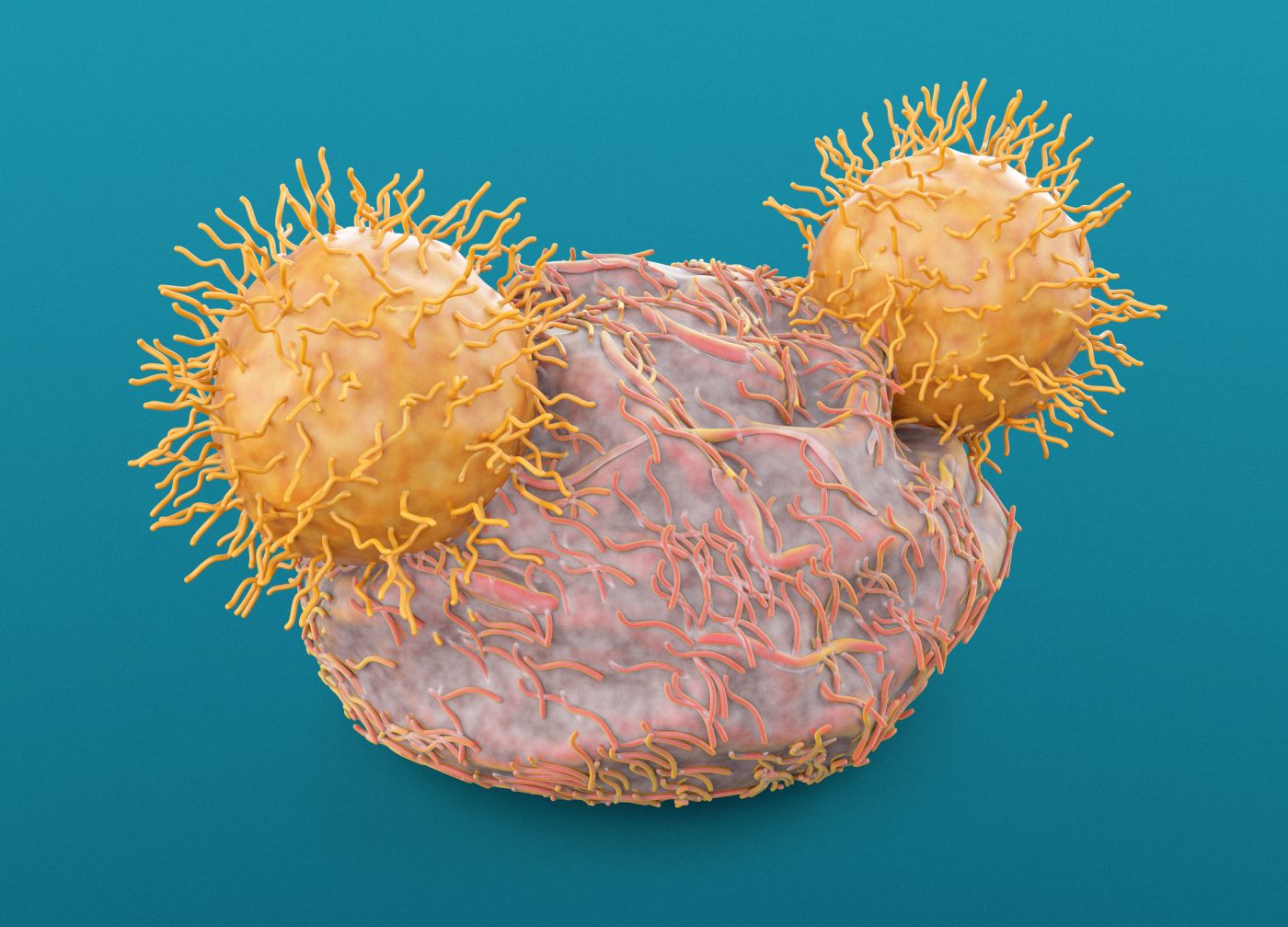
Researchers at University of California, Los Angeles (UCLA) have developed a next-generation CAR T cell therapy that strengthens the immune response by locally targeting the tumor microenvironment. A study in mice, published in Science Translational Medicine, has shown that these “armored” CAR T cells can significantly improve outcomes in glioma and ovarian cancer, two cancer types that are often resistant to immunotherapy.
“Despite the success of CAR T therapies for certain blood cancers, solid tumors have remained largely resistant,” said Yvonne Chen, PhD, professor and co-director of the tumor immunology and immunotherapy program at the UCLA Health Jonsson Comprehensive Cancer Center and senior author of the study. “A major reason is that many solid tumors create an immunosuppressive microenvironment that blocks immune cells and protects the tumor. By equipping CAR T cells to modify the tumor microenvironment, we aim to both enhance the function of CAR T cells and boost the anti-tumor activity of endogenous, or naturally occurring, immune cells in the body.”
Chen and colleagues engineered CAR T cells to produce a single-chain variable fragment (scFv) that binds to and blocks vascular endothelial growth factor A (VEGF), a protein often produced by tumors that contributes to the suppression of the immune response and the growth of tumor vasculature.
VEGF-blocking therapies have been in use for more than 20 years to prevent tumors from growing new blood vessels. However, these drugs are delivered systemically, which can cause serious side effects throughout the body and limit their efficacy. The approach developed by the UCLA team seeks to circumvent these limitations by having CAR T cells locally produce the anti-VEGF molecule, concentrating its activity inside the tumor and in its surroundings.
The armored CAR T cells were tested in mouse models of glioma and ovarian cancer and compared to conventional CAR T cells both with and without systemic anti-VEGF antibody therapy. In all scenarios, the armored CAR T cells outperformed conventional treatment.
In mice with ovarian cancer, the armored approach slowed tumor growth more effectively, increased the number of long-term survivors, and boosted levels of interferon-gamma—a cytokine that activates the antitumor immune response. In mice with glioma, the armored approach resulted in a complete response in up to 88% of mice compared to up to 38% with a standard approach. Furthermore, the armored cells prevented abnormal blood vessel growth and hypoxia while conventional therapy worsened them both.
“Ovarian cancer and glioblastoma, for example, are aggressive cancers that often recur despite standard therapies, and at that point, there are very few effective treatment options,” said Sanaz Memarzadeh, MD, PhD, professor of obstetrics and gynecology at the David Geffen School of Medicine at UCLA and co-author on the study. “In this state, current therapies may slow disease progression but rarely lead to long-term remission, highlighting the urgent need for new approaches that can overcome tumor defenses and improve patient outcomes.”
“This is an exciting step toward making CAR T therapy effective against solid tumors,” said Chen. “By giving CAR T cells the ability to reshape the tumor environment, we hope to generate a therapy that not only attacks tumor cells directly, but also awakens and recruits the endogenous immune system in the fight against cancer.”
