

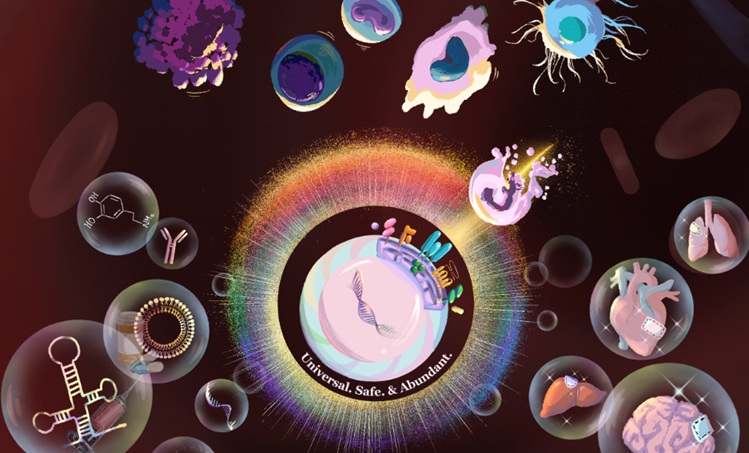
Researchers have genetically engineered a stem cell line to hide from the immune system when transplanted, showing promise as the first universal donor stem cells. In a proof-of-concept study published in Stem Cell Reports, these cloaked cells successfully engrafted and survived in humanized mice for at least five months.
Pluripotent stem cells hold great potential for the development of regenerative cell therapies across a wide range of indications, such as Parkinson’s or type 1 diabetes. In practice, though, their use comes with a series of major limitations currently holding back their wider adoption.
Autologous pluripotent stem cells can be generated by reprogramming somatic cells from a patient and infusing them back. This approach ensures the immune system does not recognize these cells as a foreign threat, but it requires an individualized manufacturing process that is costly and time-consuming.
Donor stem cells could address these manufacturing issues. However, they face immune rejection once infused into the patient. This approach is only successful in combination with an immunosuppressive treatment, which causes severe complications in the long term.
In the current study, a team of researchers led by Danny Chan, PhD, professor of stem cell biology at the University of Hong Kong, and Andras Nagy, senior scientist at the Lunenfeld-Tanenbaum Research Institute in Canada, engineered human pluripotent stem cells to overcome immune rejection by becoming invisible to the immune system.
Their so-called “AlloAccept” approach consists of genetically engineering pluripotent stem cells to overexpress eight immunomodulatory genes, especially selected to make the immune system recognize the cells as belonging to the patient rather than as foreign invaders. These cells were also engineered to carry a “SafeCell” kill switch that is activated in the presence of the drug ganciclovir, halting the growth of new tissue.
In order to test their performance, these engineered cells were transplanted into the skin of mice with humanized immune systems. While unmodified stem cells were rapidly rejected, the engineered cells successfully engrafted, formed growing tissues, and survived until the end of the five months the experiment lasted for. These results are particularly remarkable given that the skin is a tissue with high immune activity, making it a difficult site for transplant success.
Administering ganciclovir successfully killed proliferating stem cells and stopped tissue growth, rendering the remaining tissue dormant.
The researchers then tested whether these cloaked cells could survive against an immune system that is already sensitized against them. First, unmodified stem cells were administered to the humanized mice to expose their immune system and prime it against the cells. Even in the presence of antibodies against them, the engineered cells could successfully engraft and grow new tissue in the humanized mice, showcasing the strength of the immune protection granted by this approach.
While these findings support the use of these cloaking approach to develop universal donor stem cells, the current study is meant as a proof of concept. More preclinical and clinical work will be necessary to determine the long-term efficacy and safety of this cloaking approach before it can be implemented in the clinic.
