

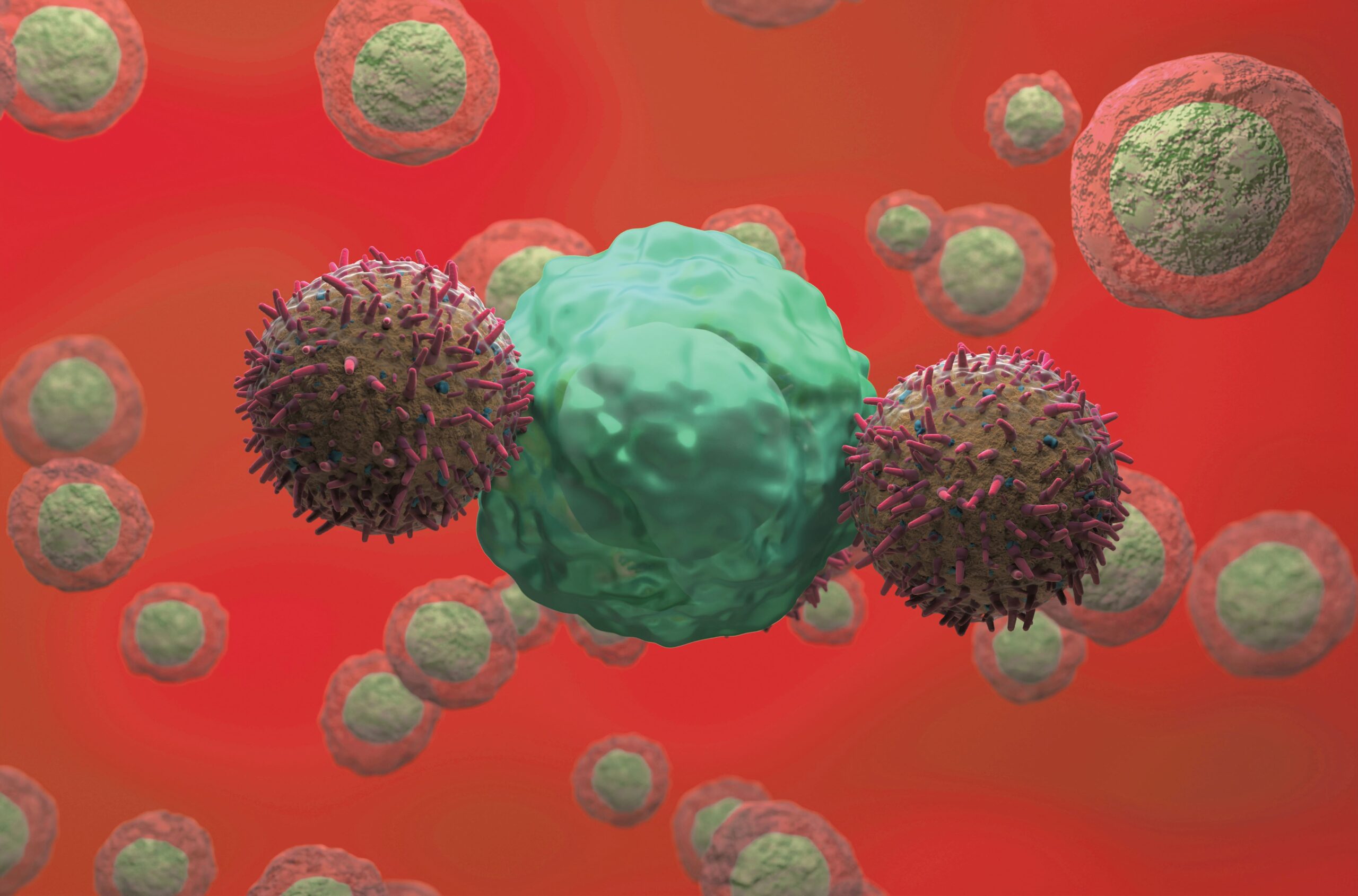
In a new Science Advances paper, a research team led by scientists at Albert Einstein College of Medicine describe a manufacturing strategy for engineering immune cells that dramatically prolongs their effectiveness after being infused into patients. According to the scientists, their approach, which was tested in mouse models, generated longer-lasting immune cells that provided more sustained control of blood cancers and suppression of HIV infection in mouse models compared to the existing approach.
The paper is titled “IL-7/IL-15/IL-21 cytokine-fusion scaffold generates highly functional CAR T cells enriched in long-lived T memory stem cells.” For the team, “our goal was to engineer therapeutic immune cells so they would not only be powerful killers but also long-lived and capable of self-renewal, to markedly extend their effectiveness after infusion into patients,” explained Harris Goldstein, MD, senior author, professor of pediatrics, microbiology & immunology, and director of the Einstein-Rockefeller-CUNY-Mount Sinai Center for AIDS Research. By improving how CAR T cells are generated, “we would prolong their functional activity and prevent disease relapse after their potency wanes.”
CAR T cell therapies are made by removing a person’s immune T cells and inserting genes that reprogram them to recognize and selectively eliminate cancer cells or virus-infected cells. Although CAR T therapy can initially produce dramatic remissions, their killing ability often diminishes over time. For example, roughly half of treated cancer patients relapse as the activity of the CAR T cells dwindles. That persistence problem has also limited efforts to extend CAR T therapy to treating people living with HIV.
To overcome this challenge, Goldstein and his team developed an approach for producing CAR T cells that uses a specially engineered protein scaffold called HCW9206 rather than the standard activation protocol. This scaffold links three naturally occurring cytokines namely, IL-7, IL-15, and IL21, which are known to promote T cell survival and immune memory.
According to results described in the paper, this multi-cytokine scaffold produced CAR T cells that retained strong disease-fighting abilities. Crucially, more than half of the cells were T memory stem cells, which are capable of self-renewal and thus generating new batches of highly active immune cell fighters over time. By way of comparison, less than five percent of CAR T cells produced using the conventional method had this stem cell-like activity.
In tests involving a mouse model of human leukemia, both conventional and multi-cytokine scaffold generated CAR T cells effectively eliminated cancer after initial treatment. But when the scientists simulated cancer relapse by re-infusing leukemia cells into mice, only the multi-cytokine scaffold generated CAR T cells mounted a response to prevent cancer recurrence.
The scientists also report good results from treating a humanized mouse mode of HIV infection with multi-cytokine scaffold generated CAR T cells. Specifically, they report that the treatment eliminated significantly more HIV-infected cells than conventionally manufactured CAR T cells. In addition, CAR T cells generated from patients living with HIV using the new multi-cytokine scaffold production technique successfully eradicated HIV-infected cells.
“Now that we have shown that we can generate potent CAR T cells that are longer-lived, we may be able to reduce blood cancer relapse rates and improve long-term remission for cancer patients,” Goldstein said. “For HIV, immune cells with this kind of staying power may one day help maintain viral control after stopping antiretroviral therapy, a critical step toward sustained drug-free remission and, potentially, a functional cure.”
