

Why aging science built around male biology keeps failing women, and what a female-first approach could finally fix.
Longevity conversations have a habit of starting in the same place. Fasting windows, biomarkers, supplements, optimization. What they rarely start with is a more uncomfortable truth: that much of aging science was built with men as the default, and women as the adjustment.
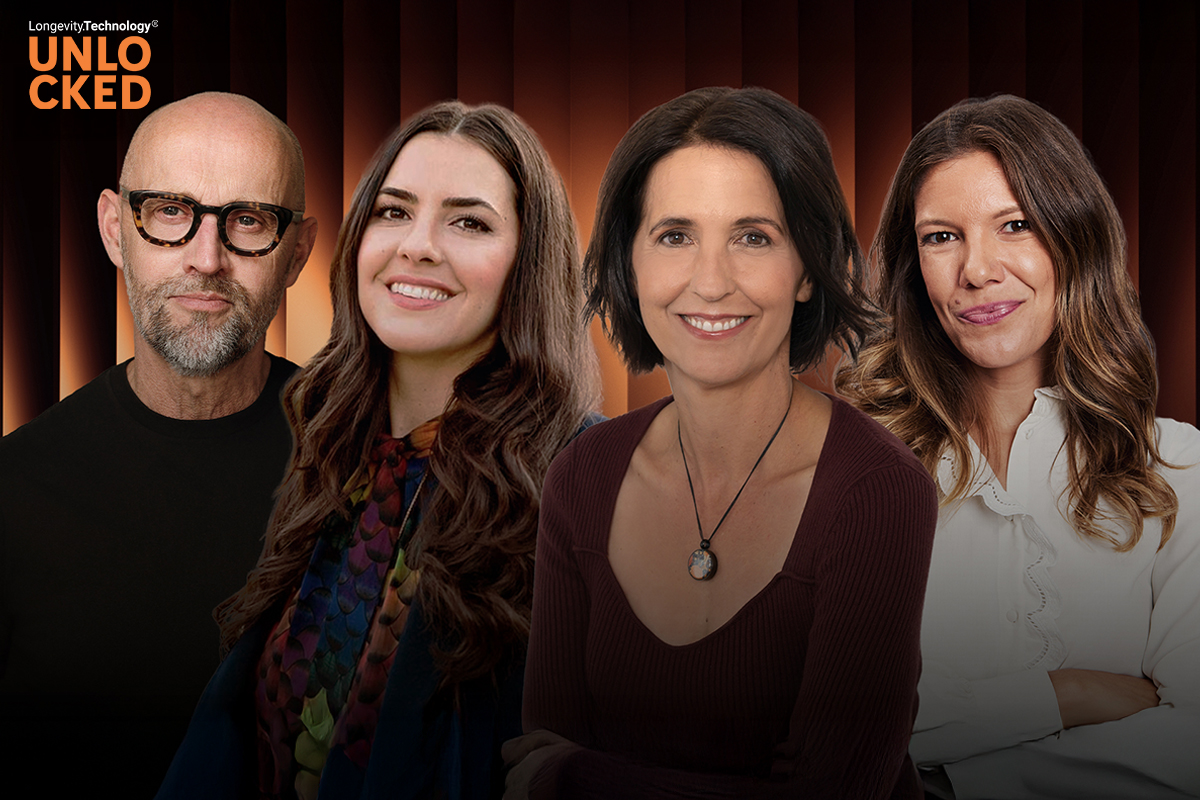
The latest episode of Longevity.Technology UNLOCKED pushes back against that idea. Hosted by Phil Newman and Nina Patrick, the conversation centers on female healthspan, not as a niche category, but as a missing foundation of longevity science itself.
“Done right, these strategies can improve energy, recovery, metabolic health, and obviously overall resilience,” Newman says early on. “And done wrong, they can obviously be ineffective and possibly even risky.” It’s a line that quietly acknowledges how often women have been on the receiving end of the latter.
To unpack why, the episode brings together two clinicians who have spent years questioning medical defaults: physician and precision medicine advocate Molly Maloof, and naturopathic doctor and author Lara Briden.
Maloof’s story begins inside the biohacking movement itself. Working with executives and entrepreneurs in Silicon Valley, she applied the same longevity strategies to herself that worked for her male clients…until they didn’t.
“A lot of the things that were working for my male clients were not working for me,” she says. Some interventions helped temporarily. She describes reversing insulin resistance through fasting and glucose monitoring. But stacking too many “biohacks” pushed her body too far. “I started burning out my adrenals… I was really damaging my hormones.”
The issue wasn’t metabolic health. Maloof is clear that “metabolic health is fundamentally the biggest driver of aging.” The issue was force. Treating women’s bodies like static machines instead of adaptive systems. Women, she notes, experience hormonal shifts earlier and more gradually than most doctors recognize. “A lot of women begin premenopause way before doctors have any idea they’re starting to have hormonal shifts.” The result is a long stretch of being told nothing is wrong when something clearly is.
Briden takes the critique further, reframing how we think about human physiology altogether. With a background in evolutionary biology, she challenges the idea that male biology is the standard template.
“The standard version of mammal physiology is female,” she says. “That means the standard version is cyclic.”
In other words, women aren’t erratic; they’re rhythmic. Monthly hormonal changes follow a logic shaped by evolution. Men, by contrast, produce hormones daily, with fluctuations driven by stress and social cues. Briden offers a striking example: testosterone levels can drop for days after a man’s favorite sports team loses.
And yet, women are the ones labeled “hormonally unstable.” That bias shows up in technology, too. Briden recalls how early wearables obsessively tracked heart rate variability and sleep while ignoring basal body temperature and ovulation. “You missed the number one most obvious thing to track in humans,” she remembers thinking. Female physiology wasn’t misunderstood; it simply wasn’t centered.
Women already outlive men on average, but Briden cautions against treating that as a mystery. Biology plays a role. Two X chromosomes offer redundancy and resilience across the lifespan. Estrogen, particularly estradiol, supports insulin sensitivity and mitochondrial health – a kind of metabolic advantage during reproductive years and, potentially, beyond.
Maloof adds another layer: connection. “We are meant to be pack animals,” she says. Women tend to maintain stronger social bonds as they age, and those bonds are protective. Oxytocin, she explains, is “neuroprotective, mitoprotective, cardioprotective, antioxidant, anti-inflammatory – literally nature’s medicine.” Longevity, in this discussion, isn’t just cellular. It’s relational. Community is not a “soft” factor; it’s biological infrastructure.
If there’s one prescription Maloof returns to, it’s fitness. Not in the Instagram sense, but in the unglamorous metrics that actually predict survival. “The two biggest factors that you really need to understand for your aging are your VO₂ max and your muscle mass,” she says.
Muscle is protective. It stabilizes bones, prevents falls and preserves independence. And yet, many women are still discouraged from strength training by doctors who were never trained in exercise science themselves.
“Doctors are trusted for health advice when they actually have no business giving advice on fitness because they’ve never been trained,” Maloof admits, recalling how she had to design her own lifestyle medicine course in medical school. Her conclusion is blunt: “Exercise is the number one anti-aging drug on the market.”
What unites Maloof and Briden is not a single protocol, but a philosophy. Female longevity isn’t about copying male strategies and adjusting the dosage. It’s about designing medicine, technology and care around bodies that are cyclical, social and adaptive.
Women are not the exception to aging science. They are the test of whether it works at all.Catch new episodes of Longevity.Technology UNLOCKED every Monday, where the people shaping aging science speak in their own words. Available on Apple Podcasts, Spotify and YouTube.
