
Close Menu
My Blog

    Subscribe to Updates

    Get the latest creative news from FooBar about art, design and business.

    What's Hot

    Nautilus debuts Voyager platform in push toward next-gen proteomics

    March 1, 2026

    First-in-Human Success for Prenatal Stem Cell Therapy in Spina Bifida

    February 28, 2026

    Pressure-Driven Pathway Links Liver Congestion to Fibrosis and Cancer

    February 28, 2026
    Facebook X (Twitter) Instagram
    X (Twitter) YouTube
    My BlogMy Blog
    Sunday, March 1
    • Home
    • About Us
    • Healthy Living
    • DNA & Genetics
    • Podcast
    • Shop
    My Blog
    Home»DNA & Genetics»Estrogen Shields Kidneys from Chronic Disease
    DNA & Genetics

    Estrogen Shields Kidneys from Chronic Disease

    adminBy adminSeptember 5, 2025No Comments3 Mins Read
    Facebook Twitter Pinterest LinkedIn Tumblr WhatsApp VKontakte Email
    The Scientist Logo
    Share
    Facebook Twitter LinkedIn Pinterest Email

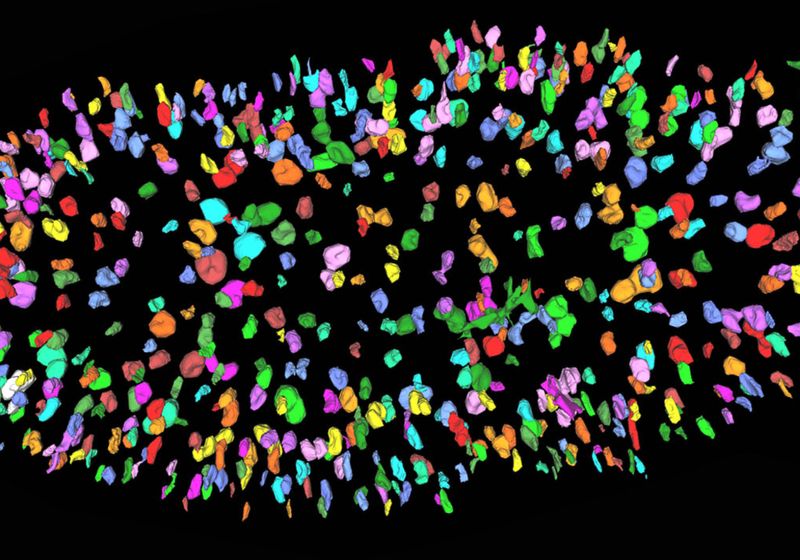
    Estrogen’s role in kidney health reveals why women have a lower risk of chronic kidney disease. Shown here are AI-labeled filtering units in a mouse kidney.

    Image credit:Conte C et al. Science, 2025

    Chronic kidney disease is an increasing global health problem that affects approximately 700 million people worldwide.1 It is a progressive condition wherein the kidneys lose their ability to filter waste and excess fluid from the blood, which consequently affects other organs of the body. In fact, the disease not only increases the chances of kidney failure, but also of developing cardiovascular disease, putting it on the path to be the fifth leading cause of death worldwide by 2040.2

    One of the leading risk factors of chronic kidney disease is male sex.3 However, the incidence rates of the disease are also high in postmenopausal females or those who have had their ovaries removed. Considering these trends, Paola Romagnani, a nephrologist at the University of Florence, hypothesized that female sex hormones—such as estrogen—could play a role in shielding the kidneys from deterioration. Now, in a study published in Science, Romagnani and her team showed that estrogen signaling promoted regeneration of key filtering cells called podocytes in female mouse kidneys, thus protecting the organs from disease during reproductive years.4 Their findings could pave way for potential therapeutics in the future.

    The adult kidney has a limited capacity to regenerate injured or diseased podocytes from renal progenitor cells (RPCs). Romagnani and her team assessed how sex affected the limits of podocyte renewal in mice at different ages. In transgenic mice with fluorescently labeled RPCs, the researchers found that compared to male mice, female mice had more RPCs that could generate more podocytes. Notably, the differences emerged after the mice hit puberty, which indicated a role for sex hormones. The team tested their theory by assessing the effects of estrogen, progesterone, and testosterone on cultured human RPCs and observed that the former two promoted proliferation of the cells and their differentiation into podocytes.

    Next, Romagnani and her group analyzed how disrupting estrogen signaling affected podocyte renewal in animals. They generated female mice without estrogen receptors in the RPCs and observed that their rates of podocyte generation were no different from that of male mice, and more than five times lower than in female mice.

    One of the times when kidneys rev up their activity is during pregnancy. A pregnant person’s kidneys increase their filtration rates by 40-50 percent. The researchers assessed how podocyte numbers adapt to this increased demand by tracing the fate of mouse RPCs with or without estrogen receptors. They found that estrogen signaling in RPCs promoted the generation of new podocytes during pregnancy. A disruption of this adaptive process led to preeclampsia, a serious complication that involves onset of high blood pressure and damage to maternal organs like kidneys or liver. The pups of preeclamptic mice had lower kidney weights and fewer filtering units, thus reducing their kidney resilience to injury later in life. To determine how human kidneys adapt to the elevated filtration demands, the team analyzed the urine of pregnant women and healthy controls and found shed RPCs only in the former group, which differentiated into podocytes in lab cultures.

    These findings highlight the mechanistic link between kidney health, preeclampsia, and estrogen signaling, offering avenues for further research and development of improved treatments.

    Chronic Disease Estrogen Kidneys Shields
    Share. Facebook Twitter Pinterest LinkedIn Tumblr WhatsApp Email
    Previous ArticlePharmaLinea obtains certification from The Good Pill Co.
    Next Article 13 Foods and Supplements to Avoid During Chemotherapy
    admin
    • Website

    Related Posts

    A Video Report from AGBT

    February 27, 2026

    Novo Nordisk, Vivtex Ink Up to $2.1B Deal to Develop Oral Biologics for Metabolic Conditions

    February 27, 2026

    Increasing Rice Yields with Gene-Informed Selective Breeding

    February 27, 2026

    Mutant p53 Selective Reactivation Demonstrated in Advanced Solid Tumors

    February 27, 2026
    Leave A Reply Cancel Reply

    Our Picks

    9 Time-Saving Kitchen Gadgets for Fall at Amazon

    September 5, 2025

    Why Exercise Is So Important For Heart Health, From An MD

    September 5, 2025

    An Engineered Protein Helps Phagocytes Gobble Up Diseased Cells

    September 5, 2025

    How To Get Rid Of Hangnails + Causes From Experts

    September 5, 2025
    • Facebook
    • Twitter
    • Pinterest
    • Instagram
    • YouTube
    • Vimeo
    Don't Miss
    Longevity

    Nautilus debuts Voyager platform in push toward next-gen proteomics

    By adminMarch 1, 20260

    Company’s new benchtop system promises a clearer view of proteins following validation at a leading…

    First-in-Human Success for Prenatal Stem Cell Therapy in Spina Bifida

    February 28, 2026

    Pressure-Driven Pathway Links Liver Congestion to Fibrosis and Cancer

    February 28, 2026

    A cellular atlas of aging comes into focus

    February 28, 2026

    Subscribe to Updates

    Get the latest creative news from SmartMag about art & design.

    About Us

    At FineGut, our mission is simple: to enhance your self-awareness when it comes to your gut health. We believe that a healthy gut is the foundation of overall well-being, and understanding the brain–gut connection can truly transform the way you live.

    Our Picks

    9 Time-Saving Kitchen Gadgets for Fall at Amazon

    September 5, 2025

    Why Exercise Is So Important For Heart Health, From An MD

    September 5, 2025

    An Engineered Protein Helps Phagocytes Gobble Up Diseased Cells

    September 5, 2025
    Gut Health

    Nautilus debuts Voyager platform in push toward next-gen proteomics

    March 1, 2026

    First-in-Human Success for Prenatal Stem Cell Therapy in Spina Bifida

    February 28, 2026

    Pressure-Driven Pathway Links Liver Congestion to Fibrosis and Cancer

    February 28, 2026
    X (Twitter) YouTube
    • Contact us
    • Privacy Policy
    • Disclaimer
    • Terms and Conditions
    © 2026 finegut.com. Designed by Pro.

    Type above and press Enter to search. Press Esc to cancel.