

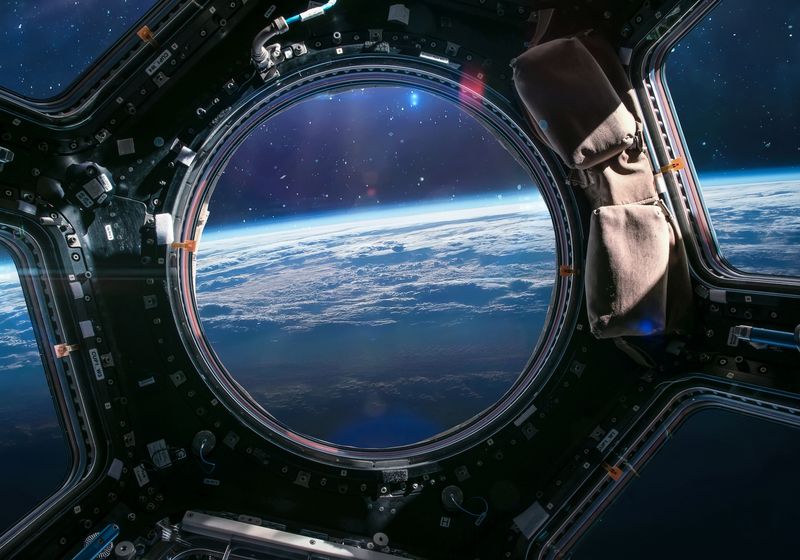
Stem cells that spent about a month in space showed signs of accelerated aging and accumulated cancer-linked mutations.
According to Einstein’s theory of relativity, time passes more slowly in space. As a result, astronauts would experience a delay in aging. However, scientists found that space travel may have the opposite effect by accelerating aging in human cells, likely due to the extreme physiological stresses it imposes on the body.
“Space is the ultimate stress test for the human body,” said Catriona Jamieson, a stem cell biologist at the University of California, San Diego, in a statement.
Recently, Jamieson’s team discovered that spaceflight accelerates aging in human blood-forming stem cells.1 The researchers found that stem cells that spent about a month in space had a reduced self-renewal capacity and showed signs of molecular aging. Their results, published in Cell Stem Cell, demonstrate the possible dangers of spending extended time in space.
In 2015, NASA recruited twin astronauts Scott and Mark Kelly for an experiment to investigate the effects of spaceflight stress on humans.2 The researchers found significant differences in molecular profiles between Scott, who spent nearly a year in space, and his identical twin Mark, who stayed on Earth. Some of the differences, such as telomere shortening and signs of DNA damage, persisted until the endpoint of the study, six months after Scott returned to Earth.
Catriona Jamieson, a stem cell biologist at the University of California, San Diego, investigates how space travel affects cells in the human body.
UC San Diego Health Sciences
Jamieson wanted to investigate the effects of spaceflight stress on cells in greater molecular detail by focusing on a specific cell type. As a stem cell researcher, she chose to investigate this phenomenon in hematopoietic stem and progenitor cells (HSPCs), which are responsible for renewing blood and immune cells. For the present study, Jamieson’s team collected HSPCs from the bone marrow of individuals undergoing hip replacement surgery. The team cultured these cells for up to 45 days either at the International Space Station (ISS) or in a research facility on Earth.
The researchers used several methods to evaluate the cells’ aging process. First, they expressed a fluorescent gene reporter, which allowed them to distinguish cells in different phases of the cell cycle under the microscope in real time. Using this system, the team found that compared to HSPCs that stayed on Earth, their counterparts in space had higher cell cycle activity, indicated by increased cell division and reduced dormancy—both of which suggest faster aging.
The team also performed additional experiments after the cells from ISS returned to Earth, including whole-genome and RNA sequencing, to evaluate changes in telomere length, genomic stability, and gene expression patterns associated with aging. Like in the twin study, the researchers observed a similar pattern showing a reduction in telomere length as well as significantly lower gene expression associated with telomere maintenance.
In addition to the changes associated with aging, Jamieson’s team saw a higher prevalence of single-base mutations in stem cells that went to space, indicating genome instability. The researchers used a computational tool called AlphaMissense to predict the possibly deleterious effects of this instability.3 The team found that the stem cells that underwent spaceflight accumulated mutations associated with clonal hematopoiesis, a condition where a mutant blood cell proliferates and can contribute to the development of acute myeloid leukemia later in life.4 They did not identify such mutations in cells that never went to space.
In the future, Jamieson’s team, in partnership with NASA, hopes to find better ways to monitor molecular changes in astronauts in real time and identify strategies that could help prevent or treat the deleterious effects of space travel. Jamieson believes that advances in space research will likely also benefit humans on Earth, noting that it “has accelerated technological advancements on Earth, making ground-based research easier and more relevant to human health.”
