

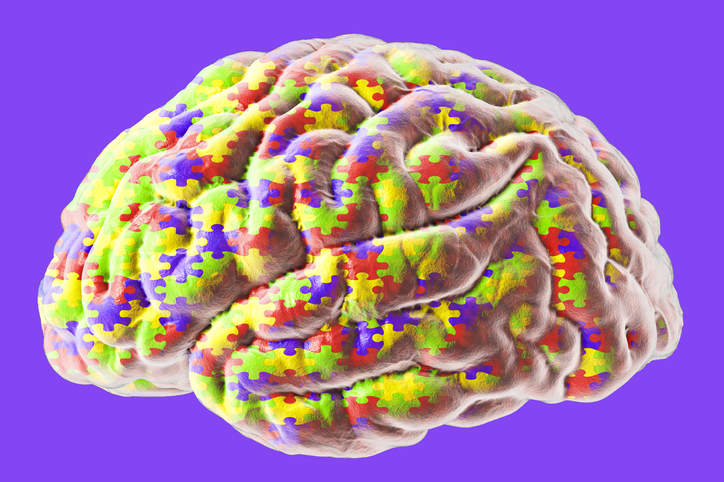
Genes relating to autism spectrum disorder (ASD) could have conferred benefits during human evolution, according to research that could shine light onto the high rates of neurodiversity worldwide. The researchers say their findings provide the strongest evidence to date that natural selection for human-specific traits has increased the likelihood of certain disorders.
The study, in Molecular Biology and Evolution, suggests the rapid rise of genes linked with autism, which may have slowed brain development after birth and led to more complex thinking or increased capacity for language. Alternatively, ASD-related genes could have compensated for negative effects in some other human-specific traits.
The findings may help explain why autism is estimated to be found in one in every 100 children, but is either rare or completely absent in non-human primates.
“Our results suggest that some of the same genetic changes that make the human brain unique also made humans more neurodiverse,” said the study’s lead author, Alexander Starr, a PhD student at Stanford University.
The mammalian brain contains an enormous array of neuronal cell types, with nearly as many neuronal types as there are protein-coding genes in the genome.
Some cell types are far more evolutionarily conserved than others, but the factors driving the differences in evolutionary rates remain unknown.
Cross-species studies of the neocortex have revealed that most cortical neuronal types are highly conserved in primates and rodents, with very few neocortical neuronal types specific to primates and none being entirely unique to humans.
This suggests that divergent patterns in the gene expression, relative proportions, and connectivity of homologous cell types could play a central role in establishing human cognition.
Just as the evolutionary rates of proteins are measured by the total rate of change in their amino acids, the evolutionary rates of cell types—which are typically defined by their patterns of gene expression—can be measured by divergence in genome-wide gene expression.
Starr and co-workers hypothesized that highly abundant neuronal cell types might be under greater selective constraint than rarer neuronal types, leading to variations in their rates of evolution. They tested this using recently published cross-species single-nucleus RNA-sequencing datasets from three distinct regions of the mammalian neocortex.
The team discovered a strong connection between cell type proportion and evolutionary divergence in the neocortex, suggesting this relationship held multiple levels of biological organization.
Specifically, there was a strong negative correlation between the abundance of each neuronal cell type and the rate at which its gene expression levels diverged.
More abundant neuronal subtypes showed greater gene expression conservation between species, which was replicated across three independent datasets covering more than a million neurons across six mammalian species.
This remained very strong when collectively analyzing inhibitory and excitatory neurons, despite their very different developmental origins and functions.
The investigators note that ASD has been linked with layer 2/3 intratelencephalic excitatory (L2/3 IT) neurons, which enables communication between neocortical areas and are thought to be important for uniquely human cognitive abilities.
They found that L2/3 IT neurons evolved unexpectedly quickly in the human lineage compared to other apes.
This accelerated evolution included the disproportionate downregulation of genes associated with ASD and schizophrenia, two neurological disorders closely linked to L2/3 IT neurons that are common in humans but rare in other apes. This downregulation was present both in adult neurons and in organoid models of the developing brain and was likely due to polygenic positive selection on cis-regulation.
“Overall, our findings provide the strongest evidence to date supporting the long-standing hypothesis that natural selection for human-specific traits has increased the likelihood of certain disorders,” the researchers wrote.
“Although our results strongly suggest natural selection for downregulation of ASD-linked genes, the reason why this conferred fitness benefits to our ancestors remains an open question.”
They speculated: “If downregulation of ASD-linked genes conferred a fitness advantage by slowing postnatal brain development or increasing the capacity for language, that could result in the signal of positive selection we observed.
“On the other hand, the downregulation we observed may have been compensatory and reduced the negative effects of some other human-specific trait or traits.”
For example, they point out that the ratio of excitatory and inhibitory synapses on pyramidal neurons is fairly constant between humans and rodents despite massive differences in brain and neuron size.
“If human brain expansion, changes in metabolism, or any other factor shifted this balance away from the fitness optimum, down-regulation of ASD-linked genes could potentially compensate.”
