

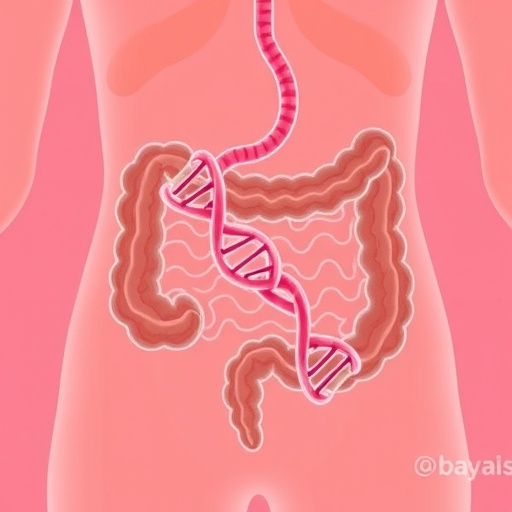
A groundbreaking study from the University of Sydney’s Charles Perkins Centre is reshaping our understanding of how genetics influence the gut microbiome and overall health. For decades, gut health has been primarily associated with diet and lifestyle factors, but this pioneering research suggests that our genes actively sculpt the bacterial ecosystem within our intestines. Such a revelation challenges long-held assumptions, indicating that the complex interplay between our genetic makeup and microbial inhabitants is far more dynamic and influential than previously recognized.
Central to this research are tiny proteins known as alpha-defensins, naturally produced peptides that serve as molecular gardeners within the gut microbiome. These peptides selectively foster beneficial bacterial populations while suppressing harmful strains, thus actively shaping the diverse microbial community critical to metabolic balance. The study focused on murine models, revealing that mice genetically predisposed to produce higher levels of alpha-defensins exhibited significantly healthier gut microbiomes and demonstrated strong resistance to insulin resistance—a hallmark precursor to type 2 diabetes and cardiovascular disease.
The experimental approach encompassed synthesizing these alpha-defensin peptides in the laboratory and administering them to genetically deficient mice. Remarkably, this intervention shielded the mice from the detrimental impacts of an unhealthy diet. This finding not only underscores the peptides’ protective potential but also paves the way for innovative therapeutic strategies aimed at manipulating the microbiome to combat chronic metabolic disorders. The peptides act not as passive agents but as active mediators of metabolic health, highlighting a sophisticated genetic influence over microbial populations.
Dr. Stewart Masson, lead author of the study published in The EMBO Journal, emphasizes that these findings mark a paradigmatic shift in understanding gut health: “Our bodies are not merely passive hosts to trillions of microbes; rather, our DNA exerts control through molecules like alpha-defensins that curate the microbial community.” The broad implication is that personalized medicine strategies should consider individual genetic profiles to optimize microbiome-targeted interventions, moving away from one-size-fits-all approaches that have dominated the field.
The research also draws attention to the evolutionary role of defensin peptides, which are found across a wide array of organisms—from plants to humans—acting as some of the earliest components of immune defense. In mice and humans alike, a diverse repertoire of defensin genes equips the immune system to combat a broad spectrum of microbial threats. This diversity is not a random feature but an evolutionary adaptation that facilitates a balanced gut microbiome, which in turn guards against metabolic and inflammatory diseases.
Notably, the study highlighted that the efficacy of administering alpha-defensin peptides varied according to the genetic background of individual mice. Some strains derived considerable benefit, showcasing improved glucose regulation and metabolic resilience. In contrast, other genetic profiles either did not respond or experienced adverse effects, underscoring the complexity of host-microbe interactions and the necessity for genetic context in therapeutic applications.
Professor David James, joint Interim Academic Director at the Charles Perkins Centre, states, “These findings herald the dawn of precision medicine tailored to the unique microbial and genetic compositions of individuals. Gut microbiome modulation via defensin peptides holds transformative potential for tackling pandemics such as obesity and diabetes, but such interventions require careful tuning based on genetic predispositions.”
The implications extend beyond metabolic syndromes. Dr. Masson and his colleagues are also investigating the role of defensins in other chronic diseases intimately linked to the microbiome, including various forms of cancer. Early evidence suggests that these peptides may modulate not only metabolic pathways but also immune responses involved in tumorigenesis, opening new avenues for research and therapeutic development in oncology.
Furthermore, this research serves as a cautionary tale against indiscriminate manipulation of the gut microbiome, a practice gaining popularity through unregulated supplements and fad diets. The team underscores the potential dangers of attempting to ‘fix’ the microbiome without understanding individual genetic and microbial nuances, which could inadvertently worsen health outcomes.
Future directions focus heavily on translational research involving human subjects. The team aims to measure alpha-defensin levels in human gut tissues and investigate their correlations with metabolic health markers and microbial community structures. Such studies are crucial for validating whether the mechanisms observed in murine models translate to human physiology—and for developing peptide-based therapeutics tailored for personalized treatment plans.
At the interface of genetics, immunology, and microbiology, this study exemplifies the power of interdisciplinary research to uncover fundamental biological truths with profound clinical implications. As the field of precision medicine evolves, the ability to harness genetic variation to modulate the microbiome will likely become a linchpin in the battle against chronic diseases that have long burdened global health systems.
In sum, the discovery that our genome encodes molecular gardeners in the form of alpha-defensin peptides that shape our gut microbiota redefines the boundaries of host-microbe interactions. This insight lays foundational knowledge for next-generation therapeutics that could revolutionize treatment paradigms for diabetes, obesity, and beyond—marking an exciting frontier in biomedical science.
Subject of Research: Animals
Article Title: Genetic variance in the murine defensin locus modulates glucose homeostasis
News Publication Date: Not explicitly stated in the content; article publication date is 9-Sep-2025
Web References:
Charles Perkins Centre: https://www.sydney.edu.au/charles-perkins-centre/
Dr Stewart Masson profile: https://www.sydney.edu.au/science/about/our-people/academic-staff/stewart-masson.html
The EMBO Journal: https://www.embopress.org/journal/14602075
DOI link: http://dx.doi.org/10.1038/s44318-025-00555-5
References:
Masson, S. et al. Genetic variance in the murine defensin locus modulates glucose homeostasis. The EMBO Journal, 9-Sep-2025. DOI: 10.1038/s44318-025-00555-5
Keywords: alpha-defensins, gut microbiome, genetics, insulin resistance, type 2 diabetes, precision medicine, metabolic health, microbiota modulation, chronic disease, peptide therapeutics
Tags: alpha-defensins and gut healthdietary impacts on gut microbiomedisease resistance and gut floragenetic influence on gut bacteriagut microbiome geneticsinsulin resistance and gut microbiomemetabolic balance and gut healthmicrobial ecosystem in intestinesmurine models in microbiome researchpeptides in gut healthrole of genetics in gut diseasesUniversity of Sydney research on microbiome
