
Close Menu
My Blog

    Subscribe to Updates

    Get the latest creative news from FooBar about art, design and business.

    What's Hot

    Nautilus debuts Voyager platform in push toward next-gen proteomics

    March 1, 2026

    First-in-Human Success for Prenatal Stem Cell Therapy in Spina Bifida

    February 28, 2026

    Pressure-Driven Pathway Links Liver Congestion to Fibrosis and Cancer

    February 28, 2026
    Facebook X (Twitter) Instagram
    X (Twitter) YouTube
    My BlogMy Blog
    Sunday, March 1
    • Home
    • About Us
    • Healthy Living
    • DNA & Genetics
    • Podcast
    • Shop
    My Blog
    Home»DNA & Genetics»HIV Tat Undermines Cellular Defenses, Enabling TB Infection
    DNA & Genetics

    HIV Tat Undermines Cellular Defenses, Enabling TB Infection

    adminBy adminSeptember 23, 2025No Comments3 Mins Read
    Facebook Twitter Pinterest LinkedIn Tumblr WhatsApp VKontakte Email
    HIV
    Share
    Facebook Twitter LinkedIn Pinterest Email

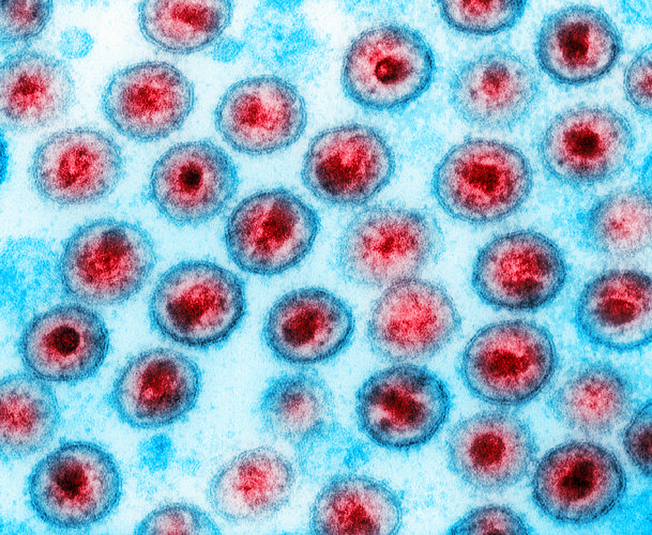
    Tuberculosis (TB) remains the leading cause of death among people living with HIV. Although HIV-1 and Mycobacterium tuberculosis (Mtb) coinfection remains a major public health concern, this problem is not well characterized. Even patients on effective antiretroviral therapy (ART) face a four- to seven-fold higher risk of TB than those without HIV. A new study now reveals why: HIV deploys one of its own proteins to sabotage the immune system’s cellular cleanup crew.

    In a paper titled “HIV-1 Tat Favors the Multiplication of Mycobacterium tuberculosis and Toxoplasma by Inhibiting Clathrin-Mediated Endocytosis and Autophagy,” researchers from the French National Centre for Scientific Research (CNRS) and collaborating universities show that the virus’s trans-activator of transcription, or Tat, protein hinders a key defense pathway inside macrophages. Their findings were published in PLOS Pathogens.

    “Tuberculosis remains the leading cause of death among people living with HIV (PLWH). We thus identified a mechanism enabling HIV Tat to favor the multiplication of intracellular pathogens such as Mtb,” the authors wrote.

    How Tat tips the balance

    Tat, the team explained, continues to circulate in nanomolar concentrations in the blood and cerebrospinal fluid of HIV-positive individuals even when ART has driven viral RNA to undetectable levels. Once inside uninfected macrophages, Tat binds a phosphoinositide called PI(4,5)P2 and becomes palmitoylated, anchoring it to the plasma membrane.

    This seemingly small interaction has dramatic consequences. By occupying PI(4,5)P2, Tat prevents the recruitment of AP-2, a key adaptor protein needed for clathrin-mediated endocytosis. Because this process supplies membranes required for autophagy, Tat effectively shuts down the machinery that would normally engulf and destroy intracellular pathogens.

    In cultured human macrophages, exposure to physiological levels of Tat increased M. tuberculosis growth and similarly boosted the intracellular replication of Toxoplasma gondii, a parasite. Zebrafish larvae injected with Tat were also more susceptible to infection by Mycobacterium marinum, a close relative of the TB bacterium.

    “Tat inhibits autophagy at an early stage,” the authors noted.

    Therapeutic implications

    The discovery helps explain a long-standing puzzle: why people with well-controlled HIV remain several times more vulnerable to TB than the general population. “ART is a combination of inhibitors that most often target HIV-1 enzymes, i.e., reverse transcriptase, integrase, and protease. However, the production of regulatory HIV-1 proteins such as Nef and Tat is largely unaffected by ART. These HIV regulatory proteins may contribute to the increased susceptibility to TB observed in PLWH under ART compared to HIV-uninfected individuals,” wrote the authors.

    Because ART does not block Tat secretion, perhaps strategies to boost or mimic autophagy could complement current HIV treatment and reduce TB incidence.

    By unmasking Tat’s stealthy sabotage of cellular defenses, this study not only deepens understanding of HIV-TB coinfection but also highlights a potential therapeutic avenue. Drugs that reactivate autophagy—or prevent Tat from interfering with the recruitment of AP-2—could provide a new weapon against the world’s deadliest infectious duo.

    cellular Defenses Enabling HIV Infection Tat Undermines
    Share. Facebook Twitter Pinterest LinkedIn Tumblr WhatsApp Email
    Previous ArticleAI Helps Flag Potentially Problematic Journals for the First Time
    Next Article NXT USA’s proprietary Digexin formula relieves upset gut in GLP-1 patients
    admin
    • Website

    Related Posts

    A cellular atlas of aging comes into focus

    February 28, 2026

    Mapping the Cellular Architecture of Aging Across 21 Organs

    February 28, 2026

    A Video Report from AGBT

    February 27, 2026

    Novo Nordisk, Vivtex Ink Up to $2.1B Deal to Develop Oral Biologics for Metabolic Conditions

    February 27, 2026
    Leave A Reply Cancel Reply

    Our Picks

    9 Time-Saving Kitchen Gadgets for Fall at Amazon

    September 5, 2025

    Why Exercise Is So Important For Heart Health, From An MD

    September 5, 2025

    An Engineered Protein Helps Phagocytes Gobble Up Diseased Cells

    September 5, 2025

    How To Get Rid Of Hangnails + Causes From Experts

    September 5, 2025
    • Facebook
    • Twitter
    • Pinterest
    • Instagram
    • YouTube
    • Vimeo
    Don't Miss
    Longevity

    Nautilus debuts Voyager platform in push toward next-gen proteomics

    By adminMarch 1, 20260

    Company’s new benchtop system promises a clearer view of proteins following validation at a leading…

    First-in-Human Success for Prenatal Stem Cell Therapy in Spina Bifida

    February 28, 2026

    Pressure-Driven Pathway Links Liver Congestion to Fibrosis and Cancer

    February 28, 2026

    A cellular atlas of aging comes into focus

    February 28, 2026

    Subscribe to Updates

    Get the latest creative news from SmartMag about art & design.

    About Us

    At FineGut, our mission is simple: to enhance your self-awareness when it comes to your gut health. We believe that a healthy gut is the foundation of overall well-being, and understanding the brain–gut connection can truly transform the way you live.

    Our Picks

    9 Time-Saving Kitchen Gadgets for Fall at Amazon

    September 5, 2025

    Why Exercise Is So Important For Heart Health, From An MD

    September 5, 2025

    An Engineered Protein Helps Phagocytes Gobble Up Diseased Cells

    September 5, 2025
    Gut Health

    Nautilus debuts Voyager platform in push toward next-gen proteomics

    March 1, 2026

    First-in-Human Success for Prenatal Stem Cell Therapy in Spina Bifida

    February 28, 2026

    Pressure-Driven Pathway Links Liver Congestion to Fibrosis and Cancer

    February 28, 2026
    X (Twitter) YouTube
    • Contact us
    • Privacy Policy
    • Disclaimer
    • Terms and Conditions
    © 2026 finegut.com. Designed by Pro.

    Type above and press Enter to search. Press Esc to cancel.