
Close Menu
My Blog

    Subscribe to Updates

    Get the latest creative news from FooBar about art, design and business.

    What's Hot

    Nautilus debuts Voyager platform in push toward next-gen proteomics

    March 1, 2026

    First-in-Human Success for Prenatal Stem Cell Therapy in Spina Bifida

    February 28, 2026

    Pressure-Driven Pathway Links Liver Congestion to Fibrosis and Cancer

    February 28, 2026
    Facebook X (Twitter) Instagram
    X (Twitter) YouTube
    My BlogMy Blog
    Sunday, March 1
    • Home
    • About Us
    • Healthy Living
    • DNA & Genetics
    • Podcast
    • Shop
    My Blog
    Home»DNA & Genetics»CRISPR Reveals EML4-ALK Variants Drive Distinct Lung Tumor Growth in Mice
    DNA & Genetics

    CRISPR Reveals EML4-ALK Variants Drive Distinct Lung Tumor Growth in Mice

    adminBy adminSeptember 24, 2025No Comments3 Mins Read
    Facebook Twitter Pinterest LinkedIn Tumblr WhatsApp VKontakte Email
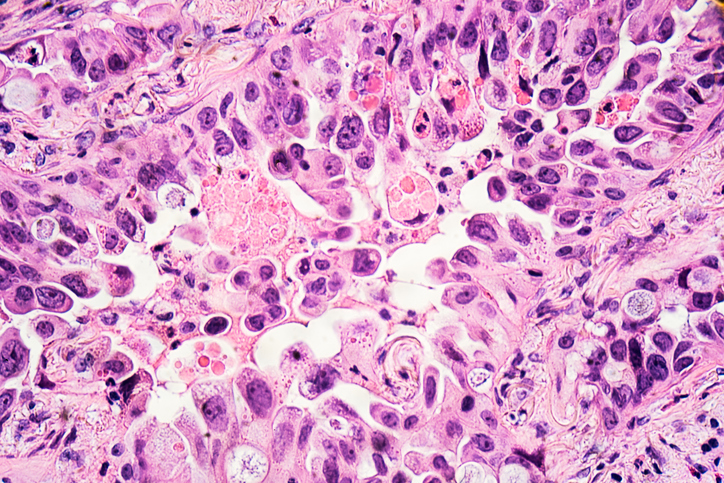
    Lung Cancer: Adenocarcinoma
    Share
    Facebook Twitter LinkedIn Pinterest Email

    Not all genetic fusions are created equal. In a new Cancer Discovery study, titled “EML4-ALK variant-specific genetic interactions shape lung tumorigenesis,” scientists from the German Cancer Research Center (DKFZ) and Stanford University reveal that different EML4-ALK fusion variants—the oncogenic drivers behind about 5% of lung adenocarcinomas—behave more like distinct oncogenes. Their findings, uncovered with advanced CRISPR genome editing in mice, could reshape how clinicians classify and treat these tumors.

    The EML4-ALK fusion occurs when parts of the EML4 and ALK genes break and rejoin, creating an abnormal protein that fuels cancer growth. But the precise breakpoints vary, producing multiple “variants,” or fusion versions, that differ in length and structure. Until now, patients harboring these fusions have typically been grouped together and treated with the same ALK-targeted drugs.

    “Until now, all patients with ALK fusions were lumped together and treated with the same drugs,” said senior author Rocío Sotillo, PhD, of DKFZ. “Our research shows that this one-size-fits-all approach overlooks important biological differences.”

    To probe these differences, first author Alberto Diaz-Jimenez, PhD, and colleagues used somatic CRISPR/Cas9 genome editing to engineer autochthonous mouse models that recapitulate the two most common human EML4-ALK fusion variants, V1 and V3.

    The results were striking. Mice carrying the V3 fusion developed larger tumors more quickly and with a shorter survival time than those with the V1 variant, showing that V3 is intrinsically more oncogenic.

    The team next explored how additional genetic factors influence these tumors. They systematically inactivated 29 known or suspected tumor suppressor genes in the V1 and V3 models. They discovered that the impact of many suppressor genes was variant-specific. For example, some tumor suppressors slowed the growth of V1-driven tumors but had little effect on V3 tumorigenesis, and vice versa.

    Pharmacogenomic analyses revealed more. “We found that the drug response really depends on the fusion variant,” explained study author Mulham Najajreh, a PhD student at DKFZ. “Tumor cells carrying the V1 variant were much more sensitive to the ALK inhibitor lorlatinib, whereas those with the V3 variant showed resistance. Moreover, the loss of certain tumor suppressor genes—such as PTEN—further modified these drug responses, suggesting that a tumor’s complete genetic context influences treatment outcomes.

    To confirm that these findings extend beyond mice, the researchers analyzed the largest available dataset of human EML4-ALK-positive lung cancers. They found that patients with different variants often carried different co-mutations, reinforcing the idea that these variants represent distinct biological entities.

    “Our results show that not all EML4-ALK fusions are the same,” Sotillo said. “This could explain why some patients respond significantly better to therapies than others. In the long term, knowledge of the exact fusion variant could help to select treatments that are even more specifically tailored to the individual disease.”

    By demonstrating that EML4-ALK variants differ in oncogenic potential, genetic dependencies, and drug sensitivity, the study challenges the long-standing practice of treating all ALK fusion–positive lung cancers identically. As precision oncology moves forward, the authors suggest that identifying a patient’s specific fusion variant—and accompanying tumor suppressor alterations—could become as critical as detecting the fusion itself.

    CRISPR Distinct drive EML4ALK growth Lung Mice Reveals Tumor Variants
    Share. Facebook Twitter Pinterest LinkedIn Tumblr WhatsApp Email
    Previous ArticleTeen Scientists Launch Bacterial Experiment into Space
    Next Article The mini placentas and ovaries revealing the basics of women’s health
    admin
    • Website

    Related Posts

    A Video Report from AGBT

    February 27, 2026

    Novo Nordisk, Vivtex Ink Up to $2.1B Deal to Develop Oral Biologics for Metabolic Conditions

    February 27, 2026

    Increasing Rice Yields with Gene-Informed Selective Breeding

    February 27, 2026

    Cigarette Consumption Linked to Rare Ancestry-Specific Coding Variants

    February 27, 2026
    Leave A Reply Cancel Reply

    Our Picks

    9 Time-Saving Kitchen Gadgets for Fall at Amazon

    September 5, 2025

    Why Exercise Is So Important For Heart Health, From An MD

    September 5, 2025

    An Engineered Protein Helps Phagocytes Gobble Up Diseased Cells

    September 5, 2025

    How To Get Rid Of Hangnails + Causes From Experts

    September 5, 2025
    • Facebook
    • Twitter
    • Pinterest
    • Instagram
    • YouTube
    • Vimeo
    Don't Miss
    Longevity

    Nautilus debuts Voyager platform in push toward next-gen proteomics

    By adminMarch 1, 20260

    Company’s new benchtop system promises a clearer view of proteins following validation at a leading…

    First-in-Human Success for Prenatal Stem Cell Therapy in Spina Bifida

    February 28, 2026

    Pressure-Driven Pathway Links Liver Congestion to Fibrosis and Cancer

    February 28, 2026

    A cellular atlas of aging comes into focus

    February 28, 2026

    Subscribe to Updates

    Get the latest creative news from SmartMag about art & design.

    About Us

    At FineGut, our mission is simple: to enhance your self-awareness when it comes to your gut health. We believe that a healthy gut is the foundation of overall well-being, and understanding the brain–gut connection can truly transform the way you live.

    Our Picks

    9 Time-Saving Kitchen Gadgets for Fall at Amazon

    September 5, 2025

    Why Exercise Is So Important For Heart Health, From An MD

    September 5, 2025

    An Engineered Protein Helps Phagocytes Gobble Up Diseased Cells

    September 5, 2025
    Gut Health

    Nautilus debuts Voyager platform in push toward next-gen proteomics

    March 1, 2026

    First-in-Human Success for Prenatal Stem Cell Therapy in Spina Bifida

    February 28, 2026

    Pressure-Driven Pathway Links Liver Congestion to Fibrosis and Cancer

    February 28, 2026
    X (Twitter) YouTube
    • Contact us
    • Privacy Policy
    • Disclaimer
    • Terms and Conditions
    © 2026 finegut.com. Designed by Pro.

    Type above and press Enter to search. Press Esc to cancel.