
Close Menu
My Blog

    Subscribe to Updates

    Get the latest creative news from FooBar about art, design and business.

    What's Hot

    Nautilus debuts Voyager platform in push toward next-gen proteomics

    March 1, 2026

    First-in-Human Success for Prenatal Stem Cell Therapy in Spina Bifida

    February 28, 2026

    Pressure-Driven Pathway Links Liver Congestion to Fibrosis and Cancer

    February 28, 2026
    Facebook X (Twitter) Instagram
    X (Twitter) YouTube
    My BlogMy Blog
    Sunday, March 1
    • Home
    • About Us
    • Healthy Living
    • DNA & Genetics
    • Podcast
    • Shop
    My Blog
    Home»DNA & Genetics»Tuned Toxin Expression Helps Candida albicans Evade Detection in the Mouth
    DNA & Genetics

    Tuned Toxin Expression Helps Candida albicans Evade Detection in the Mouth

    adminBy adminSeptember 26, 2025No Comments3 Mins Read
    Facebook Twitter Pinterest LinkedIn Tumblr WhatsApp VKontakte Email
    Candida albicans
    Share
    Facebook Twitter LinkedIn Pinterest Email

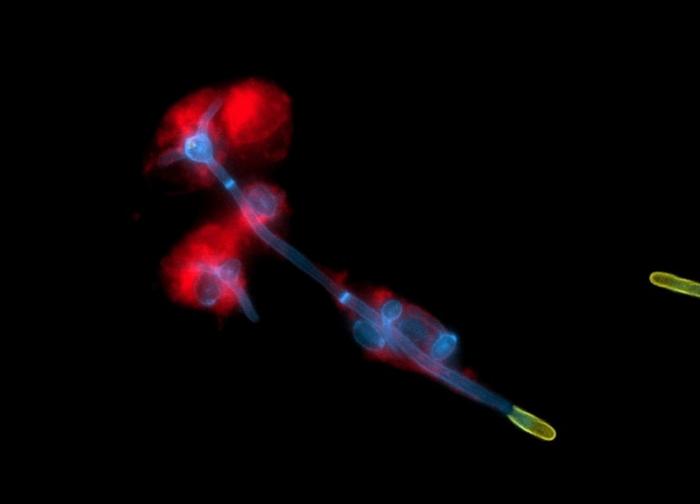
    Candida albicans occurs naturally in the human microbiome and usually remains harmless. Under certain conditions, however, it can transform from its yeast form into thread-like hyphae and cause infections that can have fatal consequences, especially in immunocompromised patients. In this hyphal form, C. albicans produces the toxin candidalysin, a protein that directly attacks host cells.

    Now, new research reveals that C. albicans not only uses the toxin candidalysin to cause infections, but also to colonize the oral mucosa inconspicuously—but only in finely balanced amounts. Too little toxin prevents oral colonization, too much triggers the immune system and leads to an inflammatory defense reaction.

    The results were published in the journal Nature Microbiology in the paper, “Dynamic expression of candidalysin facilitates oral colonization of Candida albicans in mice.”

    “We knew that the fungal toxin candidalysin can cause disease. What is new is that it is also necessary for the fungus to survive in the mouth,” explains Bernhard Hube, PhD, head of the department of microbial pathogenicity mechanisms at the Leibniz Institute for Natural Product Research and Infection Biology (Leibniz-HKI) and professor and chair of microbial pathogenicity at Friedrich Schiller University in Jena, Germany. “The yeast fungus Candida albicans uses the toxin like a door opener to anchor itself in the mucous membrane. As long as it only produces it in small quantities, it remains under the radar of the immune system and survives in the oral cavity in the long term.”

    Two different Candida strains were compared: The aggressive laboratory strain SC5314 forms long hyphae and produces large amounts of candidalysin. As a result, the immune system reacts immediately with severe inflammation and eliminates the fungus after a short time. Strain 101, which occurs naturally in the mouth, produces only small amounts of the toxin and can thus remain inconspicuous in the mucous membrane without triggering a strong immune response.

    “It is precisely these differences between the strains that show how important the fine regulation of candidalysin is for colonizing different niches in the body,” adds Tim Schille, PhD, a postdoc on the team. “Only if Candida albicans finds the correct amount, then the fungus can survive in the mouth long-term without being fought by the immune system.”

    More specifically, the team found that “low-virulent strains of C. albicans expressed the candidalysin-encoding gene ECE1 transiently upon exposure to keratinocytes in vitro. In mice, ECE1 mutants were defective at accessing terminally differentiated oral epithelial layers where the fungus is protected from IL-17-mediated immune defense.”

    Indeed, tight regulation of ECE1 expression prevented detrimental effects of candidalysin on the host. “It is remarkable how well the fungus regulates its activity,” says Schille. “This balance also explains why the toxin has been preserved evolutionarily: it enables the fungus to live permanently in the oral mucosa, but at the same time makes it dangerous as a potential pathogen.”

    albicans Candida Detection Evade Expression Helps Mouth Toxin Tuned
    Share. Facebook Twitter Pinterest LinkedIn Tumblr WhatsApp Email
    Previous ArticleThe Power of Enzymatic DNA Synthesis
    Next Article Low-Dose Aspirin Cancer Benefits Restricted to Specific Characteristics
    admin
    • Website

    Related Posts

    A Video Report from AGBT

    February 27, 2026

    Novo Nordisk, Vivtex Ink Up to $2.1B Deal to Develop Oral Biologics for Metabolic Conditions

    February 27, 2026

    Increasing Rice Yields with Gene-Informed Selective Breeding

    February 27, 2026

    Mutant p53 Selective Reactivation Demonstrated in Advanced Solid Tumors

    February 27, 2026
    Leave A Reply Cancel Reply

    Our Picks

    9 Time-Saving Kitchen Gadgets for Fall at Amazon

    September 5, 2025

    Why Exercise Is So Important For Heart Health, From An MD

    September 5, 2025

    An Engineered Protein Helps Phagocytes Gobble Up Diseased Cells

    September 5, 2025

    How To Get Rid Of Hangnails + Causes From Experts

    September 5, 2025
    • Facebook
    • Twitter
    • Pinterest
    • Instagram
    • YouTube
    • Vimeo
    Don't Miss
    Longevity

    Nautilus debuts Voyager platform in push toward next-gen proteomics

    By adminMarch 1, 20260

    Company’s new benchtop system promises a clearer view of proteins following validation at a leading…

    First-in-Human Success for Prenatal Stem Cell Therapy in Spina Bifida

    February 28, 2026

    Pressure-Driven Pathway Links Liver Congestion to Fibrosis and Cancer

    February 28, 2026

    A cellular atlas of aging comes into focus

    February 28, 2026

    Subscribe to Updates

    Get the latest creative news from SmartMag about art & design.

    About Us

    At FineGut, our mission is simple: to enhance your self-awareness when it comes to your gut health. We believe that a healthy gut is the foundation of overall well-being, and understanding the brain–gut connection can truly transform the way you live.

    Our Picks

    9 Time-Saving Kitchen Gadgets for Fall at Amazon

    September 5, 2025

    Why Exercise Is So Important For Heart Health, From An MD

    September 5, 2025

    An Engineered Protein Helps Phagocytes Gobble Up Diseased Cells

    September 5, 2025
    Gut Health

    Nautilus debuts Voyager platform in push toward next-gen proteomics

    March 1, 2026

    First-in-Human Success for Prenatal Stem Cell Therapy in Spina Bifida

    February 28, 2026

    Pressure-Driven Pathway Links Liver Congestion to Fibrosis and Cancer

    February 28, 2026
    X (Twitter) YouTube
    • Contact us
    • Privacy Policy
    • Disclaimer
    • Terms and Conditions
    © 2026 finegut.com. Designed by Pro.

    Type above and press Enter to search. Press Esc to cancel.