
Close Menu
My Blog

    Subscribe to Updates

    Get the latest creative news from FooBar about art, design and business.

    What's Hot

    Nautilus debuts Voyager platform in push toward next-gen proteomics

    March 1, 2026

    First-in-Human Success for Prenatal Stem Cell Therapy in Spina Bifida

    February 28, 2026

    Pressure-Driven Pathway Links Liver Congestion to Fibrosis and Cancer

    February 28, 2026
    Facebook X (Twitter) Instagram
    X (Twitter) YouTube
    My BlogMy Blog
    Sunday, March 1
    • Home
    • About Us
    • Healthy Living
    • DNA & Genetics
    • Podcast
    • Shop
    My Blog
    Home»DNA & Genetics»RNA Splitting Sparked Rise of Type V Systems
    DNA & Genetics

    RNA Splitting Sparked Rise of Type V Systems

    adminBy adminSeptember 30, 2025No Comments3 Mins Read
    Facebook Twitter Pinterest LinkedIn Tumblr WhatsApp VKontakte Email
    CRISPR
    Share
    Facebook Twitter LinkedIn Pinterest Email

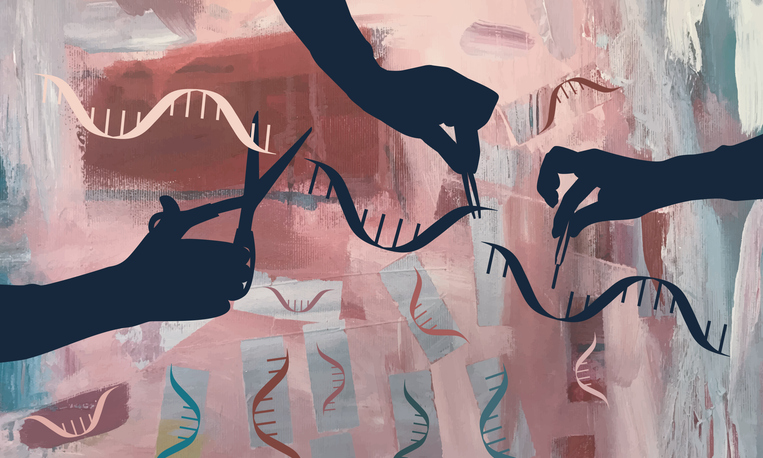
    CRISPR powers everything from gene editing to rapid diagnostics, but how did one of its most versatile branches arise? A new Cell study, “Functional RNA splitting drove the evolutionary emergence of type V CRISPR-Cas systems from transposons,” shows that an RNA-splitting event transformed transposons into Type V Cas12 immune systems.

    Long before CRISPR became a clinical staple, it was a routine tool for microbiologists—workhorse enough to slip into undergraduate yeast labs and powerful enough to rewire entire genomes. In the decade since those early demonstrations, CRISPR technologies have revolutionized basic research and medicine. Scientists now use them to correct disease-causing mutations, create model organisms with unprecedented speed, and engineer crops that resist pests or survive drought. Diagnostic platforms such as SHERLOCK and DETECTR harness CRISPR enzymes to detect viral infections in minutes. Even gene drives aimed at controlling malaria-carrying mosquitoes rely on CRISPR’s precision.

    Among CRISPR’s many variants, the compact Type V Cas12 enzymes—key players in genome editing, diagnostics, and even emerging base-editing approaches—stand out. Their small size also makes them attractive for therapeutic delivery, where every nucleotide counts, leaving researchers eager to trace their evolutionary roots.

    Despite these advances, scientists had only hints of where Type V systems came from. Biochemists had long suspected a link to TnpB nucleases, proteins encoded by mobile genetic elements called IS200/605 transposons. These “jumping genes” move around bacterial genomes and were thought to be distant ancestors of Cas12. However, the molecular mechanisms bridging transposon activity and CRISPR immunity remained unclear, wrote the authors.

    Research led by Caixia Gao, PhD, from the Institute of Genetics and Developmental Biology (IGDB) at the Chinese Academy of Sciences (CAS), with colleagues at Tsinghua University and the Institute of Zoology of CAS, has now filled in the missing pieces. By mining prokaryotic and metagenomic databases, the team uncovered 146 previously hidden relatives of TnpB. Phylogenetic analyses, AlphaFold structural predictions, and functional assays revealed six intermediate clades they dubbed “TranCs”—short for transposon-CRISPR intermediates.

    These TranCs proved to be evolutionary hybrids. Like modern Cas12 proteins, they could use CRISPR RNAs (crRNAs) to find DNA targets. Yet they also retained the ancestral ability to work with transposon-derived right-end (re)RNAs, or ωRNAs. Cryo-EM snapshots of one system, LaTranC-sgRNA-DNA, showed why: its guide RNA had split into two parts—a tracrRNA and a crRNA—mirroring modern CRISPR architecture.

    That seemingly subtle RNA split was transformative. Engineering experiments confirmed that artificially cleaving TnpB’s reRNA was enough to make it behave like a CRISPR system capable of drawing guides from a CRISPR array. In other words, RNA-level innovation—not a major protein redesign—sparked the emergence of the entire Type V branch.

    Beyond satisfying evolutionary curiosity, the discovery points to practical opportunities. TranC enzymes are small and naturally flexible in the guides they accept, offering fresh templates for next-generation CRISPR tools that are easier to deliver and control.

    As CRISPR continues to drive breakthroughs in medicine, agriculture, and synthetic biology, understanding its origins does more than tell an ancient story. It provides a blueprint for engineering the next wave of genome-editing technologies—reminding us that sometimes, a simple molecular split can change the course of biology.

    Rise RNA Sparked Splitting Systems Type
    Share. Facebook Twitter Pinterest LinkedIn Tumblr WhatsApp Email
    Previous ArticleGPs give government 48 hours to avoid dispute over “online triage tsunami”
    Next Article Little urchins, mischievous molluscs: my life as a sea champion
    admin
    • Website

    Related Posts

    A Video Report from AGBT

    February 27, 2026

    Novo Nordisk, Vivtex Ink Up to $2.1B Deal to Develop Oral Biologics for Metabolic Conditions

    February 27, 2026

    Increasing Rice Yields with Gene-Informed Selective Breeding

    February 27, 2026

    Mutant p53 Selective Reactivation Demonstrated in Advanced Solid Tumors

    February 27, 2026
    Leave A Reply Cancel Reply

    Our Picks

    9 Time-Saving Kitchen Gadgets for Fall at Amazon

    September 5, 2025

    Why Exercise Is So Important For Heart Health, From An MD

    September 5, 2025

    An Engineered Protein Helps Phagocytes Gobble Up Diseased Cells

    September 5, 2025

    How To Get Rid Of Hangnails + Causes From Experts

    September 5, 2025
    • Facebook
    • Twitter
    • Pinterest
    • Instagram
    • YouTube
    • Vimeo
    Don't Miss
    Longevity

    Nautilus debuts Voyager platform in push toward next-gen proteomics

    By adminMarch 1, 20260

    Company’s new benchtop system promises a clearer view of proteins following validation at a leading…

    First-in-Human Success for Prenatal Stem Cell Therapy in Spina Bifida

    February 28, 2026

    Pressure-Driven Pathway Links Liver Congestion to Fibrosis and Cancer

    February 28, 2026

    A cellular atlas of aging comes into focus

    February 28, 2026

    Subscribe to Updates

    Get the latest creative news from SmartMag about art & design.

    About Us

    At FineGut, our mission is simple: to enhance your self-awareness when it comes to your gut health. We believe that a healthy gut is the foundation of overall well-being, and understanding the brain–gut connection can truly transform the way you live.

    Our Picks

    9 Time-Saving Kitchen Gadgets for Fall at Amazon

    September 5, 2025

    Why Exercise Is So Important For Heart Health, From An MD

    September 5, 2025

    An Engineered Protein Helps Phagocytes Gobble Up Diseased Cells

    September 5, 2025
    Gut Health

    Nautilus debuts Voyager platform in push toward next-gen proteomics

    March 1, 2026

    First-in-Human Success for Prenatal Stem Cell Therapy in Spina Bifida

    February 28, 2026

    Pressure-Driven Pathway Links Liver Congestion to Fibrosis and Cancer

    February 28, 2026
    X (Twitter) YouTube
    • Contact us
    • Privacy Policy
    • Disclaimer
    • Terms and Conditions
    © 2026 finegut.com. Designed by Pro.

    Type above and press Enter to search. Press Esc to cancel.