
Close Menu
My Blog

    Subscribe to Updates

    Get the latest creative news from FooBar about art, design and business.

    What's Hot

    Nautilus debuts Voyager platform in push toward next-gen proteomics

    March 1, 2026

    First-in-Human Success for Prenatal Stem Cell Therapy in Spina Bifida

    February 28, 2026

    Pressure-Driven Pathway Links Liver Congestion to Fibrosis and Cancer

    February 28, 2026
    Facebook X (Twitter) Instagram
    X (Twitter) YouTube
    My BlogMy Blog
    Sunday, March 1
    • Home
    • About Us
    • Healthy Living
    • DNA & Genetics
    • Podcast
    • Shop
    My Blog
    Home»DNA & Genetics»Rookie researchers boost disruptive science
    DNA & Genetics

    Rookie researchers boost disruptive science

    adminBy adminOctober 1, 2025No Comments6 Mins Read
    Facebook Twitter Pinterest LinkedIn Tumblr WhatsApp VKontakte Email
    Rookie researchers boost disruptive science
    Share
    Facebook Twitter LinkedIn Pinterest Email

    You have full access to this article via your institution.

    Hello Nature readers, would you like to get this Briefing in your inbox free every day? Sign up here.

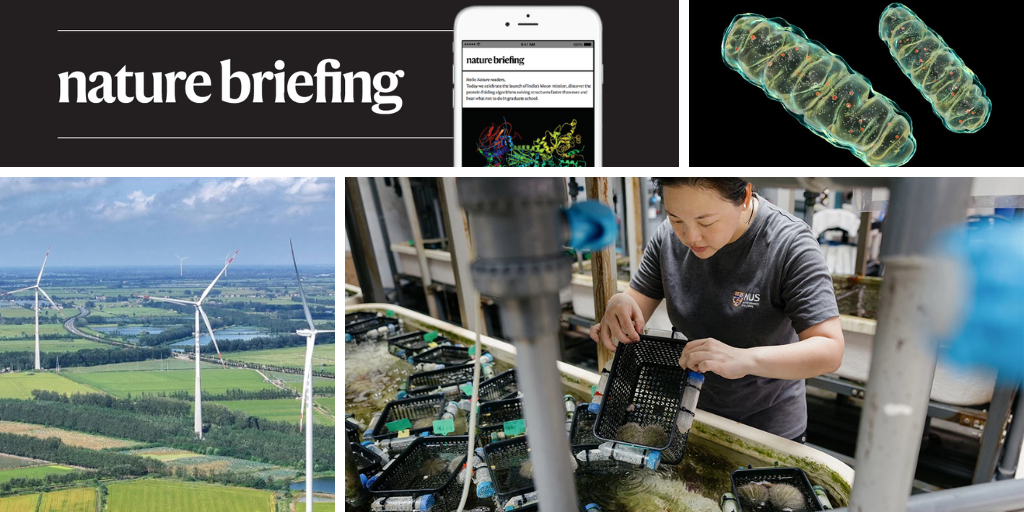
    Mitochondria (illustration) have their own DNA, which they expel into their environment if the molecules don’t meet their standards.Credit: Kateryna Kon/Science Photo Library

    Mitochondria — the powerhouses of the cell — expel ‘tainted’ DNA into their surroundings. In mice, researchers found that the organelles spit out strands of mitochondrial DNA (mtDNA) that contained an excess of a certain type of molecular building block that can harm DNA. This genetic fly-tipping might protect the mitochondria, but free-floating mtDNA in a cell kick-starts key inflammatory pathways associated with ageing. The findings hint at mitochondria’s role in ‘inflammageing’ — chronic inflammation that occurs as we get older.

    Nature | 4 min read

    Reference: Nature paper

    Chinese president Xi Jinping has announced that, by 2035, China will reduce greenhouse gas emissions by 7-10% from their peak level. In 2020, Xi pledged that China’s CO2 emissions would reach their peak before 2030, a milestone some researchers think might have been reached already. As the largest emitter in the world, the pace of China’s cuts will have profound global impact: if met, this target would be the equivalent to “three UKs completely decarbonizing over the next decade”, says climate physicist Piers Forster. But the goal — a proportion of an undefined amount — leaves room for short-term increases, and anyway might not be enough to keep warming below the 1.5-2 ℃ set in the Paris agreement.

    Nature | 5 min read

    Lab leaders who want to produce innovative research should welcome ‘beginner’ scientists with little or no prior publication history, suggests a new preprint study. A team looked at more than 28 million articles and scored them for ‘disruption’ — being cited more times than the papers it referenced were. Across team sizes, decades and disciplines, “as the fraction of beginners increases in teams, the disruptivity and innovation go up”, says computational social scientist and co-author Raiyan Abdul Baten. He credits newbies for having “less loyalty to prevailing assumptions”.

    Nature | 5 min read

    Reference: arXiv preprint

    US autism research

    Last week, US President Donald Trump prompted fierce pushback from scientists over an event at which he repeated poorly evidenced claims that taking the painkiller Tylenol (also known as acetaminophen and paracetamol) during pregnancy is linked with autism in children. But the same event brought welcome news to scientists: a US$50 million investment into research that studies how interacting genetic and environmental factors contribute to autism, with a focus on reproducibility. “This is where the field needs to be going in searching for the complex causes of autism,” says psychologist Helen Tager-Flusberg, the founder of the Coalition of Autism Scientists. However, some researchers are worried about political interference in the studies.

    Nature | 5 min read

    Paracetamol is commonly used to relieve pain and reduce fevers, and encouraging people to stop using it during pregnancy could raise the risk of some negative outcomes. On top of the discomfort, there is evidence that leaving a fever untreated raises the risk of miscarriage and some birth defects — particularly if it is high (above 39.1 °C) or lasts longer than 24 hours. And there is some evidence that untreated high temperatures during pregnancy might increase the chance of autism and psychiatric disorders such as schizophrenia, because they can interfere with fetal brain development. Other pain-relief options have higher and well-established risks of harm when taken during pregnancy — although some are prescribed in low doses when necessary.

    Nature | 4 min read

    Features & opinion

    The New Model Institute for Technology and Engineering (NMITE) in Hereford discards much of the traditional approach to higher education, eschewing the competition for international students and focusing on training work-ready graduates in a city with one of the lowest university participation rates in England. The institution prioritizes hands-on experience, with no lectures, essays or exams, and a schedule that closely resembles a full-time job. “Speaking to hundreds of companies, one thing they said to me was: you send us engineering graduates, and we have to train them again,” says NMITE’s first chief executive and president Elena Rodríguez-Falcón.

    Nature | 13 min read

    Read the full collection in Nature: Universities made the modern world — now they must survive it

    Two articles in The New York Times provide sobering pictures of childhood malnourishment in different parts of the world. In Gaza, the ongoing conflict and the restrictions on aid flowing into the territory mean many young children are deprived of sufficient food. A series of graphics illustrate why they are especially vulnerable to malnourishment, how it harms young bodies and how its effects can last a lifetime.

    Meanwhile, Pulitzer-prizewinning journalist Nicholas Kristof travels to southwestern Uganda, where the impact of Trump-administration cuts to humanitarian aid is “accelerating”. “Stockpiles of food and medicine are running out here. Village health workers who used to provide inexpensive preventive care have been laid off. Public health initiatives like deworming and vitamin A distribution have collapsed. Immunizations are being missed,” writes Kristof. “And because children are particularly vulnerable, they are often the first to starve and the first to die.”

    The New York Times | 6 min read & The New York Times | 12 min read

    Where I work

    Mei Lin Neo holding a small plastic basket in front of a water tank for mussels. She is framed among grey plastic pipes.

    Mei Lin Neo is a marine ecologist in the Tropical Marine Science Institute at the National University of Singapore.Credit: Juliana Tan for Nature

    Ecologist Mei Lin Neo studies how marine invertebrates such as sea urchins (Salmacis sphaeroides) react to changes in their environments. The organisms her group studies also act as guards against extinction — if an event such as disease ravages wild populations, Neo is confident they could renew the natural stock. “People don’t realize how charismatic a seemingly static marine animal can be,” she says. “I want to champion lesser-known marine species.” (Nature | 3 min read)

    Quote of the day

    Sanaa Seif celebrates the release of her brother, Egyptian–British activist Alaa Abd el-Fattah, whose imprisonment served as a lightning rod for human-rights protests at the 2022 UN climate conference (COP27) in Egypt and was decried in an open letter by fifteen Nobel prizewinners. (The Observer | 5 min read)

    On Friday, Leif Penguinson was exploring a gorge on the River Kaveri in Mekedatu, India. Did you find the penguin? When you’re ready, here’s the answer.

    Thanks for reading,

    Flora Graham, senior editor, Nature Briefing

    With contributions by Jacob Smith

    Nature Briefing: Careers — insights, advice and award-winning journalism to help you optimize your working life

    • Nature Briefing: Microbiology — the most abundant living entities on our planet — microorganisms — and the role they play in health, the environment and food systems

    • Nature Briefing: Anthropocene — climate change, biodiversity, sustainability and geoengineering

    • Nature Briefing: AI & Robotics — 100% written by humans, of course

    • Nature Briefing: Cancer — a weekly newsletter written with cancer researchers in mind

    • Nature Briefing: Translational Research — covers biotechnology, drug discovery and pharma

    Boost disruptive Researchers rookie Science
    Share. Facebook Twitter Pinterest LinkedIn Tumblr WhatsApp Email
    Previous ArticleIna Garten’s 5 Tips for Roasting Veggies
    Next Article Eating fruits may improve lung function impacted by pollution
    admin
    • Website

    Related Posts

    A Video Report from AGBT

    February 27, 2026

    Novo Nordisk, Vivtex Ink Up to $2.1B Deal to Develop Oral Biologics for Metabolic Conditions

    February 27, 2026

    Increasing Rice Yields with Gene-Informed Selective Breeding

    February 27, 2026

    Mutant p53 Selective Reactivation Demonstrated in Advanced Solid Tumors

    February 27, 2026
    Leave A Reply Cancel Reply

    Our Picks

    9 Time-Saving Kitchen Gadgets for Fall at Amazon

    September 5, 2025

    Why Exercise Is So Important For Heart Health, From An MD

    September 5, 2025

    An Engineered Protein Helps Phagocytes Gobble Up Diseased Cells

    September 5, 2025

    How To Get Rid Of Hangnails + Causes From Experts

    September 5, 2025
    • Facebook
    • Twitter
    • Pinterest
    • Instagram
    • YouTube
    • Vimeo
    Don't Miss
    Longevity

    Nautilus debuts Voyager platform in push toward next-gen proteomics

    By adminMarch 1, 20260

    Company’s new benchtop system promises a clearer view of proteins following validation at a leading…

    First-in-Human Success for Prenatal Stem Cell Therapy in Spina Bifida

    February 28, 2026

    Pressure-Driven Pathway Links Liver Congestion to Fibrosis and Cancer

    February 28, 2026

    A cellular atlas of aging comes into focus

    February 28, 2026

    Subscribe to Updates

    Get the latest creative news from SmartMag about art & design.

    About Us

    At FineGut, our mission is simple: to enhance your self-awareness when it comes to your gut health. We believe that a healthy gut is the foundation of overall well-being, and understanding the brain–gut connection can truly transform the way you live.

    Our Picks

    9 Time-Saving Kitchen Gadgets for Fall at Amazon

    September 5, 2025

    Why Exercise Is So Important For Heart Health, From An MD

    September 5, 2025

    An Engineered Protein Helps Phagocytes Gobble Up Diseased Cells

    September 5, 2025
    Gut Health

    Nautilus debuts Voyager platform in push toward next-gen proteomics

    March 1, 2026

    First-in-Human Success for Prenatal Stem Cell Therapy in Spina Bifida

    February 28, 2026

    Pressure-Driven Pathway Links Liver Congestion to Fibrosis and Cancer

    February 28, 2026
    X (Twitter) YouTube
    • Contact us
    • Privacy Policy
    • Disclaimer
    • Terms and Conditions
    © 2026 finegut.com. Designed by Pro.

    Type above and press Enter to search. Press Esc to cancel.