
Close Menu
My Blog

    Subscribe to Updates

    Get the latest creative news from FooBar about art, design and business.

    What's Hot

    Nautilus debuts Voyager platform in push toward next-gen proteomics

    March 1, 2026

    First-in-Human Success for Prenatal Stem Cell Therapy in Spina Bifida

    February 28, 2026

    Pressure-Driven Pathway Links Liver Congestion to Fibrosis and Cancer

    February 28, 2026
    Facebook X (Twitter) Instagram
    X (Twitter) YouTube
    My BlogMy Blog
    Sunday, March 1
    • Home
    • About Us
    • Healthy Living
    • DNA & Genetics
    • Podcast
    • Shop
    My Blog
    Home»DNA & Genetics»Fixing the imbalance in cancer rates between Black and white women
    DNA & Genetics

    Fixing the imbalance in cancer rates between Black and white women

    adminBy adminOctober 1, 2025No Comments5 Mins Read
    Facebook Twitter Pinterest LinkedIn Tumblr WhatsApp VKontakte Email
    Fixing the imbalance in cancer rates between Black and white women
    Share
    Facebook Twitter LinkedIn Pinterest Email

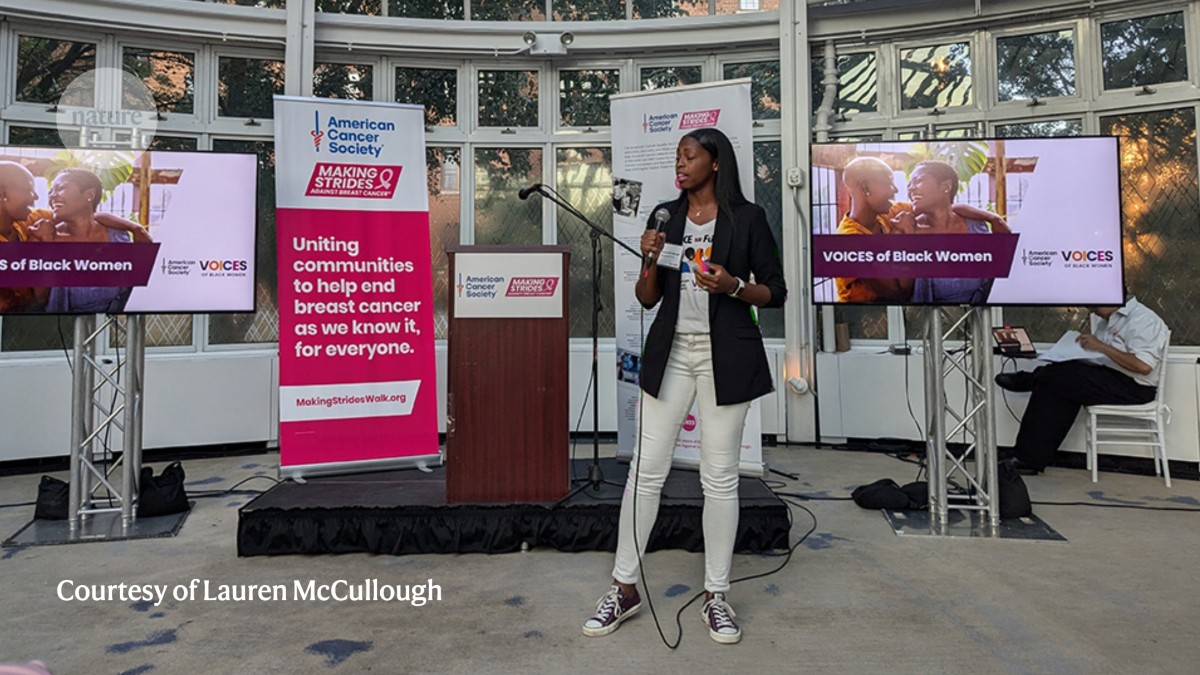
    Epidemiologist Lauren McCullough is leading the VOICES of Black Women study.Credit: Courtesy of Lauren McCullough

    Broadening the long view

    Longitudinal studies — which follow individuals to collect data about health, lifestyle and environment over a period of months, years or even decades — have helped researchers understand disease risk, inform prevention strategies and improve public health planning. But the majority of large-scale longitudinal research has historically taken place in Europe or North America, meaning many populations remain under-represented in the data.

    A new generation of longitudinal studies is aiming to better reflect population diversity — not just by recruiting from underserved groups, but by embedding community involvement, local scientific leadership and context-specific questions into their design. This article is one of a series of three profiles about studies taking this approach.

    When epidemiologist Lauren McCullough began working in cancer research in the United States, she was struck by a glaring omission in population-level studies. “When thinking about large-scale cancer studies, one of the groups that have been left behind have been Black women,” she says. “That’s despite the fact that Black women are more likely to get an aggressive disease and, with very few exceptions, are more likely to die of their cancer.”

    Now, McCullough, visiting scientific director at the American Cancer Society (ACS), is leading a research effort to help change that. The VOICES of Black Women study aims to enrol 100,000 Black women aged 25–55 with no prior history of cancer. The longitudinal study, which launched in 2024, will follow participants for at least 30 years, capturing a range of data on health, lifestyle and lived experience to reach a depth and scale not seen before for this population, say those involved.

    For McCullough and Alpa Patel, co-investigator on the study and senior vice-president of population science at the ACS, researchers on the team had to be more than just experts. They wanted people who “really had the passion for the topic and were committed to ensuring the study was going to be designed and executed in a way that we all felt really proud of”, McCullough says.

    Nature Index 2025 Research hospitals

    The VOICES team hope the data will begin to clarify what is behind disparities in cancer risk for Black women in the United States. They are around 40% more likely to die from breast cancer than white women, for example, despite having lower incidence rates. According to the ACS, Black women have a 12% higher overall cancer death rate than white women.

    Initially spanning the 20 US states with the largest populations of Black women, the study now recruits nationwide, working in partnership with a network of hospitals, community organizations and health centres.

    The VOICES team wants to look beyond the biological data typical of a standard longitudinal study — such as genetics, diet or medical history — to capture some of the potential social drivers of health. “Something that was really missing when I emerged from my training was understanding how the social aspects impact cancer,” McCullough says. “How do social elements above the skin impact the biology below the skin?” To that end, the study asks participants about factors such as their experiences of racism, access to quality health care and what social support they receive.

    This information is collected through a 60-minute baseline survey and shorter follow-ups, in which participants are asked about day-to-day discrimination and economic stressors. “A lot of the existing data are at the area level, like residential racial segregation, but that doesn’t really capture the specific insults an individual might experience,” McCullough says. By capturing individual experiences, the team hopes to uncover how these cumulative exposures interact with biological processes to influence cancer risk.

    This is important, McCullough says, because “the data among Black women doesn’t match our ideas about how socioeconomics should lead to better health outcomes. In fact, some of the greatest health disparities are among Black women with higher levels of socioeconomic status.” Recent studies have shown that racism-related stress contributes to persistent health gaps between Black and white women by disrupting cortisol patterns, as demonstrated in a 2024 study1 published in Scientific Reports, and by activating cellular stress-response pathways linked to aggressive breast cancer, according to research from the Duke Cancer Institute in Durham, North Carolina2. The VOICES study also includes biological sampling. Participants can voluntarily provide blood samples and undergo height, weight, waist and blood-pressure measurements. These will help researchers investigate the role of ancestry, hormones, inflammation, infections and genetic mutations in cancer development.

    “In five years or so, I think we will better understand the various exposures that might differentially impact Black women,” says McCullough. For example, it could lead to better regulation of products frequently used by Black women, such as chemical hair relaxers, which were linked to an increased risk of uterine cancer by a 2023 study3.

    Key facts: VOICES of Black Women

    Study name: VOICES of Black Women.

    Lead institution: American Cancer Society (ACS).

    Principal investigators: Lauren McCullough, visiting scientific director at the ACS, and Alpa Patel, senior vice-president of population science at the ACS.

    Participant goal: 100,000 Black women aged 25–55, cancer-free at enrolment.

    Current participant numbers: 4,850

    Data collected: Online surveys (60 minutes at baseline, two 30-minute follow-ups per year) covering health behaviours, discrimination, social support, economic stress and personal care product use; optional blood samples; anthropometric and biometric data (such as height, weight, blood pressure).

    Launch year: Pilot 2023, official launch 2024.

    Duration: At least 30 years.

    Funding: Solely funded by the American Cancer Society.

    Enrolled participants, who so far number almost 4,000, will receive regular follow-ups — two 30-minute surveys per year — with the hope this will build trust. McCullough says early feedback suggests participants feel their experiences are well represented.

    “It takes a different level of comfort and trust to join a study. So, I am always grateful for every single person that joins,” she says.

    black Cancer Fixing imbalance Rates White Women
    Share. Facebook Twitter Pinterest LinkedIn Tumblr WhatsApp Email
    Previous ArticleMix-and-match fossils tell the tale of snake and lizard evolution
    Next Article 10+ Chicken & Spinach Dinner Recipes
    admin
    • Website

    Related Posts

    Pressure-Driven Pathway Links Liver Congestion to Fibrosis and Cancer

    February 28, 2026

    A Video Report from AGBT

    February 27, 2026

    Novo Nordisk, Vivtex Ink Up to $2.1B Deal to Develop Oral Biologics for Metabolic Conditions

    February 27, 2026

    Advanced Brain Cancer Survival Rates Double with LITT

    February 27, 2026
    Leave A Reply Cancel Reply

    Our Picks

    9 Time-Saving Kitchen Gadgets for Fall at Amazon

    September 5, 2025

    Why Exercise Is So Important For Heart Health, From An MD

    September 5, 2025

    An Engineered Protein Helps Phagocytes Gobble Up Diseased Cells

    September 5, 2025

    How To Get Rid Of Hangnails + Causes From Experts

    September 5, 2025
    • Facebook
    • Twitter
    • Pinterest
    • Instagram
    • YouTube
    • Vimeo
    Don't Miss
    Longevity

    Nautilus debuts Voyager platform in push toward next-gen proteomics

    By adminMarch 1, 20260

    Company’s new benchtop system promises a clearer view of proteins following validation at a leading…

    First-in-Human Success for Prenatal Stem Cell Therapy in Spina Bifida

    February 28, 2026

    Pressure-Driven Pathway Links Liver Congestion to Fibrosis and Cancer

    February 28, 2026

    A cellular atlas of aging comes into focus

    February 28, 2026

    Subscribe to Updates

    Get the latest creative news from SmartMag about art & design.

    About Us

    At FineGut, our mission is simple: to enhance your self-awareness when it comes to your gut health. We believe that a healthy gut is the foundation of overall well-being, and understanding the brain–gut connection can truly transform the way you live.

    Our Picks

    9 Time-Saving Kitchen Gadgets for Fall at Amazon

    September 5, 2025

    Why Exercise Is So Important For Heart Health, From An MD

    September 5, 2025

    An Engineered Protein Helps Phagocytes Gobble Up Diseased Cells

    September 5, 2025
    Gut Health

    Nautilus debuts Voyager platform in push toward next-gen proteomics

    March 1, 2026

    First-in-Human Success for Prenatal Stem Cell Therapy in Spina Bifida

    February 28, 2026

    Pressure-Driven Pathway Links Liver Congestion to Fibrosis and Cancer

    February 28, 2026
    X (Twitter) YouTube
    • Contact us
    • Privacy Policy
    • Disclaimer
    • Terms and Conditions
    © 2026 finegut.com. Designed by Pro.

    Type above and press Enter to search. Press Esc to cancel.