

- Diet is a powerful tool in helping to reduce the risk of cognitive decline as we age.
- Foods like fatty fish, blueberries, eggs, walnuts and leafy green veggies top the list.
- Other lifestyle factors like staying connected to others and regular exercise can also help.
What if choosing your next snack or dinner dish could help keep your mind sharp and vibrant for years to come? After age 55, it’s not just our joints that creak; our brains crave some extra TLC, too. The good news? Delicious food is on your side. Science highlights certain foods that deliver key nutrients that may help protect against cognitive decline and maintain strong memory and focus.
“Making simple, nourishing choices every day can have a big impact on how our brains age,” says Johannah Katz, M.A., RD. In other words, a few simple tweaks to your weekly menu can turn mealtime into brain-supporting time. If you’re looking to support a healthy mind as you age, here are five notable foods backed by science that can help protect your cognitive function.
1. Fatty Fish
Fatty fish like salmon, mackerel and sardines are often hailed as brain food, and for good reason. Packed with omega-3 fatty acids, especially docosahexaenoic acid (DHA), these fish provide essential nutrients that play a key role in brain health.
“DHA is a powerhouse for the brain,” says Jill Koegel, RD, CDCES. “It helps maintain brain cell membranes, reduces inflammation linked to cognitive decline, and boosts blood flow—key for memory and learning.” To better understand how omega-3s affect the brain, researchers reviewed studies spanning more than 12 years and found that these fats are linked to improved learning, memory and overall brain health. They also supported blood flow to the brain.
Adding just one or two servings of fatty fish to your weekly meals is an easy, delicious way to nourish your brain and keep it sharp.
2. Blueberries
These small berries pack a big punch when it comes to brain health. They are loaded with powerful plant compounds called flavonoids, specifically anthocyanins, which give them their deep blue color. But the anthocyanins do more than make these berries colorful.
“Blueberries are one of the most studied foods for protecting brain health in older adults,” shares Katz. “They’re rich in anthocyanins, which are antioxidants that cross the blood–brain barrier, reduce inflammation and improve brain-derived neurotrophic factor (BDNF), which supports memory and learning.”
For an extra boost, consider wild blueberries. “Compared to regular blueberries, wild blueberries have 33% more anthocyanins, two times the antioxidants and a more intense blueberry taste,” notes Kitty Broihier, M.S., RD, LD. Some data suggest that regularly eating wild blueberries may be linked to improved brain function in older adults, particularly in processing information faster. While this study specifically used blueberry powder, it remains relevant because the powder contains the same beneficial compounds, like antioxidants and flavonoids, found in whole wild blueberries.
3. Eggs
Eggs are often called a “nutritional powerhouse” for brain health, offering an accessible and versatile way to support cognitive function. “Eggs are rich in choline, a nutrient that supports mood and memory,” explains Drew Ramsey, M.D. “Though choline is crucial for brain health, 90% of Americans don’t get enough of this nutrient.” Eating two eggs at breakfast provides a strong start to your day with 12 grams of high-quality protein and 60% to 80% of your daily choline requirement.
Recent research further emphasizes the importance of eggs, suggesting an association between eating eggs and a reduced risk of Alzheimer’s disease in older adults, shares Ramsey. “These findings are important as the prevalence of Alzheimer’s dementia—the most common type of dementia—is expected to increase with an aging population,” says Ramsey.
4. Walnuts
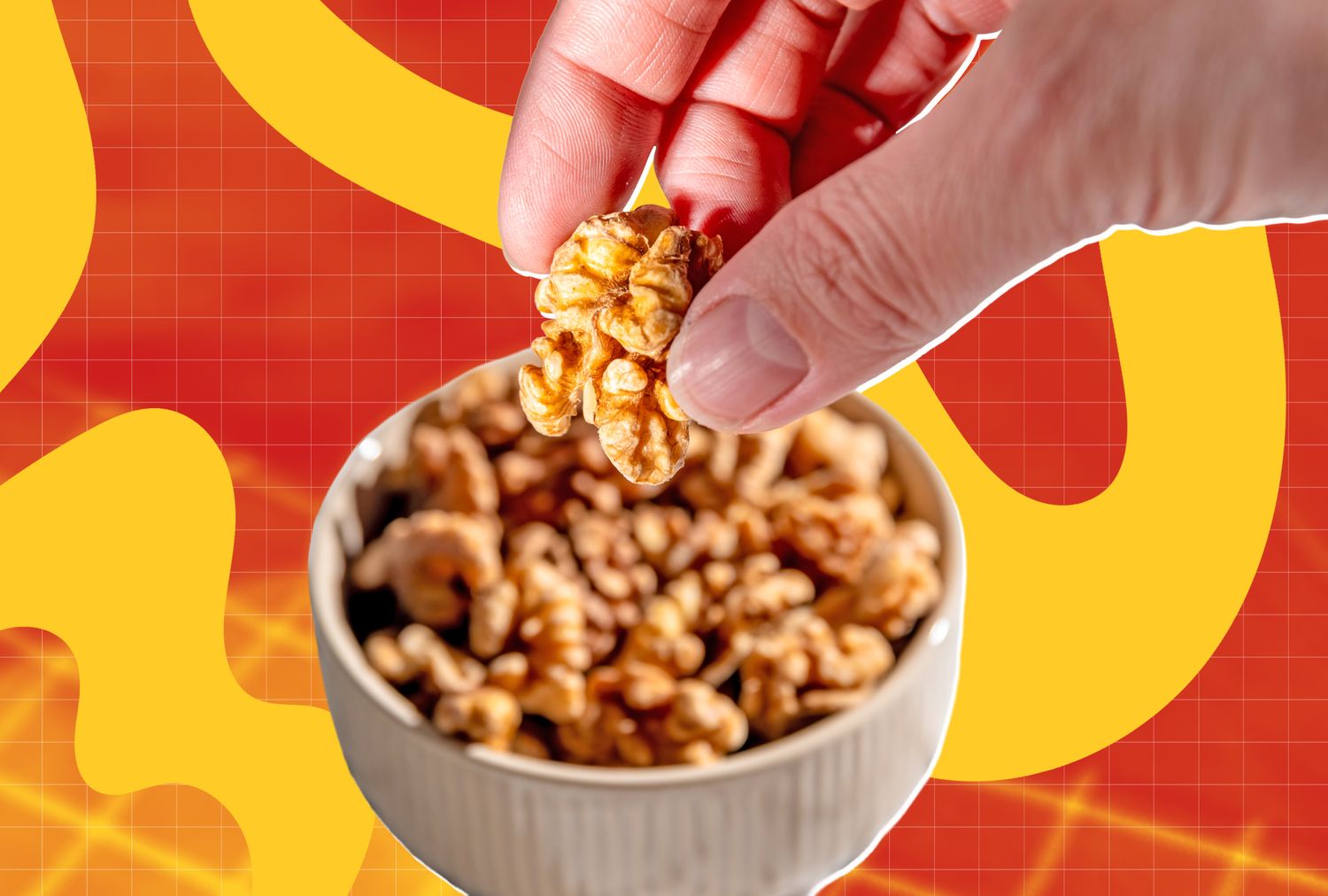
If you’re looking for a brain-healthy snack, look no further than walnuts. Their unique shape, which resembles a tiny brain, is a fitting hint at their cognitive benefits. Walnuts stand out among nuts due to their concentration of alpha-linolenic acid (ALA), a plant-based omega-3 fatty acid. In fact, they are the only tree nut that is considered to be an excellent source of ALA omega-3 fatty acids.
According to Megan Tomlin, M.S., RDN, “Walnuts are rich in antioxidants, omega-3 fatty acids and fiber, all of which are crucial for brain health and aging.” The combination of these nutrients helps combat oxidative stress and inflammation, two key contributors to age-related cognitive decline.
Observational research consistently shows that those who eat more walnuts tend to have better cognitive outcomes, including improved memory and thinking skills. For example, one study analyzed data from older adults in the U.S. to explore the link between eating walnuts and brain health. People who ate walnuts, even in small amounts, scored higher on cognitive tests at the start of the study compared to those who didn’t eat walnuts. Walnut eaters also tended to have healthier lifestyles and diets rich in brain-boosting nutrients, which may have contributed to their higher cognitive scores.
Yet, because many studies focusing on walnut intake and outcomes used inconsistent methods to measure brain health, experts suggest that more reliable research is needed before a definitive link can be established between walnut consumption and cognitive health outcomes.
5. Leafy Green Vegetables
Vegetables like spinach, kale, collard greens and broccoli are fundamental to a brain-healthy diet. They are packed with nutrients like vitamin K and lutein, which have been linked to slower cognitive decline.
These nutrients work together to protect the brain. For example, vitamin K is involved in forming sphingolipids, a type of fat densely packed into brain cells. This is a good thing because sphingolipids are essential for maintaining the structure and function of brain cells, which supports overall brain health and cognitive function. Studies also showed that higher lutein levels are linked to better brain structure and more efficient brain function during cognitive tasks.
One study looked at how eating these vegetables might affect brain health in older adults (aged 60 and up) in the U.S., using data from over 2,300 participants. The results showed that eating more dark green vegetables (like spinach) was linked to better overall brain function, particularly in immediate and delayed memory tasks. People who ate the most dark green vegetables performed significantly better on these tests compared to those who didn’t eat any. Interestingly, the study also found that some of the benefits might come from the vegetables’ ability to lower blood neutrophil levels, which are linked to inflammation.
Other Strategies to Help Reduce Cognitive Decline
While a healthy diet is a cornerstone of brain health, it is most effective when combined with healthy lifestyle habits. Here are a few other strategies to help protect your cognitive function:
- Stay Physically Active: Regular exercise increases blood flow to the brain and can help grow new brain cells. Aim for at least 150 minutes of moderate-intensity activity, like brisk walking or swimming, each week.
- Challenge Your Mind: Keep your brain engaged by learning new skills, playing strategy games, reading or doing puzzles. Mental stimulation helps build cognitive reserve, making your brain more resilient.
- Stay Socially Connected: Maintaining strong social ties and engaging in meaningful conversations can help preserve cognitive function and reduce the risk of dementia.
- Manage High Blood Pressure: Having high blood pressure in your 40s to early 60s can increase the risk of memory and thinking problems later in life.
- Get Enough Sleep: Experts recommend getting seven to nine hours of sleep every night.
Meal Plan to Try
Our Expert Take
Protecting your cognitive health as you age is an achievable goal, and your diet is one of the most powerful tools. Incorporating brain-supportive foods like fatty fish, wild blueberries, eggs, leafy green vegetables and walnuts can provide essential nutrients to help fight inflammation and support brain cell structure as well as memory and learning processes. These foods are not only beneficial for your brain, but they also contribute to your overall well-being.
Remember that diet is just one part of the equation. Combining a brain-healthy eating plan with regular physical activity, mental challenges and strong social connections creates a robust defense against cognitive decline. While there are some factors that may contribute to cognitive decline that are out of our control, like our genetics, by taking these proactive steps, you may help ensure your mind stays sharp and vibrant for many years to come.
