


The WHO reveals that food taxes are an evidence-based and effective way to promote healthy diets. The new policy brief argues that current food taxes are too narrow, often targeting just one nutrient like sugar. Since sugar is only a small part of food prices, companies can change recipes, or people can swap products to avoid taxes, which weakens their impact.
The WHO advocates a holistic approach to food taxes, using the nutrient profile model (NPM). This would also enable synergies and enhance policy impacts altogether.
“Modelling studies have shown that NPM-based food taxes can be more effective in curbing excess calorie and nutrient intakes than taxes targeting individual nutrients, especially when combined with subsidies — which can take the form of tax reductions — on healthier products,” the paper suggests.
With recent industry discussions on the need for more distinct classifications between processed and ultra-processed foods, the WHO warns against using processed versus ultra-processed food labels to decide taxes, since these systems classify foods differently and would target different products. For example, Nova and Nutri-Score don’t always give the same ratings.
Nova can help establish healthy food taxes, but governments must consider various factors when deciding on nutritional criteria that best support their goals, the report adds.
Diet and environment link
Poor diets are a leading cause of rising obesity and noncommunicable diseases worldwide, while foods high in saturated fat, salt, sugar, and calories are widely available and marketed.
WHO calls for smarter food taxes to promote health and sustainability. WHO’s new policy brief, “Food taxes for a healthy diet: time for action,” provides an overview of various food taxes in Europe while suggesting how they can inform policy. Research increasingly shows that implementing such policies, especially sugar-sweetened beverage taxation, improves nutrition.
Additionally, the report notes that food consumption and production affect the environment as well as human health.
It underscores that while more countries are applying health taxes on foods that typically do not contribute to a healthy diet, these policies rarely cite reasons that include health or environmental sustainability.
“Governments will have to address tradeoffs because different types of taxes and tax designs have varying pros and cons,” adds the report
The report suggests that food taxes promoting healthy diets should rely on overall nutritional quality measured by a suitable NPM. “This would improve the alignment of food prices and nutritional quality and prevent unwarranted food substitutions and reformulations.”
The report also suggests that food health taxes must be properly designed, implemented, and monitored to accomplish their objectives without raising the tax burden and administrative expenses.
Affordability and accessibility issues
The report details that dietary risk and high body mass index make up ~11% of disease burdens each in the WHO European Region. Dietary risks account for 18.5% of deaths.
“Diet-attributable deaths from cardiovascular diseases increased by 43.8% from 1990 to 2019 globally. Current levels of overweight and obesity mean income losses equivalent to 3.5% of GDP in G20 countries, according to the Organisation for Economic Co-operation and Development.”
“Large-scale production and international trade have resulted in a steady increase in the global availability of highly processed industrially produced foods, boosted by pervasive brand marketing,” cautions the report.
Additionally, these foods are often cheaper, per unit of energy, while fresh and healthy foods are more expensive. According to FAO, a healthy diet remains unaffordable for millions. The Healthy Diet Basket found that 2.8 billion people worldwide cannot afford a healthy diet — even the cheapest costs more than low-income people can afford.
 New WHO brief urges governments to tax foods by overall nutrition quality, not single nutrients.“The FAO estimates the hidden costs arising from agri-food systems as being equivalent to 10% of global GDP, with an 8.6% increase in net costs from 2019 to 2023,” the report warns. “These hidden costs include environmental, social, and health costs, with the latter calculated as productivity losses due to obesity and NCDs as a result of food consumption.”
Colombia, Hungary, and Mexico combine tax and health
The report mentions Colombia, Hungary, and Mexico as examples of countries that have designed taxes to promote healthy diets with varied results.
Colombia introduced a tax on food with high salt and saturated fat or prepackaged foods industrially manufactured in 2022. The goal was to reduce obesity, along with another tiered tax on sugar-sweetened beverages.
This year, the tax rose to 20% from the initial 10%.
In Hungary, an excise tax was created to promote healthier F&B choices and encourage reformulation in 2011, targeting products that had healthier alternatives available. It also sets NPM with categories based on excess consumption of nutrients, like salt and sugar.
In 2016, manufacturers could opt to allocate 10% of their tax payments to their own health-promoting programs.
One year post-implementation, processed food expenditures rose by 6.5% without changes in the quantity of unprocessed products. Three years later, sales volumes of high-sugar foods remained similar to baseline levels.
Meanwhile, Mexico set an 8% ad valorem tax (percentage of product value) on “non-essential” foods in 2018. A tax on sugar-sweetened beverages was also implemented. A year later, the tax resulted in a 5% decrease in purchases of taxed products. However, the WHO notes conflicting evidence on the impact of total energy purchased.
“Current health taxes on food and beverages tend to focus on a relatively narrow range of foods. For example, Mexico’s tax on foods with an energy density above 275 kcal/100 g has a wider tax base than other taxes, but despite this, it only covers 14% of caloric intakes,” details the report.
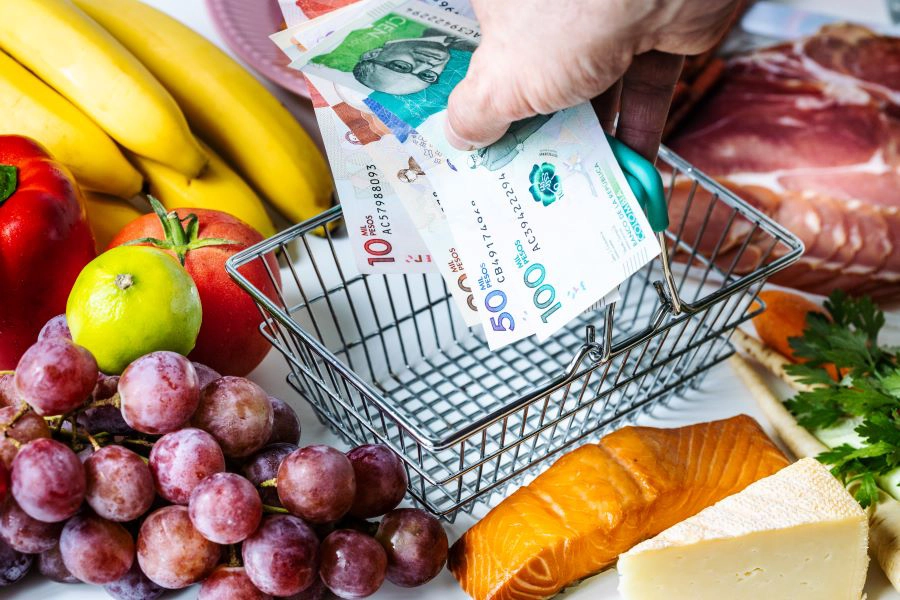 Combining taxes with subsidies could make healthy diets more affordable and effective.“Existing taxes also often focus on a single nutrient (e.g., sugar) and tend to be small as a proportion of food prices. This narrow scope means that effects are limited and may be offset by increasing intakes of nutrients not directly targeted by taxation, which may occur as a result of food reformulation by manufacturers or food substitutions by consumers.”
Creating food taxes linked to health
WHO notes that food taxes, like alcohol or tobacco taxes, are motivated to discourage consumption. Therefore, it is essential to connect food taxes to health goals. WHO also reveals that, despite having a food tax, most countries do not design them to improve diet quality and health.
“Taxes can encourage manufacturers to reformulate foods, reducing levels of nutrients such as salt, saturated fat, and sugar, which are often consumed in excess.”
“They can also help people to change their food choices, curbing the demand for unhealthy products. This is particularly relevant among households with lower incomes, already at higher risk of unhealthy diets, as those households tend to respond to price increases caused by tax changes with greater reductions in consumption,” suggests the report.
Additionally, food taxes bring revenue to governments, which could be used for health solutions caused by unhealthy diets and obesity.
The WHO suggests incentivizing taxes with subsidies or tax reductions on healthy foods may help lift the cost burden on low-income households.
