

What’s driving the gut health boom? Summary
- Searches for gut health terms surged up to thirty-five percent
- Digestive health market hit $116.9bn with 8.74 percent CAGR
- AI-powered digital twins promise personalised nutrition and gut insights
- Poop transplants may soon be democratised for wider health use
- Next-gen biotics like Akkermansia target ageing and inflammation
Gut health was once considered terribly unsexy. Now, it’s one of the hottest topics in food and beverage. Who would have thought that fermented cabbage (aka sauerkraut) or bacterial strains like Lactobacillus could become trendy?
But the proof is in the data. According to contract research organisation Magnitude Biosciences, searches for gut health-related terms are spiking, including ‘gut health’ by 35%, ‘microbiome’ by 31% and ‘probiotics’ by 8% – all in 2024 alone.
The global digestive health products market is also skyrocketing, reaching an eye-watering $116.9bn (€100.8bn), with a CAGR of 8.74%.
The gut health trend has come far, and developments in microbiome science will continue to push the envelope. What does the next frontier of gut health hold?
1. Digital twins for precision nutrition
As artificial intelligence reshapes industries worldwide, it’s also revolutionising gut health.
In the future, it’s hoped that everyone will have their own computer model, a ‘digital twin’, which creates a personalised, virtual replica of people’s data. Researchers could use it to combine genetic and dietary data, and better understand how genes affect metabolism, diet response, and disease risk.
Adding continuous monitoring of the gut microbiome could allow for precision nutrition, says Andrea Maier, professor of medicine and healthy ageing at the National University of Singapore. Using digital twin technology in this way could mean people get individualised advice on what to eat, and what not to eat.
Such developments may be available soon. The professor has a particular interest in postbiotics – the compounds produced when live bacteria in the gut digest fibre and other nutrients. Certain B vitamins and vitamin K can both be produced by gut microbes.
“Imagine developing vitamins for the gut that don’t have to be swallowed. I believe this is happening already in clinical trials,” she says, hinting that evidence-based personalised probiotic developments could reach patients and consumers in the “coming years”.
2. Data-driven personalised eating
Whereas precision nutrition is more likely to involve biological data, like gut microbiome profiling, personalised nutrition keeps a keen eye on personal and behavioural data.
Personalised nutrition is already here, but AI will propel it to the next level, believes UK nutritionist Rhiannon Lambert. “We’re only a matter of years away from tech being on an individualised, microbiome level. That means scanning a plate of food, and AI telling you exactly what’s inside it – and taking it to the next level.”
Analysing everything on a more micro level when it comes to personalised nutrition could be the future, right down to looking at “beneficial fibre strains”, she explains.

The more biological data available, the more personalised and precision nutrition lines will blur. At a clinical level, physicians are able to analyse samples to better understand gut health. “They know that what we eat, our digestion, and our gut microbes are key to our long-term health and how we function.”
That’s something already underway in clinical settings, but Lambert predicts that will soon be democratised. “Everyone will be able to get that data on their phones at the drop of a hat. That’s where I hope we’ll see the research go mainstream.”
3. Faecal microbiota transplants (yep, poop therapy)
Perhaps further away, but still on the horizon, is the democratisation of faecal microbiota transplants. In layman’s terms: poop therapy.
It’s easy to get weighed down by how much we don’t understand about the gut microbiome, suggests National University of Singapore’s professor Maier. “What we have to learn is what the real determinants are when thinking about poop transplants.”
A faecal microbiota transplant is a medical procedure where stool from a healthy donor is transferred into the gut of a patient to restore a balanced microbiome. Transplants are known to help certain infections, and are being trialled for other indications, like gut and behavioural symptoms associated with autism.

Professor Maier expects developments in stool transfers to continue, apace. “In the end, we may even engineer bacteria to swallow, for them to keep growing in the gut.”
Yes, there are ethical considerations, she admitted, but doesn’t see those standing in the way of gut health breakthroughs. “For me, this is the future.”
4. Food innovation for targeted nutrition
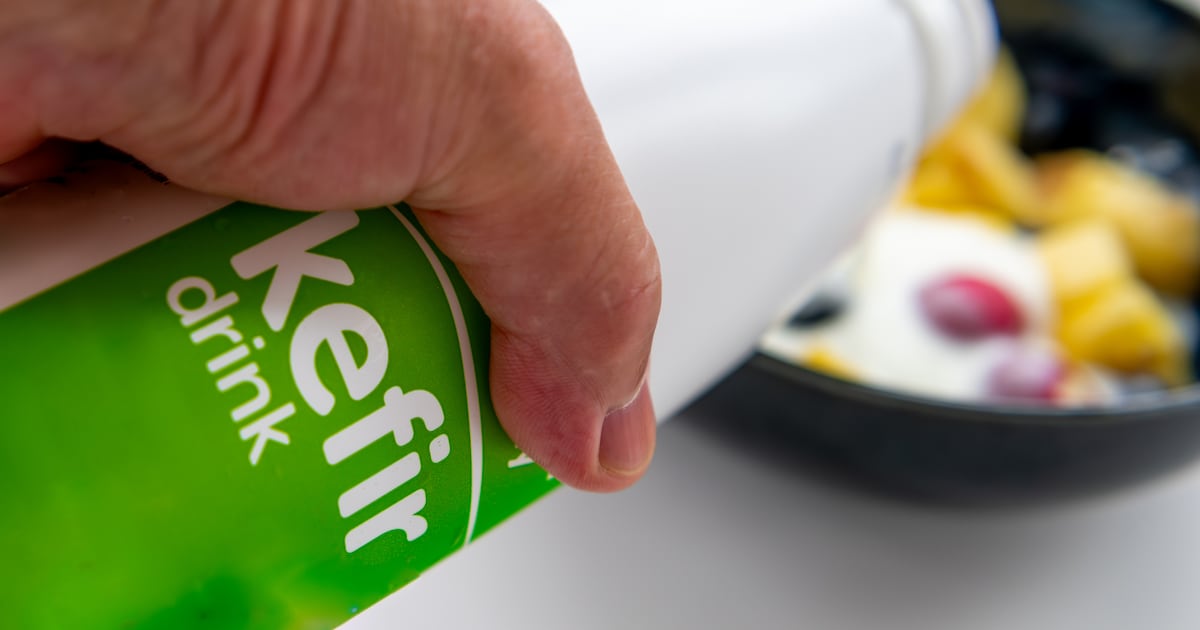
And last, but certainly not least, comes food innovation. We’ve seen this develop in recent years, with an influx of new brands tapping into the gut health trend. Think inulin-infused snack bars, pre- and probiotic sodas, and fermented food galore: from kimchi to kefir and kombucha.
And innovation shows no sign of slowing down. “What excites me is health data giving ground to a new generation of innovations,” says Katrien van Laere, chief scientific and medical officer at Danone.
The dairy giant continues to innovate to build out its ferments and biotics library, including via the recent acquisition of Akkermansia Company – which makes a next-generation biotic found to reinforce the gut barrier, reduce inflammation, and help manage obesity, diabetes and cardiovascular disease.

The Akkermansia biotic has the potential to feed into Danone’s strategy for targeted nutrition, particularly for ageing populations. Akkermansia levels have been found to be notably higher in healthy centenarians, compared to the general elderly population, and research suggests potential to promote healthy ageing.
“This is the era of new yoghurts, new cultures, prebiotics and postbiotics,” says van Laere. “What an exciting opportunity it is that we, as a company, can contribute – alongside experts – to improving consumer and patient health and wellbeing.”
